

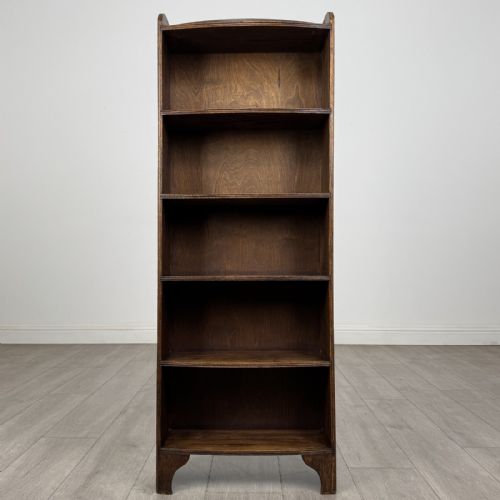
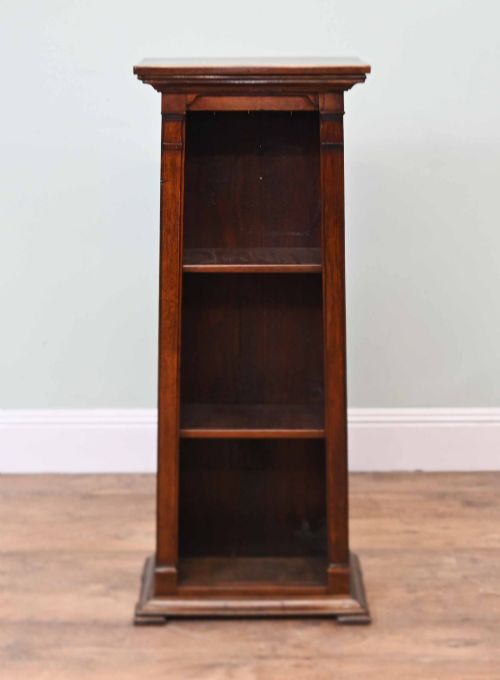

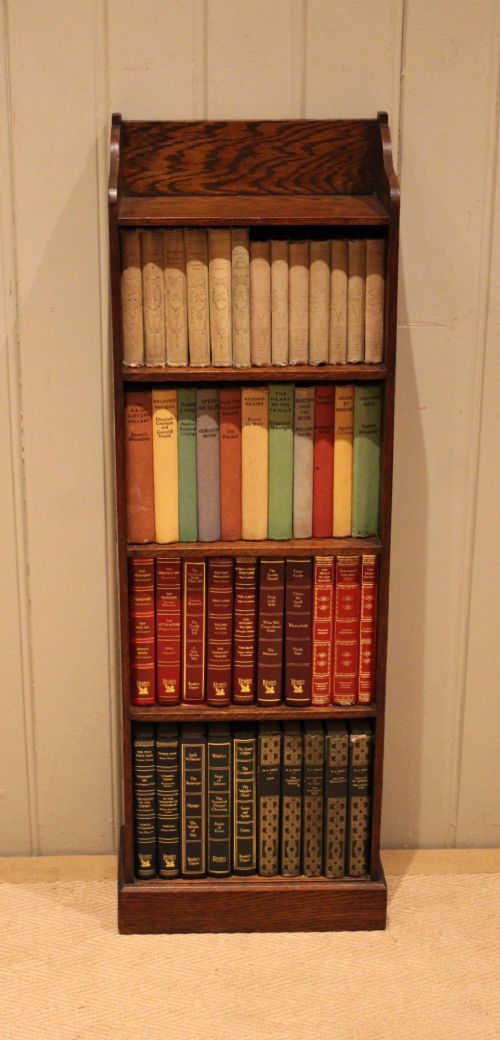

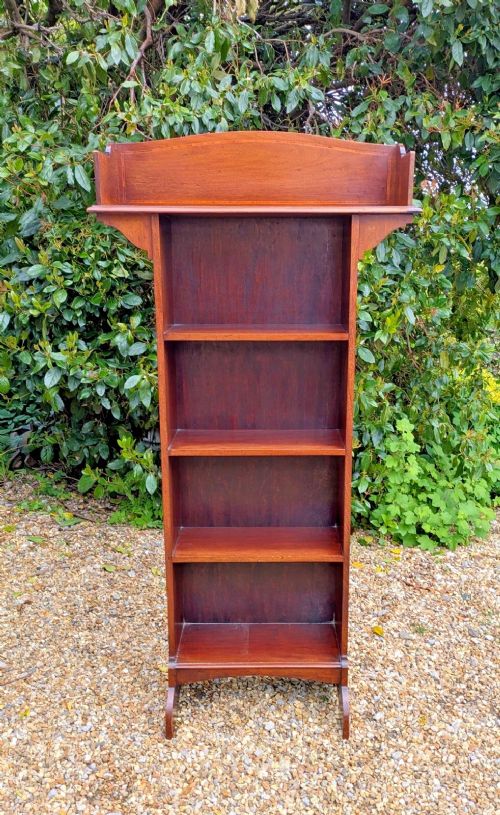


Slim Open Bookshelf
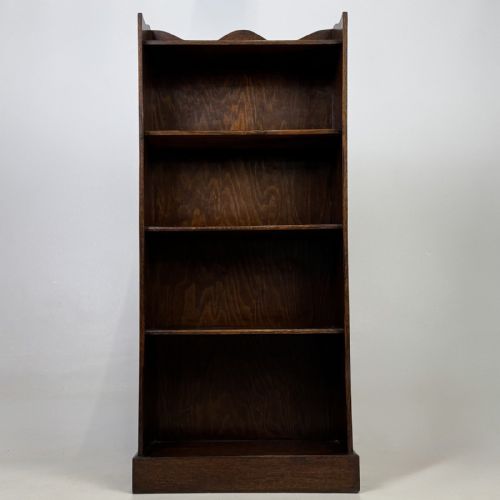
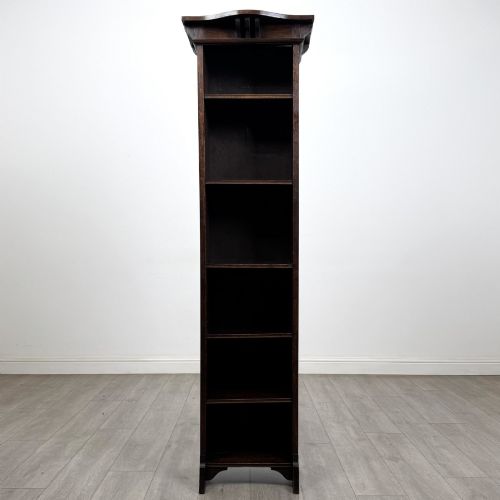
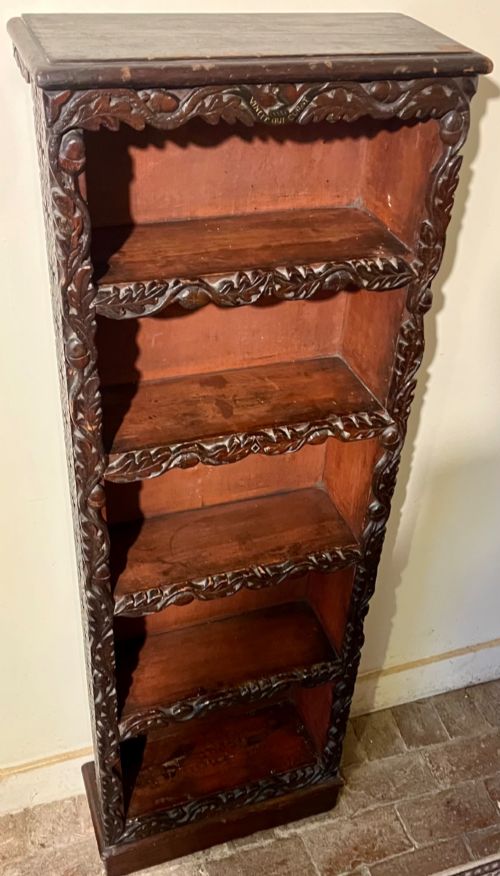
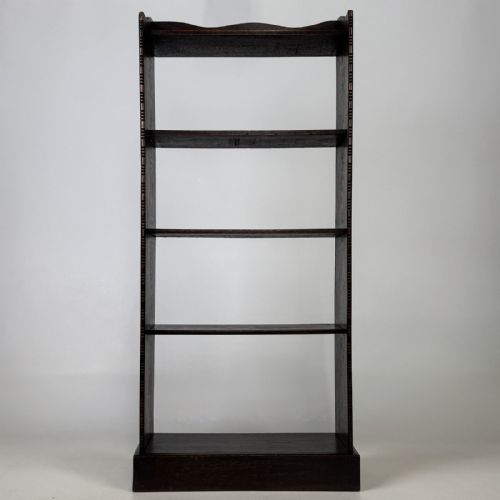
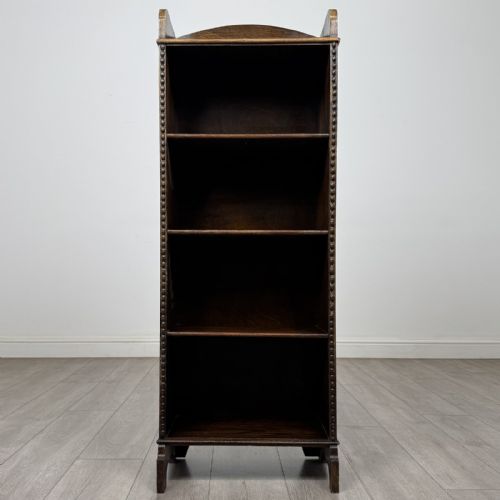
These slim open bookshelf examples bring upright storage to narrow spaces, combining timber construction with accessible shelving for everyday book collections.
Slim Open Bookshelf
A slim open bookshelf provides vertical storage without dominating a room, utilising narrow footprints suited to tight alcoves and modest wall spaces. The pieces gathered under this heading span the Victorian and Edwardian eras, alongside early twentieth century productions and revival styles.
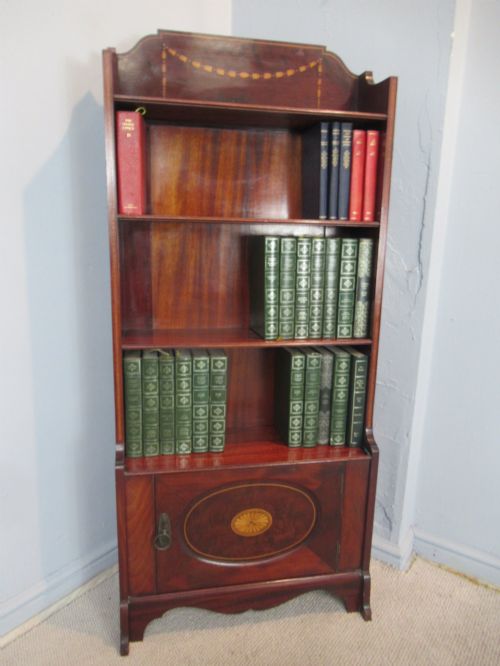
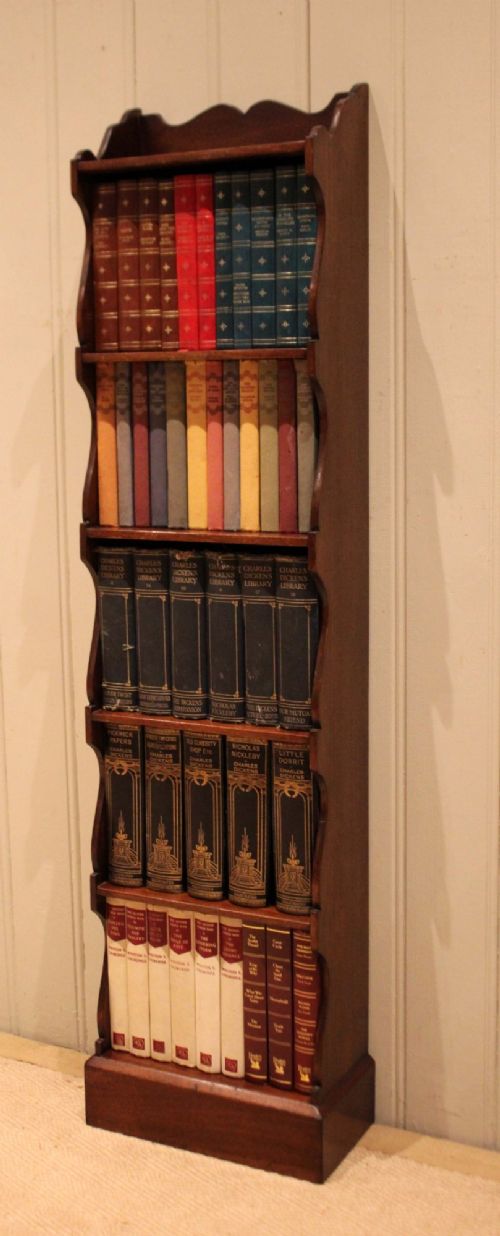
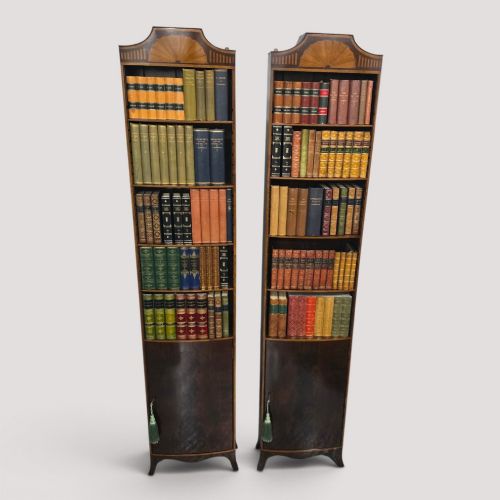
The format relies on open fronts that display volumes clearly while keeping the overall volume light. Common forms include tall structures and smaller waterfall variations, often paired with low cupboards or simple upright frames.
How they were made
Cabinet makers utilised dense hardwoods such as oak and mahogany for structural integrity, ensuring the upright sides could support heavy rows of books. Burr walnut and satinwood appear as decorative veneers, adding varied grain patterns to the primary timber carcass.
Surface ornamentation frequently incorporates subtle wood inlay and brass fittings. These decorative elements highlight the edges and panels without disrupting the functional lines of the open shelving.
Slim Open Bookshelf Retail Price Guide 2026
Typical asking prices for slim open bookshelf among the pieces listed under this phrase on Sellingantiques today, from the lower quarter to the upper quarter. They describe what is for sale here now, not the wider market.
Some Edwardian shelves slope gently downward like a waterfall, proving that even Victorian descendants enjoyed a bit of architectural drama.
What varies in quality
Quality rests upon the selection of timber and the precision of the joinery joining the shelves to the upright supports. Superior examples display carefully matched veneers and clean joints that remain stable over decades of use.
The refinement of decorative details, such as delicate inlay work and the choice of secondary woods, distinguishes standard utility items from more ambitious cabinet work.
The Slim Open Bookshelf Glossary
- Waterfall bookcase
- A stepped shelving unit where each successive shelf is shallower than the one below it. This form creates a sloping profile reminiscent of cascading water.
- Burr walnut
- A prized timber harvested from walnut tree growths, featuring swirling, knotted grain patterns. It is typically sliced into thin veneers for cabinet fronts.
- Satinwood
- A luminous, hard timber with a yellowish sheen used extensively in fine cabinet making. It takes a high polish and provides sharp contrast in inlaid designs.
- Aesthetic Movement
- A late nineteenth century design style that prioritised visual beauty over moral or narrative purpose. Pieces from this movement often exhibit refined craftsmanship and lighter proportions.
Slim Open Bookshelf: Frequently Asked Questions
Where should I place a slim open bookshelf?
These compact units fit comfortably in narrow hallways, tight alcoves beside fireplaces, or small study rooms where floor space is limited. Their modest width prevents them from overwhelming smaller domestic interiors.
Because the shelves remain open, positioning the unit away from direct, harsh sunlight protects both the book bindings and the polished timber surfaces from fading.
How do I date an older wooden bookcase?
Dating relies on observing construction methods, timber choices, and stylistic markers recorded in the piece. Victorian and Edwardian examples often display specific grain characteristics and characteristic hardware.
Secondary woods used at the back and interior carcase also offer clues regarding the period of manufacture and regional workshop practices.
Are these shelves sturdy enough for heavy books?
Solid hardwoods like oak and mahogany provide robust support for extensive collections of standard volumes. The thickness of the timber and the method of shelf attachment dictate the load capacity.
Checking the tightness of the joints where shelves meet the vertical sides ensures the structure remains stable under weight.
What is the difference between Victorian and Edwardian bookcases?
Victorian pieces tend to use darker, heavier timbers and often incorporate ornate details or enclosed cupboards below the shelving. They reflect a period of dense decoration and substantial proportions.
Edwardian designs frequently favour lighter woods, simpler lines, and restrained inlay work, aligning with a broader shift towards brighter domestic interiors.