

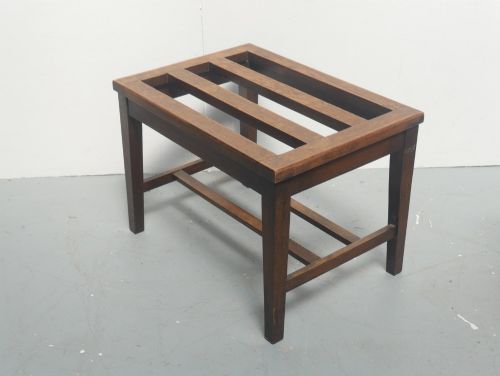
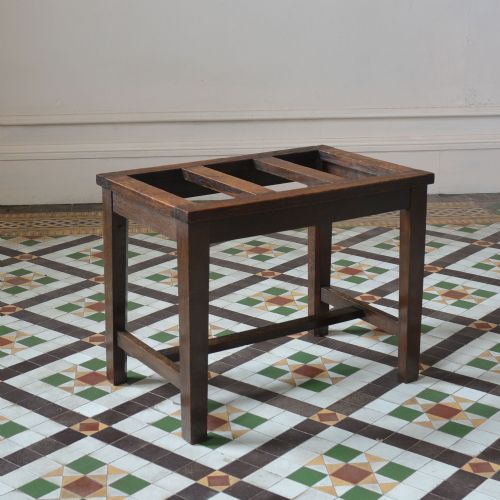


Slatted Wooden Stool
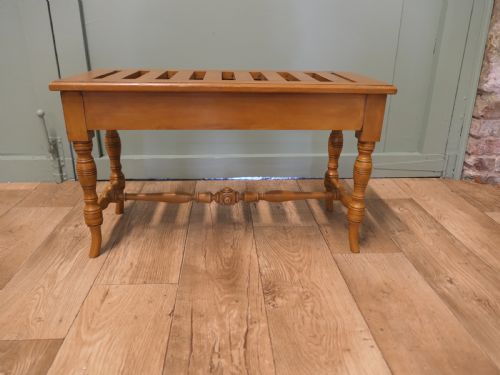
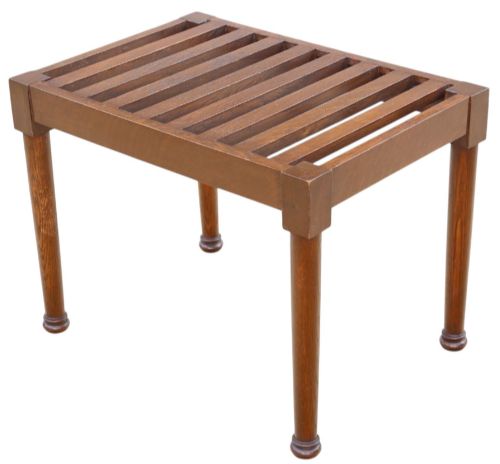
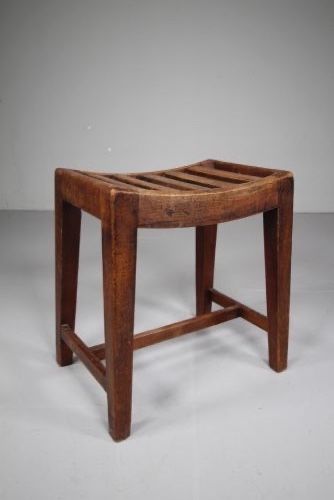
A slatted wooden stool offers honest utility and clean joinery, making it a versatile bench or stand for any traditional interior.
Slatted Wooden Stool
When you search for a slatted wooden stool, you encounter practical seating and luggage stands originating from periods ranging from the eighteenth century to the early twentieth century. These pieces serve multiple domestic functions, functioning equally well as luggage stands, suitcase supports, or low seats.
The most common forms on this page include folding luggage racks and luggage stands alongside traditional stools. They often appear in oak and mahogany, reflecting English country house and Arts and Crafts design traditions.
Makers produced these forms with slatted tops designed to hold weight without warping. You find examples spanning the Georgian, Victorian, Edwardian, and Arts and Crafts eras, each bringing distinct proportions and timber choices to the room.
How they were made
Joiners and cabinetmakers constructed these pieces primarily from solid hardwoods including oak, mahogany, and walnut. They utilised traditional framing and pegged joints to ensure stability across folding and rigid structures.
The defining slatted tops were individually shaped and fitted into the rails to distribute weight evenly. Some iterations incorporated brass or metal hardware for folding mechanisms, while others integrated velvet upholstery elements.
Slatted Wooden Stool Retail Price Guide 2026
Typical asking prices for slatted wooden stool among the pieces listed under this phrase on Sellingantiques today, from the lower quarter to the upper quarter. They describe what is for sale here now, not the wider market.
Early twentieth-century guests packed lighter trunks, yet their hosts still required sturdy folding oak stands to keep the leather straps off the carpet.
What varies in quality
Quality rests upon the selection of timber and the precision of the joinery rather than ornate decoration. Pieces featuring dense oak or figured mahogany with cleanly shaped slats represent the higher end of the range.
The refinement of the turning on legs and the tightness of the structural joints separate standard utility items from finer examples made in the Georgian or Arts and Crafts manner.
The Slatted Wooden Stool Glossary
- Slats
- Narrow strips of wood arranged with spaces between them to form a flat supporting surface. They allow the piece to remain lightweight while supporting heavy items such as luggage.
- Luggage stand
- A low folding or rigid bench designed at suitcase height for guest bedrooms. These often share the slatted construction typical of these stools.
- Commode chair
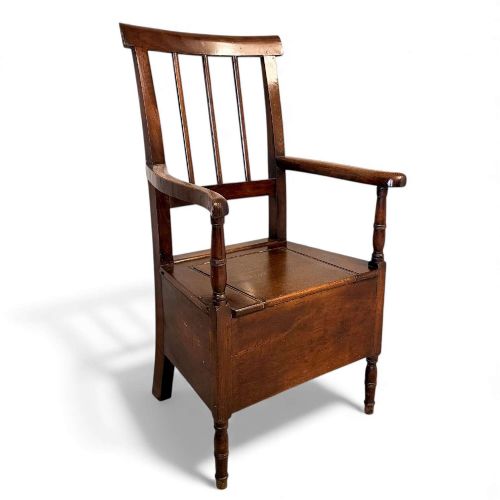
- An enclosed seat from the eighteenth century designed for sanitary purposes, often featuring wooden cabinetry or commode seating beneath a lid. Early examples utilised oak and walnut construction.
- Chippendale manner
- A stylistic approach following the eighteenth-century cabinetmaker Thomas Chippendale, characterised by carved mahogany frames and shaped legs. This style appears on formal seating pieces.
Slatted Wooden Stool: Frequently Asked Questions
What were slatted wooden stools used for?
These pieces served multiple domestic purposes, acting primarily as luggage stands in bedrooms or as low stools for seating by the fireside.
In the country house, folding variants provided flexible accommodation for guests' luggage and could be tucked away when not in use.
How do I date an oak luggage rack?
Dating relies on observing the timber grain, construction marks, and stylistic clues such as chamfered edges or pegged joints.
Earlier pieces from the eighteenth century display hand-cut joinery, while Edwardian and Arts and Crafts examples often show machine-sawn components and characteristic quarter-sawn oak figuring.
Are these stools sturdy enough for daily seating?
Most pieces were built with robust hardwood frames designed to bear significant weight, whether luggage or a person.
Solid oak and mahogany construction ensures lasting durability, though folding mechanisms should be checked for smooth operation before continuous seating use.
How do I care for antique mahogany wood?
Mahogany requires minimal interference, benefiting from occasional dusting with a dry lint-free cloth and gentle waxing to preserve the grain.
Keep these items away from direct heat sources and strong sunlight to prevent the timber from drying out or fading over time.