


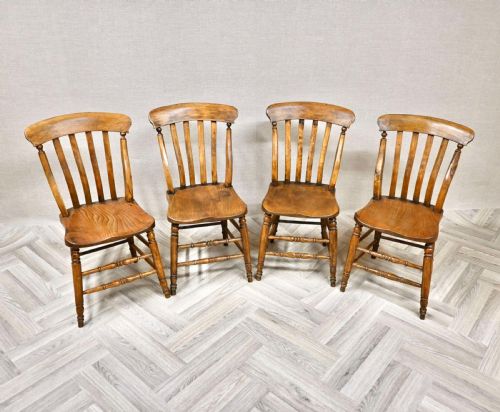


Slatted Wood Chairs
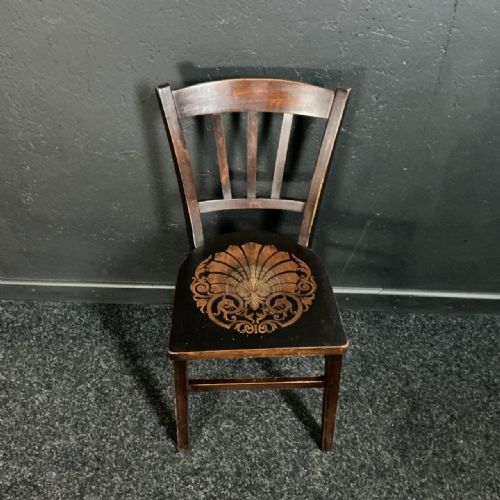
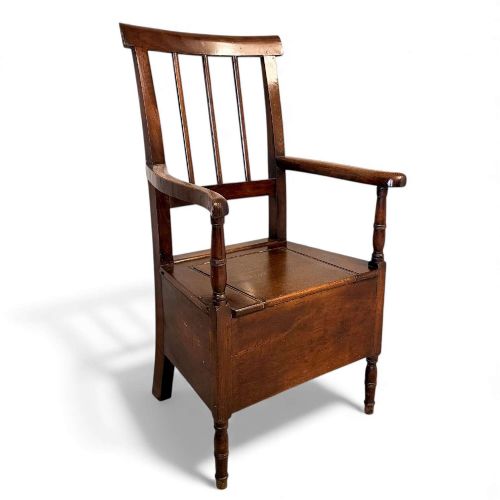
Slatted wood chairs bring straightforward grain and honest domestic utility into a room, spanning rustic farmhouse forms and refined Georgian dining seats.
Slatted Wood Chairs
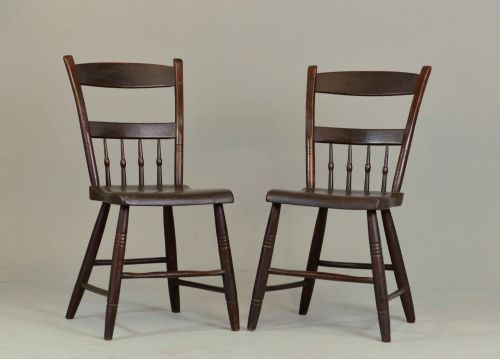
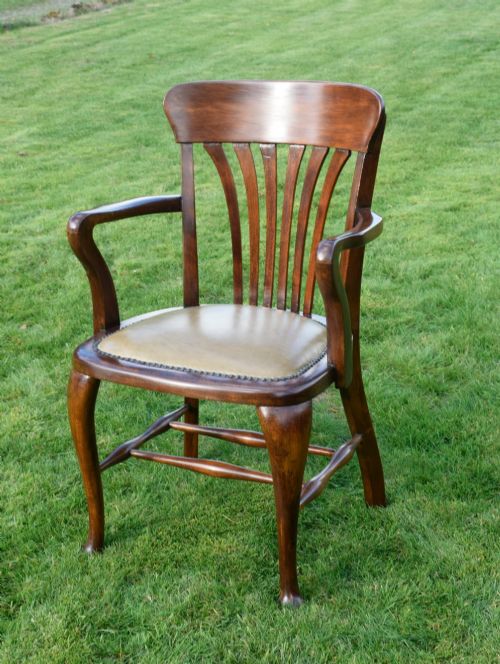
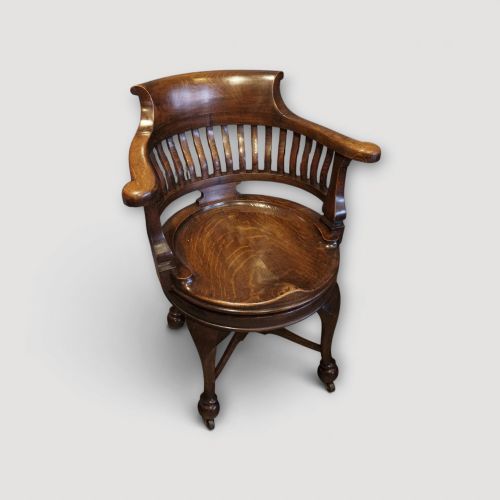
Slatted wood chairs encompass practical seating from simple kitchen stools and ladderbacks to revolving desk chairs and Windsor lathbacks. Buyers exploring this selection encounter pieces originating from the 17th century through to the 1920s, reflecting domestic and commercial life across generations.
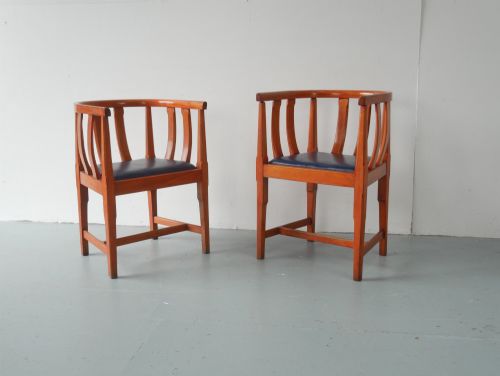
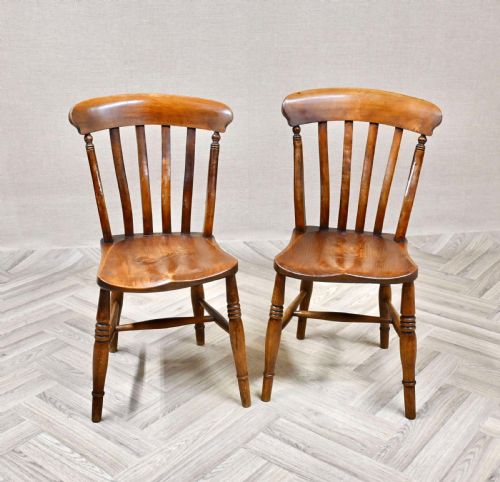
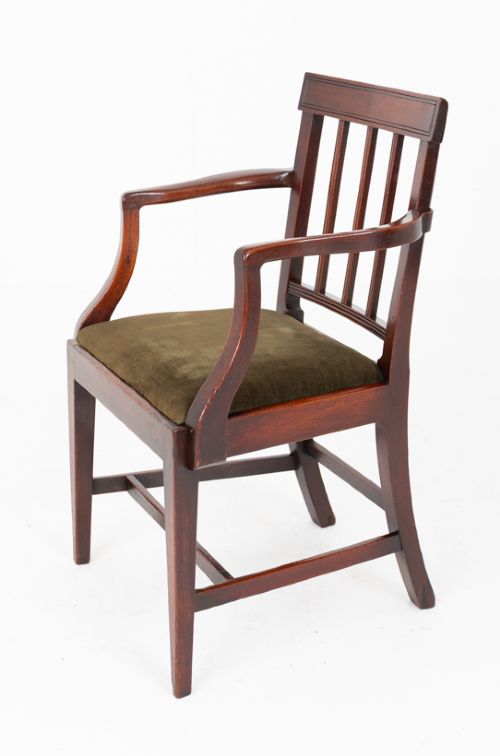
The most frequent examples on this page belong to 19th-century farmhouse traditions, particularly Windsor and lathback designs fashioned for everyday utility. These domestic forms sit alongside Edwardian desk chairs, Victorian bedroom seats, and earlier Georgian dining formats.
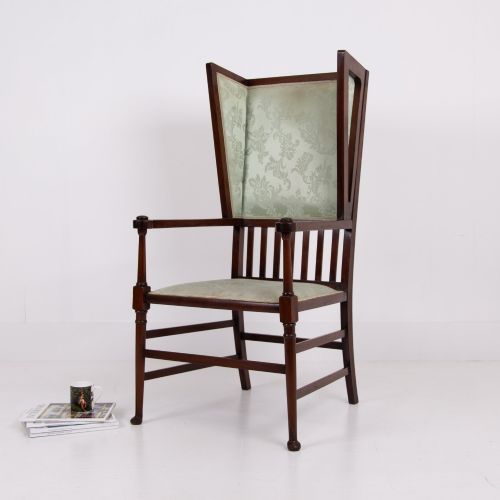
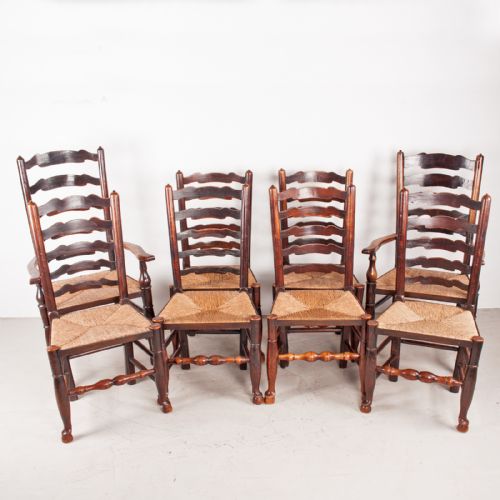
Makers utilised timber such as elm, oak, mahogany, and beech, frequently pairing rigid wooden frames with woven rush seats or upholstered pads. Styles range from plain vernacular country workshop output to Arts and Crafts expressions and Aesthetic Movement forms.
Materials and construction
Construction relies on solid hardwoods selected for resilience, with elm, oak, and beech serving structural roles in country chairs and mahogany dominating formal Georgian and Edwardian dining seats. Turnery, mortise and tenon joints, and steam-bending shaped the frames of ladderbacks and bentwood items.
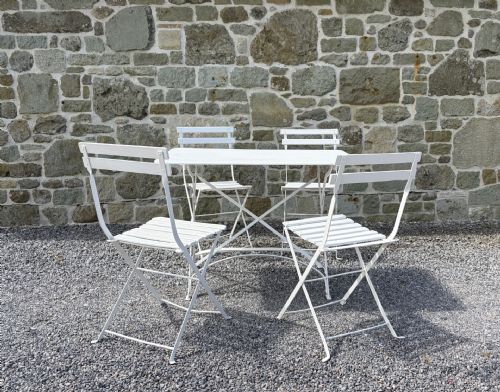
Seating surfaces often incorporate shaped solid timber planks or woven rush, while iron components appear on specialised garden furniture and swivel mechanisms. Makers utilised traditional joinery without modern adhesives, relying on pegged joints and natural expansion tolerances in the wood.
Slatted Wood Chairs Retail Price Guide 2026
Typical asking prices for slatted wood chairs among the pieces listed under this phrase on Sellingantiques today, from the lower quarter to the upper quarter. They describe what is for sale here now, not the wider market.
Judging quality
Quality rests on the integrity of the timber and the tightness of the original joinery, separating sturdy workshop output from weakened examples with excessive replacements. Grain selection and the depth of natural patination on elm, oak, or mahogany indicate how a piece has aged.
Proportion and execution distinguish standard utilitarian furniture from pieces designed by skilled provincial turners or prominent cabinet makers. Refined slat shaping, balanced arm scrolls, and intact rush work elevate a chair above basic utility wares.
E W Godwin
The Slatted Wood Chairs Glossary
- Ladderback
- A chair back featuring multiple horizontal wooden slats between two upright posts. This traditional form was common in country workshops.
- Windsor
- A chair built with a solid wooden seat into which the legs and back spindles are közvetlenül wedged. These chairs often feature bentwood bows.
- Rush
- Dried marsh grass twisted into cords and woven to create flexible seating pads. It appears frequently on country farmhouse chairs.
- Vernacular
- Everyday objects made by local craftspeople following regional traditions rather than high-style academic designs. These pieces emphasise utility over fashion.
- Turnery
- The process of shaping wood on a lathe to create decorative or structural uprights and legs. It defines the profile of many 18th-century and 19th-century chairs.
Slatted Wood Chairs: Frequently Asked Questions
How do I identify a Windsor chair?
Windsor chairs feature distinct construction where legs and back spindles insert directly into a thick sculpted wooden seat rather than a frame. They often incorporate a steam-bent bow or comb piece forming the upper back.
Look for traditional turning on the legs and H-stretchers beneath the seat. Elm and beech are common timbers used in these country pieces.
What is the difference between a ladderback and a slat back?
Ladderbacks feature horizontal arched slats resembling the rungs of a ladder between two vertical rear posts. Slat backs typically describe vertical wooden slats integrated into the backrest.
Both forms appear widely in country kitchens and dining rooms from the 18th century onward.
Can I use antique wooden chairs every day?
Solid hardwood chairs built from oak, elm, or mahogany are generally robust enough for daily domestic use. Check that the joints remain tight and the undercarriage is stable before putting them into service.
Avoid exposing antique timber to rapid temperature changes or direct heat sources to prevent wood splitting.
How do I care for rush seated chairs?
Rush seats require gentle cleaning with a dry brush or a barely damp cloth to remove dust from the woven strands. Keep them away from excessive moisture, which can cause the marsh grass to rot.
Applying occasional light furniture wax to the wooden frame helps maintain the finish without affecting the woven seat.