


Skeleton Desk Clock
A skeleton desk clock lays bare the intricate mechanics of time, offering both precision engineering and striking interior sculpture.
Skeleton Desk Clock
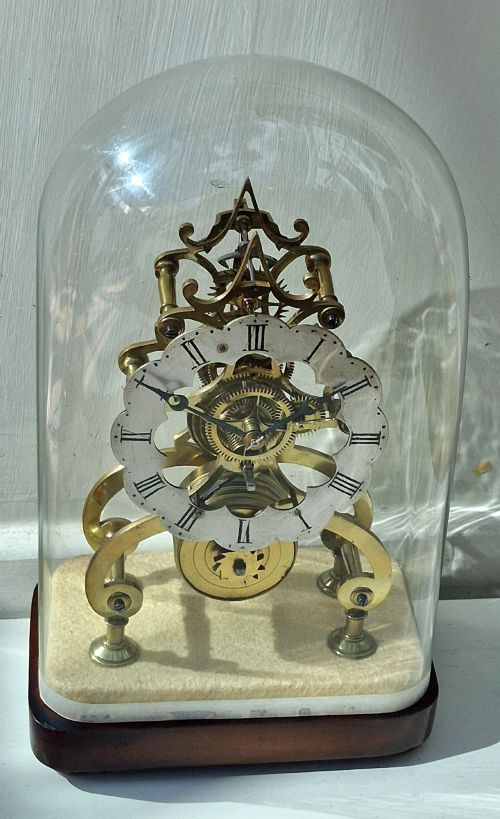
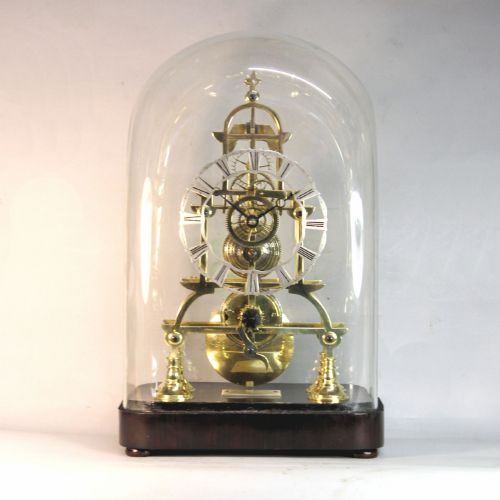
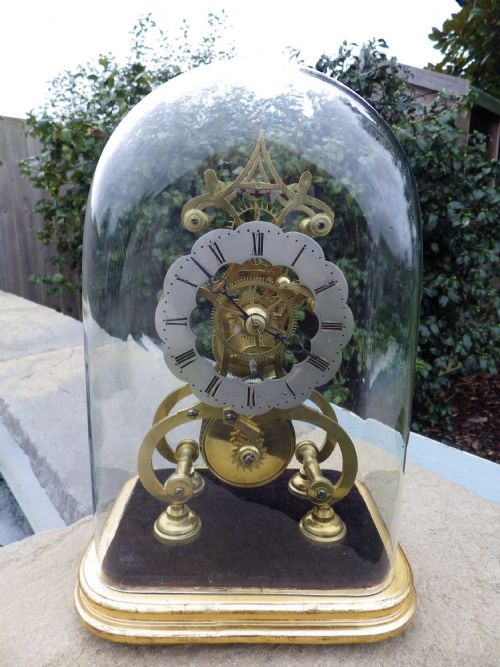
A skeleton desk clock exposes its gear trains, escapements and plates to view, stripping away the traditional wooden or metal case in favour of open brass frameworks and glass domes. These timepieces range from diminutive nineteenth-century English fusee models under glass shades to mid-century Swiss inline designs and electrical marvels.
Buyers seeking a skeleton desk clock encounter a variety of forms including miniature Gothic architectural designs, French four-glass mantel versions, and atmospheric clocks driven by minute temperature changes. The aesthetic balances industrial mechanical ingenuity with decorative elegance, making them focal points for desks and mantelpieces alike.
The materials span traditional polished brass and marble bases to rhodium plating and glass bell-jars, stretching chronologically from the Victorian era through the mid-century modern period. English and French workshops dominate the selection, each bringing distinct regional approaches to wheel-work geometry and escapement construction.
How they were made
Makers constructed the structural frames from heavy cast or cut brass, often silvering the dial rings and chapter rings to create contrast against the exposed movement. Glass domes or four-glass enclosures protected the delicate brass wheel-work and escapements from dust while maintaining complete visibility from every angle.
The driving power derived from fusee spring-driven movements or precision gear trains, sometimes supplemented by electrical systems such as the Favre-Bulle mechanisms seen in twentieth-century examples. Artisans cut intricate skeletal plates with multiple spokes to lighten the structure without losing rigidity.
Some mid-century models rely on air temperature changes to wind themselves, effectively running on the weather outside.
What varies in quality
The refinement of the wheel-work and the complexity of the escapement, such as a coup perdu detent or six-spoke design, separate standard production from masterwork pieces. Finishing details on the brass plates, hand-engraved dials, and the presence of original protective glass domes heavily influence the standing of an individual clock.
The integrity of the movement and the reputation of the maker, whether an independent English horologist or an established Swiss firm, determine the baseline excellence of the piece. Superior examples maintain crisp, unpolished edges on the brass framework and retain their original mounting plinths.
Richard Winter Of Chieveley·Maurice Marcel Moulin Favre-Bulle·William Evans Of Handsworth·Jaeger LeCoultre·E White Of Manchester
The Skeleton Desk Clock Glossary
- Fusee
- A conical pulley used in clock movements to maintain an even pull on the gear train as the mainspring unwinds. This mechanism ensures consistent timekeeping power throughout the running period.
- Escapement
- The mechanical linkage that controls the release of power from the gear train to the balance wheel or pendulum. It provides the characteristic ticking sound and maintains the motion of the clock.
- Glass Dome
- A blown or formed bell-jar placed over a delicate timepiece to protect the exposed mechanism from dust and air currents. These covers are frequently original to nineteenth-century skeleton clocks.
- Four-Glass Clock
- A mantel timepiece encased in bevelled glass panels held within a brass or gilt frame, allowing unobstructed views of the movement from all sides. They became particularly popular during the nineteenth century in France.
- Inline Movement
- A horological layout where the gear train and escapement are arranged in a single linear horizontal or vertical plane. This modern configuration suits the minimalist aesthetics of mid-century design.
Skeleton Desk Clock: Frequently Asked Questions
How do I wind a skeleton desk clock?
Most mechanical skeleton clocks require a key to tension the mainspring via the arbors visible within the brass framework. Care must be taken not to over-wind the movement.
Electric or atmospheric variants, such as Atmos models, operate without manual winding by utilising ambient temperature fluctuations or electrical currents.
Are glass domes original to these clocks?
Many nineteenth-century English and French skeleton clocks retain their original blown glass domes and wooden plinths. These covers protected the intricate exposed gear trains from environmental dust.
Replacements are common due to the fragile nature of old glass, so examining the fit and base helps determine authenticity.
How do I tell an English skeleton clock from a French one?
English skeleton clocks often feature robust fusee movements and architectural brass frames inspired by church spires or classic proportions. They frequently rest on mahogany or marble bases beneath glass shades.
French models tend toward polished four-glass cases or highly decorative gilt-bronze mounts with platform escapements.
Where should I place a skeleton clock in my home?
These timepieces require stable, vibration-free surfaces such as a heavy desk, mantelpiece, or dedicated display cabinet. Placement should avoid direct sunlight and draughts that might affect delicate temperature-sensitive escapements.
Because the movement is fully visible from all sides, placing the clock where light passes through the glass enhances the visual effect.