
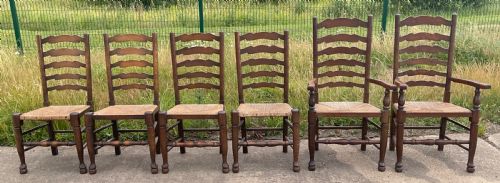
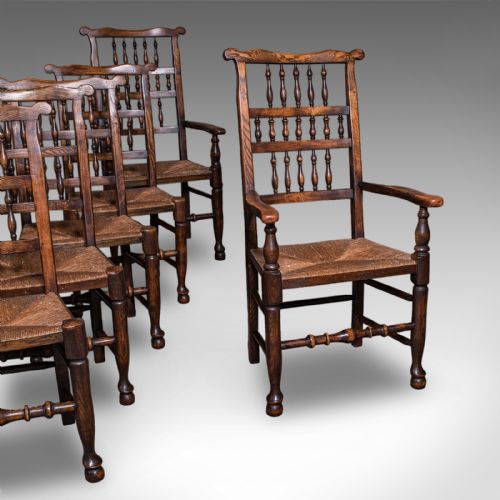
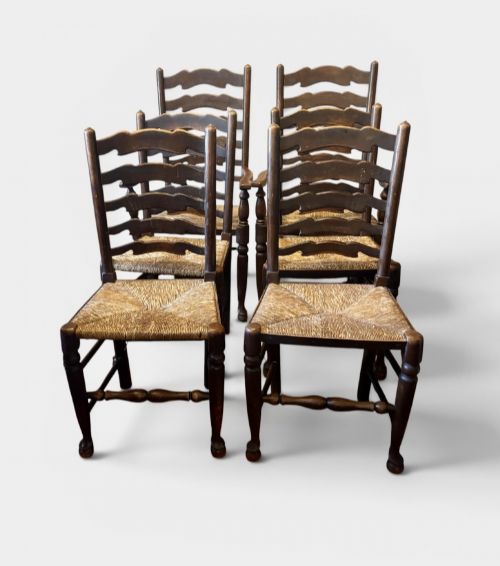


Six Ladderback Dining Chairs
Six ladderback dining chairs bring honest vernacular character to a dining table through rhythmic horizontal slats and sturdy traditional framing.
Six Ladderback Dining Chairs
Six ladderback dining chairs form a substantial matched or harmonised group for daily dining, featuring the characteristic horizontal slats that give the form its name. These sets draw upon regional English country traditions as well as continental vernacular styles.
The versions most commonly met across these listings combine sturdy timbers like oak, beech, elm, or ash with woven rush seats, reflecting rural woodworking traditions. You will encounter sets spanning the nineteenth century through the early twentieth century, including revival styles like Arts and Crafts and Chippendale.
A set of six provides enough seating for a standard family table while retaining the cohesive aesthetic of traditional joinery. The form bridges rustic farmhouse utility and refined period styling, depending on the timber and turning work chosen by the maker.
How they were made
Joiners built these chairs using native hardwoods such as oak, elm, beech, and ash, turning upright posts on a lathe and shaping horizontal slats by hand. Frameworks relied on mortise and tenon joinery to withstand daily use without metal fasteners.
Seats were typically woven from natural rush, though some examples feature timber boards, leather, or velvet pads. This combination of turned wooden frames and flexible woven seating allowed rural makers to produce resilient furniture from local materials.
Some sets turn up with wavy slats, reminding us that country joiners enjoyed adding a subtle flourish to everyday seating.
What varies in quality
The distinction between ordinary and superior examples lies in the grace of the slat shaping and the precision of the turnings. More refined sets show subtle tapering in the uprights and carefully graduated slats that fit the curve of the sitter's back.
The tightness and regularity of the rush weaving also mark the grade of the piece, alongside the choice of timberfigure in the main posts. Harlequin sets or assembled groups require a more careful eye to ensure visual harmony across the whole set.
Heals Antique Oak
The Six Ladderback Dining Chairs Glossary
- Ladderback
- A chair style characterised by horizontal wooden slats or rails between the vertical back posts. This design draws on centuries of traditional rural joinery.
- Rush seat
- A seating surface woven from dried marsh rushes around a wooden frame. It provides a resilient, traditional base found on many country chairs.
- Carver
- An armchair, traditionally placed at the head of a dining table, designed with armrests. These often accompany side chairs in larger dining sets.
- Vernacular
- Everyday furniture made by local craftsmen using regional materials, distinct from high-style urban cabinet making. These pieces prioritise functional utility and local tradition.
- Harlequin set
- A collection of chairs assembled to match in general style and era rather than originating from a single workshop. Such sets rely on shared proportions and materials for visual cohesion.
Six Ladderback Dining Chairs: Frequently Asked Questions
How do I care for rush seats?
Keep rush seats dry and clean them gently with a soft brush to remove dust from the natural fibres. Avoid excessive moisture, which can weaken the dried marsh grasses over time.
Applying occasional light humidity in very dry rooms helps prevent the rush from becoming brittle. With proper care, a tightly woven rush seat lasts for generations of regular dining use.
Are these chairs comfortable for long dinners?
Traditional ladderback chairs offer supportive upright posture due to their ergonomically curved horizontal slats. The flexible give of woven rush seats adds natural cushioning during extended seating.
While lacking modern upholstery padding, these chairs were designed for daily domestic comfort and long family meals. Adding loose squab cushions is a traditional way to adjust the height and softness.
Can I mix these with a modern table?
The clean architectural lines of ladderback slats pair naturally with modern wooden or metal dining tables. Their neutral timber tones bridge historical character and contemporary interior spaces.
Using antique chairs around a modern table grounds the room with texture and historical depth. The varied grain of oak, elm, and beech complements minimalist and rustic table designs alike.
How do I identify Edwardian ladderbacks?
Edwardian ladderbacks often reflect revival movements, incorporating lighter framing and refined turning work inspired by earlier Georgian or Arts and Crafts designs. These pieces frequently utilise beech or oak with crisp joinery.
Examining the wear patterns, timber preparation, and construction methods helps distinguish Edwardian craftsmanship from earlier nineteenth-century originals. Makers in this period balanced traditional country forms with domestic dining trends.