
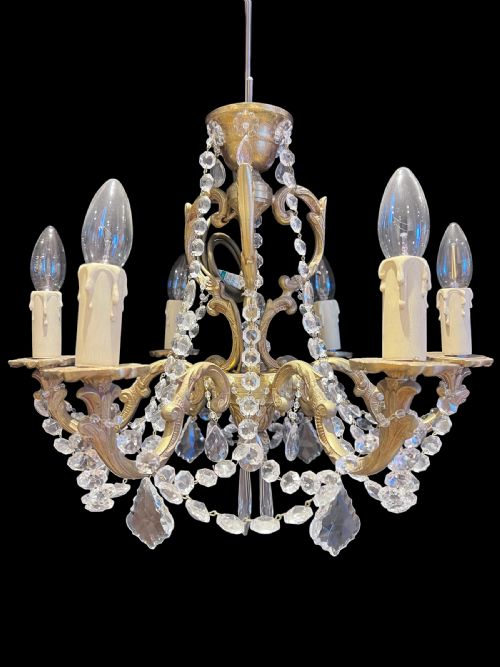
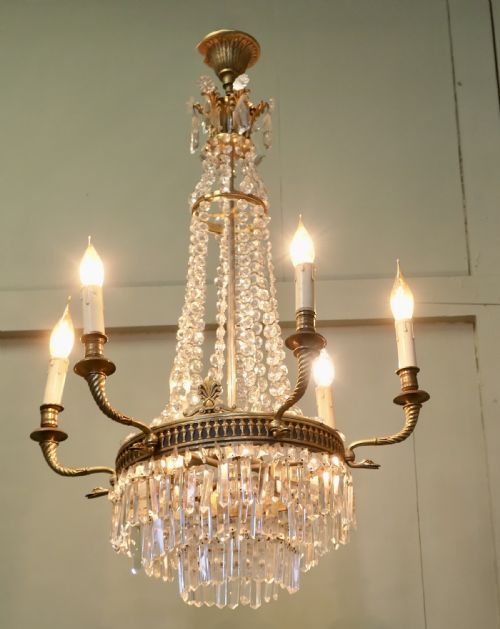
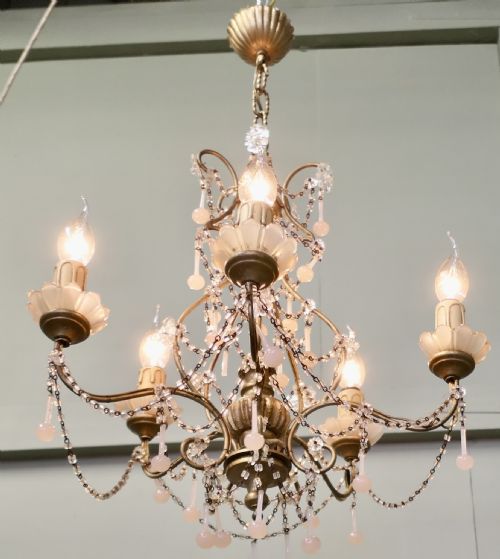
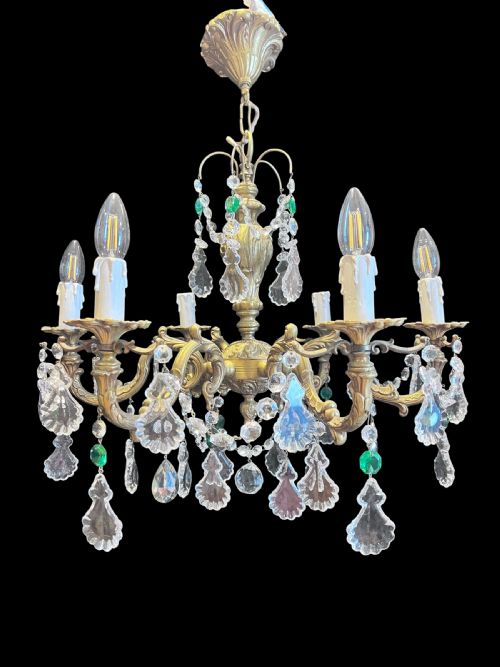


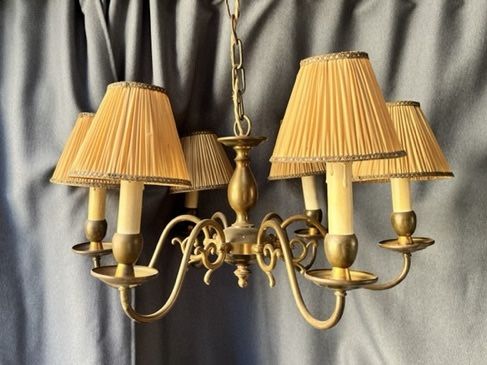

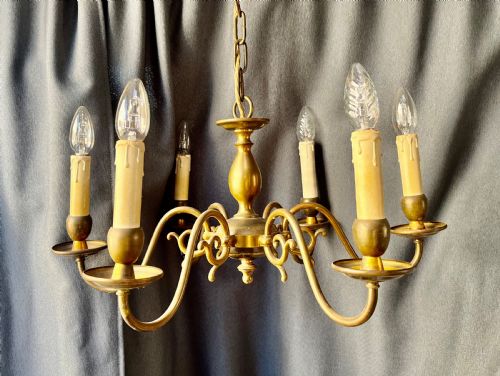
Six Branch Chandelier
A six branch chandelier brings striking illumination and period character to a room, offering a balanced spread of light from six distinct arms.
Six Branch Chandelier
A six branch chandelier offers a balanced spread of illumination across six arms, making it a prominent ceiling fixture for larger spaces. When you search for a six branch chandelier, you encounter a variety of regional interpretations ranging from French styles to Dutch designs.
The selections span several periods, including the Victorian era, the nineteenth century, and the early decades of the twentieth century. Forms include traditional tent and waterfall designs, cage chandeliers, and billiard lights alongside ceiling pendants.
French designs dominate the selection, often featuring neoclassical, empire, or art deco influences with crystal drops and gilded bronze. Dutch revival and Baroque styles also appear, alongside English giltwood and gilt brass pieces.
Materials and construction
Metals form the structural backbone of these fixtures, with brass, gilt brass, ormolu, gilded bronze, and gilded metal providing the durable framework for the arms. Toleware and giltwood also appear in specific stylistic traditions.
Glass and crystal elements are integrated extensively, ranging from clear and coloured crystals to cut glass drops, waterfall configurations, and amethyst glass accents. Ceramic components occasionally supplement the metal and glass structures.
Materials recorded across the inventory include pink Venetian glass, amethyst glass, fabric, and giltwood.
Assessing quality in construction and detail
The refinement of the casting and chasing on bronze, brass, and ormolu mounts distinguishes standard production from superior examples. Crisp detailing in the metalwork shows the hand of a skilled maker.
The integration and clarity of the crystal or cut glass elements dictate the visual impact of the piece. High quality fittings utilise precisely cut drops and coherent glass arrangements that refract light evenly.
The Six Branch Chandelier Glossary
- Ormolu
- Gilded bronze produced by applying a mercury and gold amalgam to a bronze base, creating a durable golden finish.
- Toleware
- Enamelled and painted sheet metal used to decorative effect on body elements and candle arms.
- Girandole
- A branched candleholder or light fixture designed to be mounted on a wall or used as a table lamp.
- Tent and waterfall
- A chandelier configuration where strings of crystals form an upper tent shape above a cascading waterfall of glass drops.
- Cage chandelier
- A style where the metal framework resembles an open cage enclosing the central stem and lighting components.
Six Branch Chandelier: Frequently Asked Questions
How do I clean a crystal chandelier?
Cleaning requires a gentle solution applied by hand to each individual crystal and metal arm. Care must be taken around delicate wiring and historical finishes.
Using specialised glass cleaner on a cloth rather than spraying directly protects the surrounding metalwork and structural joints from moisture damage.
Can these chandeliers be rewired for modern use?
Most antique lighting can be adapted to meet contemporary electrical standards by a qualified professional. Rewiring ensures safe operation in modern homes.
Original sockets and wiring are often replaced while preserving the exterior metal components and historical appearance of the fixture.
How high should I hang my chandelier?
Placement depends on the room function and ceiling height, ensuring adequate clearance for movement underneath. Dining tables typically allow for lower placement than open walkways.
Standard guidelines suggest maintaining clear space beneath the lowest crystal drop to prevent obstruction and balance the visual scale of the room.
What is the difference between French and Dutch styles?
French designs often incorporate neoclassical or empire motifs with elaborate crystal drops and gilded bronze. These pieces emphasise decorative elegance and complex framing.
Dutch styles tend to focus on robust brass construction with simpler, sweeping arms rooted in baroque or revival traditions.