
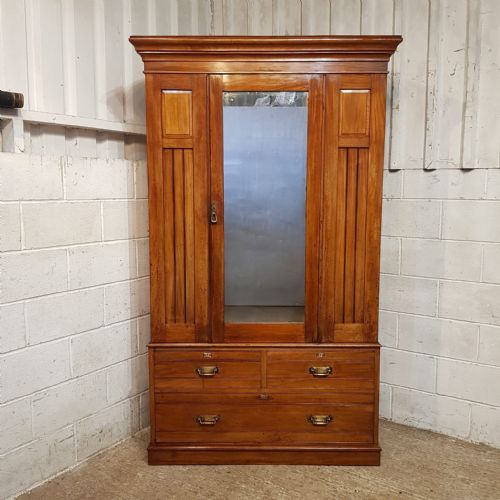
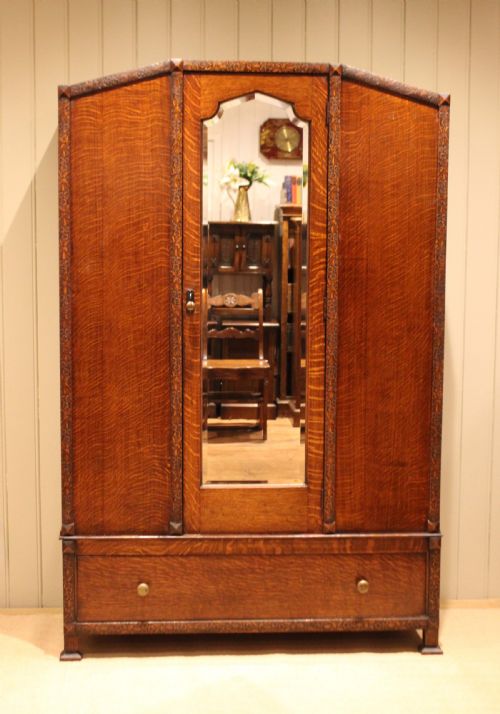
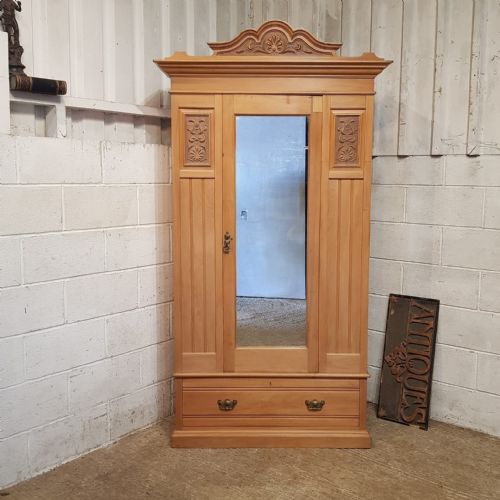
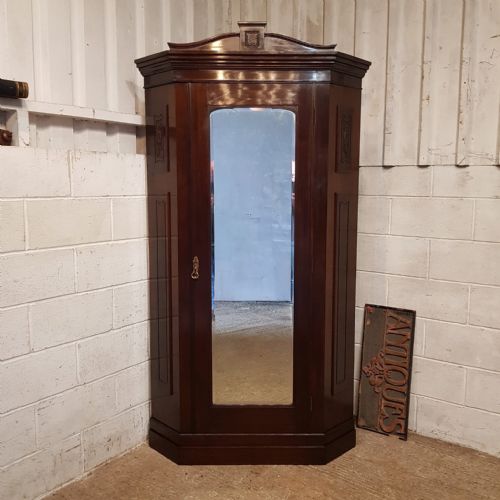


Single Door Armoire Mirror
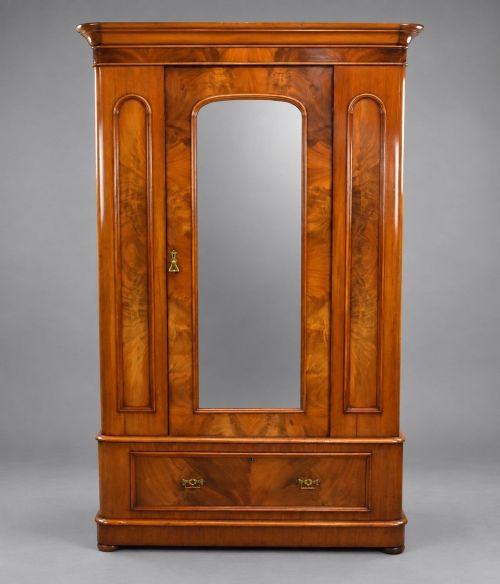
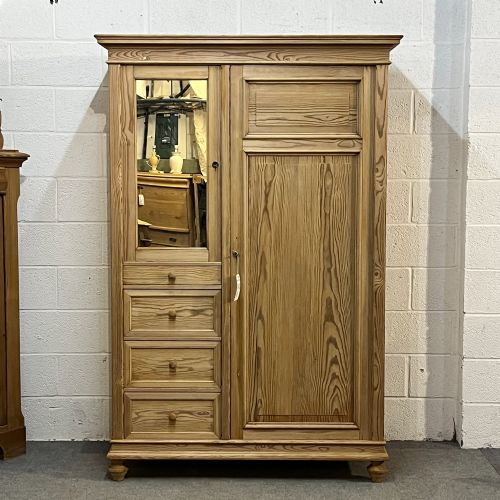
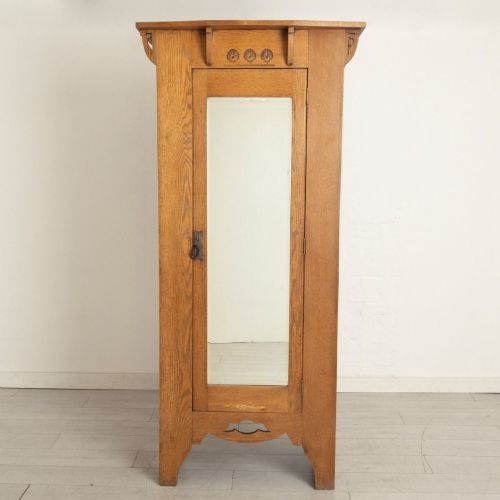
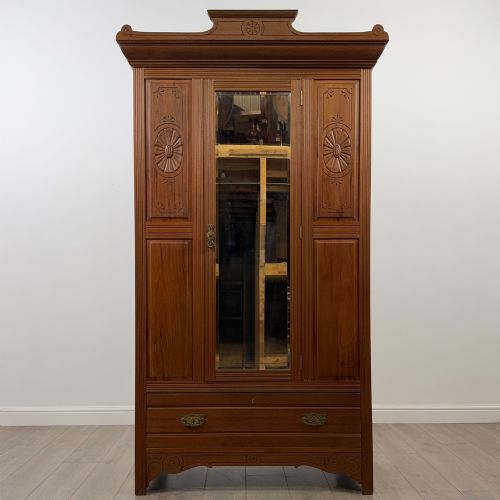
When you search for single door armoire mirror, you find tall storage pieces combining timber frames with full-length glass panels to open up compact rooms.
Single Door Armoire Mirror
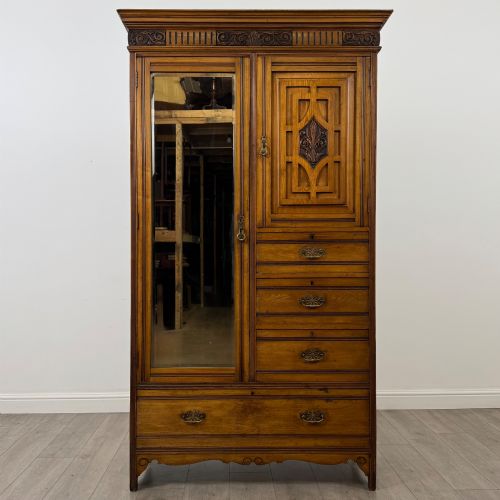
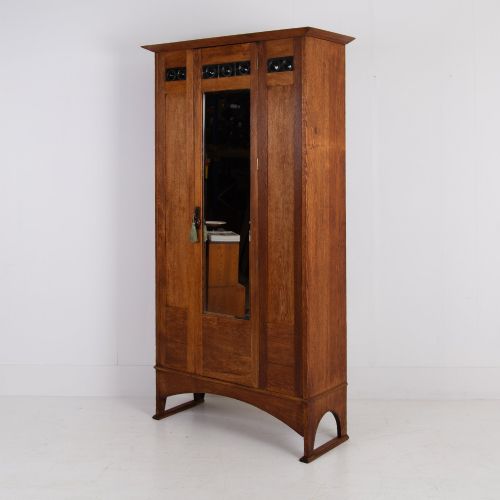
A single door armoire mirror combines tall vertical storage with a reflective glass panel fitted into the main door, serving bedroom and hallway spaces alike. These pieces appear frequently in Victorian, Edwardian, and early twentieth-century formats.
The selection ranges from compact hall wardrobes to larger compactum styles featuring fitted drawers and internal hanging space. Buyers encounter regional British designs alongside continental French interpretations.
Makers utilised various timbers to suit different domestic interiors, from simple pine for utilitarian rooms to figured walnut and mahogany for principal chambers.
Materials and construction methods
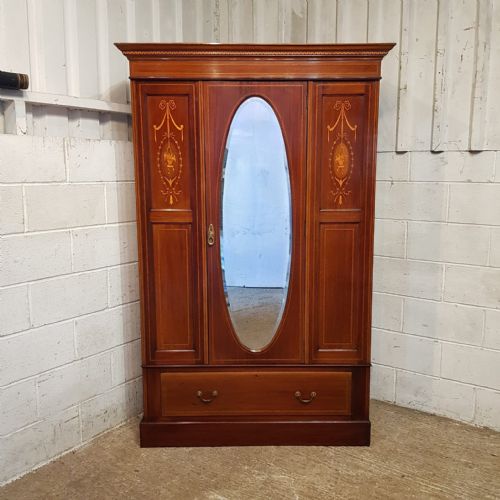
Carpenters constructed these wardrobes using solid and veneered hardwoods such as oak, mahogany, walnut, and ash, alongside softer pine and ash for utility pieces. Timber panels were frequently matched or inlaid with marquetry details.
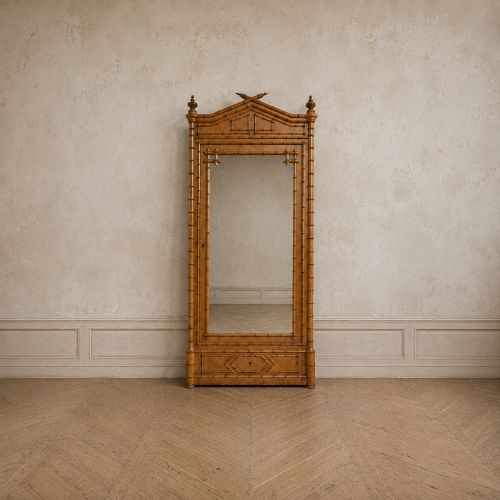
Glass mirrors were bevelled and set securely into door frames, sometimes accompanied by brass hinges, handles, and hanging hooks. French examples often incorporated painted finishes or faux bamboo turnings.
Several pieces are designated specifically as child's or hall wardrobes, serving compact garments in narrow Victorian hallways.
Factors separating different examples
The selection of timber grain, such as figured walnut, bird's-eye maple, or figured mahogany, marks out more ambitious commissions from standard utility cupboards. Cabinetmakers demonstrated skill through precise dovetail joints in internal drawers and clean marquetry inlay.
The clarity and thickness of the original mirrored glass, together with the proportion of the single door frame, dictate the visual balance of the piece. Well-preserved brass hardware and original waxed surfaces also distinguish better-surviving items.
Early Heals·Gillows of Lancaster
The Single Door Armoire Mirror Glossary
- Compactum
- A wardrobe or armoire featuring internal compartments, shelves, and drawers alongside hanging space. This design maximises storage within a single door footprint.
- Marquetry
- The art of applying small pieces of veneer to a structure to form decorative patterns. Craftsmen used various contrasting timbers to create geometric or floral motifs.
- Faux bamboo
- Wood turned and carved to imitate the segmented stalks of natural bamboo. This decorative technique appeared frequently on continental furniture.
- Bevelled glass
- Mirror glass with edges cut and polished at an acute angle. This traditional finish adds depth and catches light differently than flat-cut glass.
- Satinwood
- A pale, hard timber with a natural sheen, prized for fine furniture in the eighteenth and nineteenth centuries. It takes a smooth polish and contrasts well with darker woods.
Single Door Armoire Mirror: Frequently Asked Questions
How do I fit a single door wardrobe into a small bedroom?
A single door footprint takes up minimal wall space compared to double-door wardrobes. The mirrored door also reflects natural light, making compact rooms feel larger.
Measure your ceiling height and floor clearance carefully before placing the piece near windows or beds.
What is the difference between an armoire and a wardrobe?
Armoire traditionally refers to a continental European cupboard, while wardrobe is the common British term for similar hanging furniture. Both terms describe tall timber storage units.
In practice, pieces labelled as armoires often feature French styling, painted finishes, or brass detailing.
How do I clean and maintain the wood and mirror?
Dust timber surfaces regularly with a soft dry cloth and apply bees wax occasionally to nourish the grain. Avoid chemical sprays that can strip older polished finishes.
Clean the glass panel with a mild glass cleaner, applying it to the cloth rather than spraying directly onto the mirror to protect the wooden frame.
Can I dismantle these wardrobes for moving?
Many older wardrobes were built as single solid units designed not to be taken apart. Check the construction at the joints and cornices to see if pegs or screws allow disassembly.
If the piece is fixed together with glued joints, employ professional furniture movers to transport it safely without straining the frame.