
Silvered Candle Holders
Silvered candle holders encompass polished metal fixtures designed to support tapers, bringing illumination and decorative presence to a room.
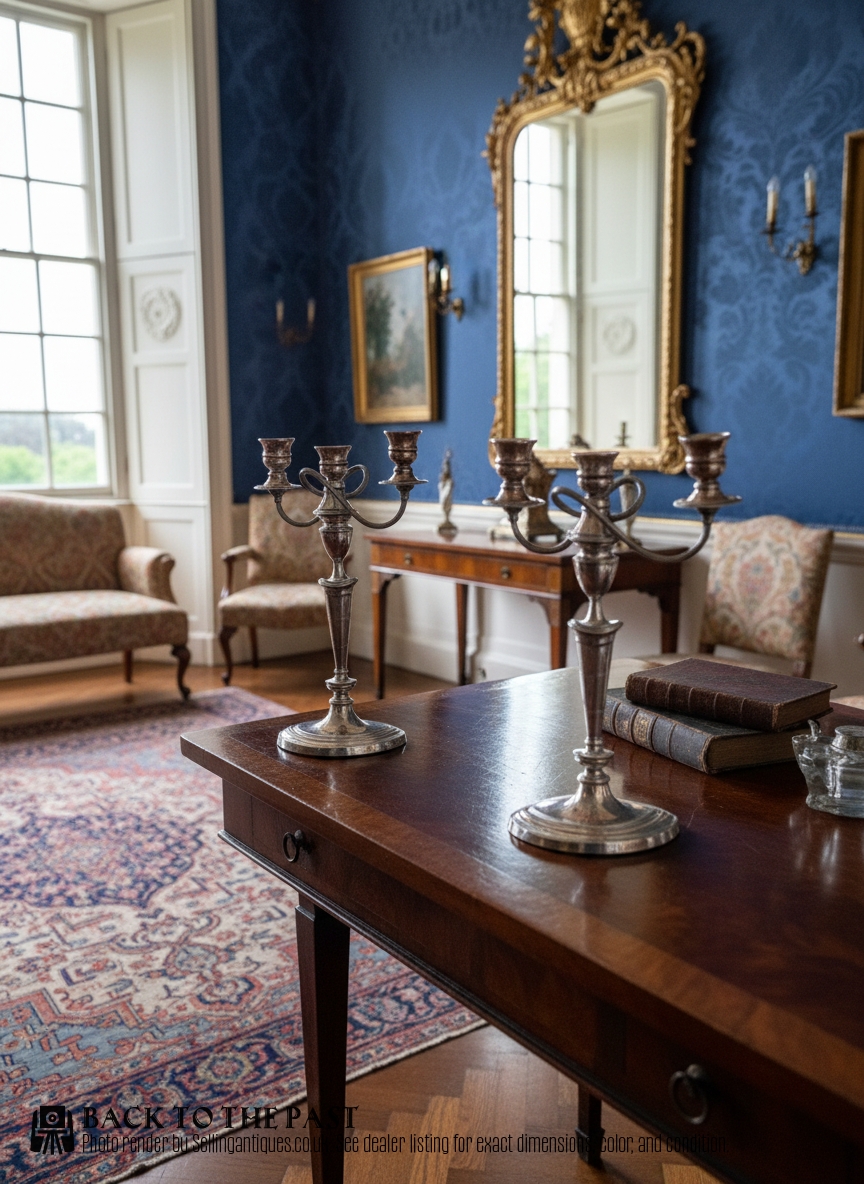
Silvered Candle Holders
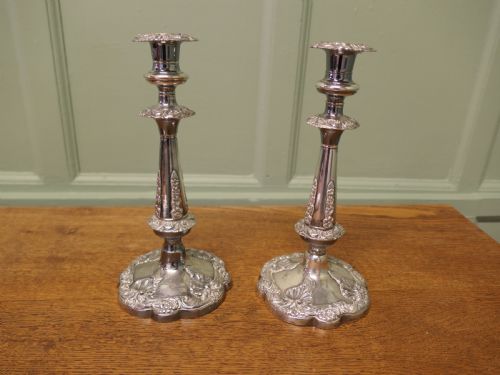
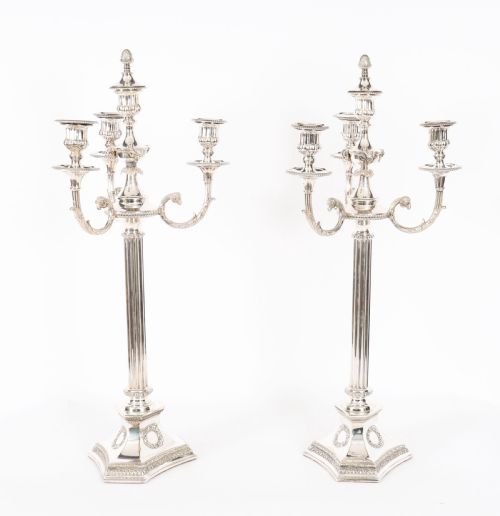
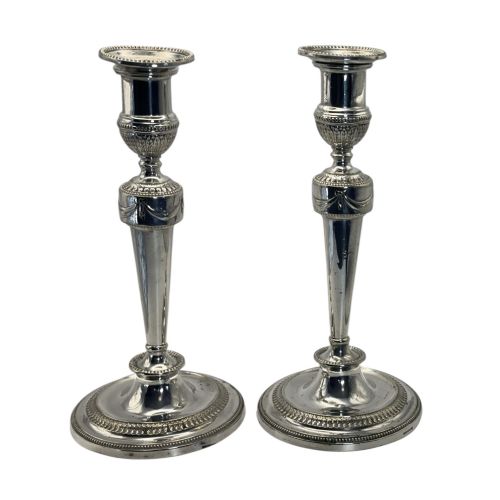
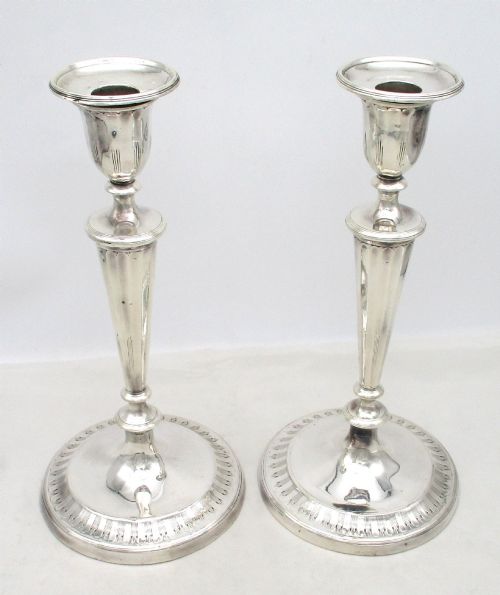
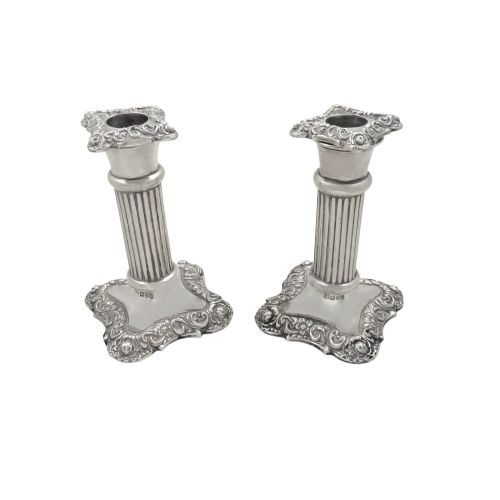
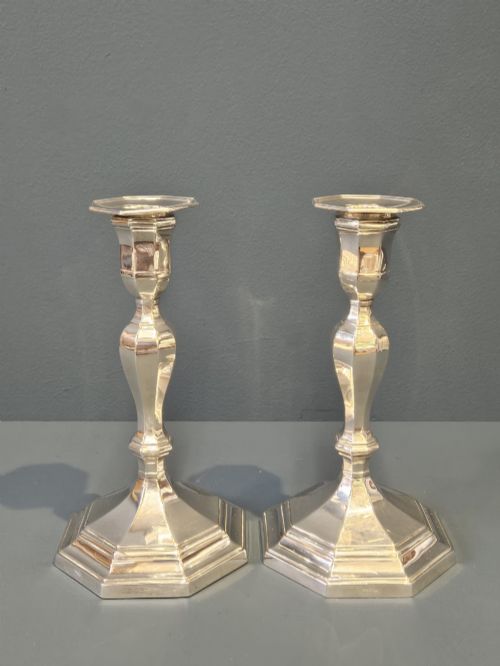
Silvered candle holders appear primarily as candlesticks and candelabras spanning the eighteenth century through the mid twentieth century. Pieces from the Victorian and Edwardian eras dominate, alongside examples from the George V period and the nineteenth century.
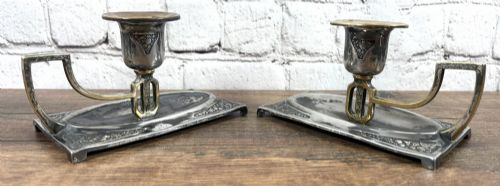
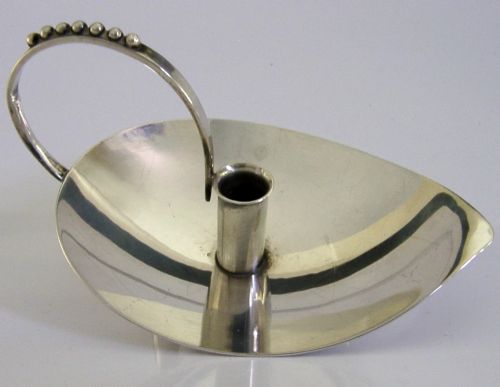
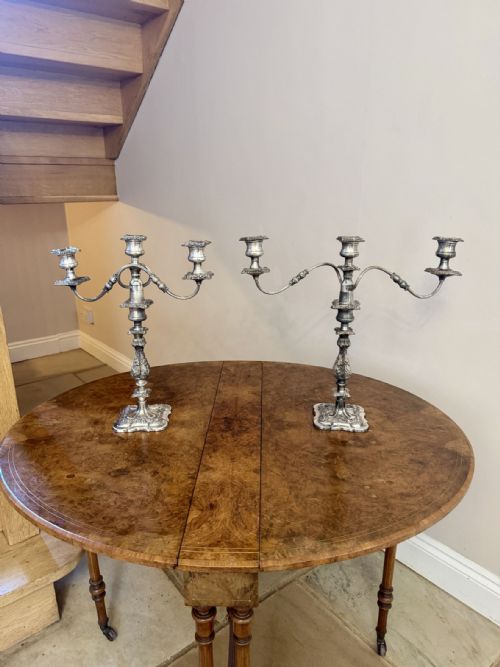
Buyers encounter single sticks, pairs, and larger suites configured with multiple branches for branching light. Forms range from standard table candlesticks and chambersticks to telescopic designs and wall sconces.
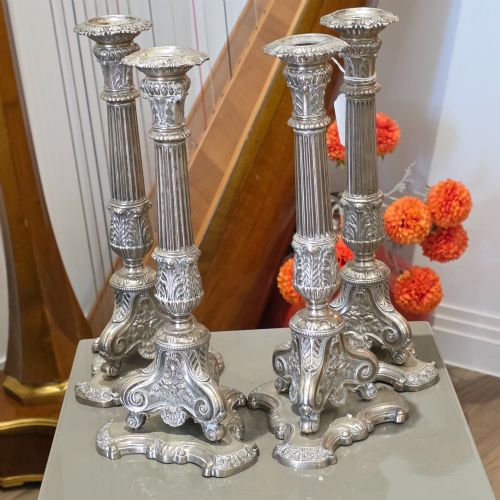
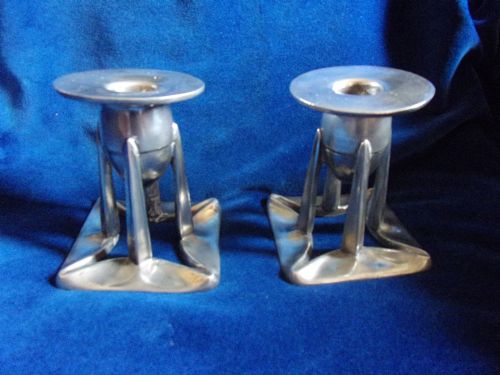
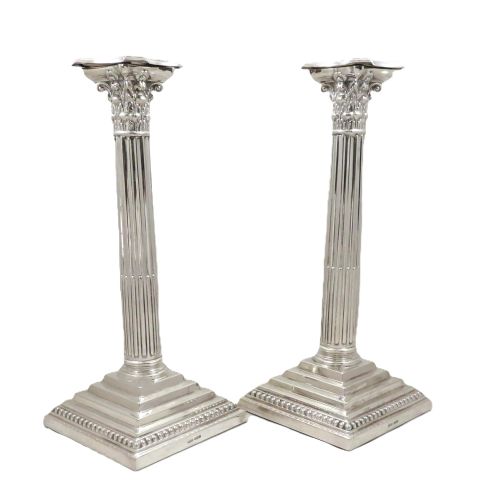
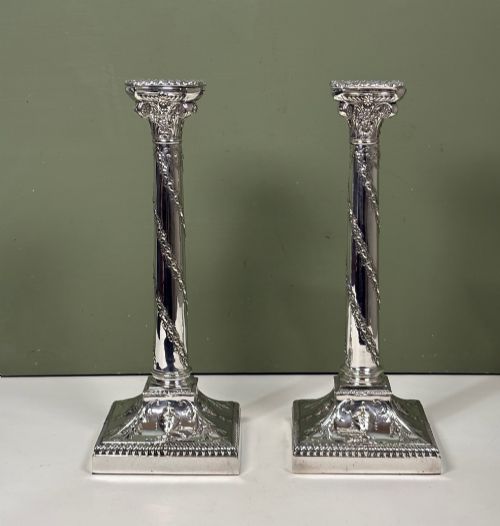
Stylistic influences trace classical roots through Neoclassical columns, Georgian restraint, Rococo curves, and the distinct organic lines of Art Nouveau and Arts and Crafts movements.
Craftsmanship and weight
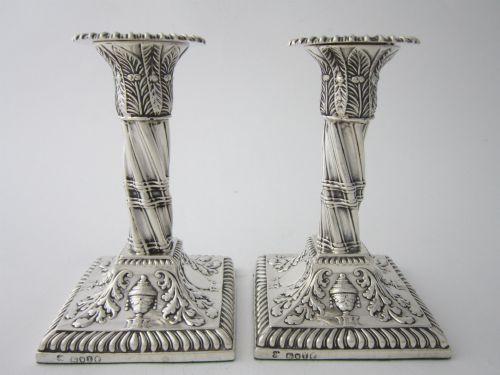
The standard of execution rests in the crispness of casting detail, particularly on ornate Rococo or figural examples where chasing defines the surface relief. Substantial weight in the base indicates robust construction rather than thin plating over lightweight cores.
The integrity of the surface finish dictates value, separating items retaining intact silver layers from those showing base metal bleed-through. Maker marks and hallmarks provide definitive evidence of origin and metal purity.
Listings span the eighteenth century, the Victorian era, the Edwardian period, and mid-century design, utilising sterling silver, silver plate, pewter, and copper.
Archibald Knox·Geoffrey Bellam·Mappin & Webb·Birks·Garrard and Co·Matthew Boulton·WMF·James Fenton
The Silvered Candle Holders Glossary
- Candlestick
- A portable device with a single socket designed to hold a wax taper upright. They rest on flat surfaces and vary from short dwarf versions to tall floor models.
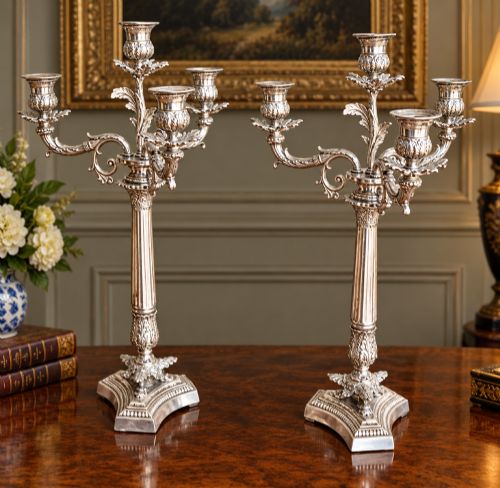
- Candelabra
- A branched lighting fixture holding multiple candles upon a central stem. These branch into arms numbering between two and five lights.
- Chamberstick
- A low candle holder featuring a flat pan to catch dripping wax and a loop handle for carrying through a house at night. They frequently incorporate a conical snuffer.
- Old Sheffield Plate
- A composite material formed by fusing a thin sheet of silver to a thicker copper ingot before rolling. This technique produces distinct edge seams visible upon close examination.
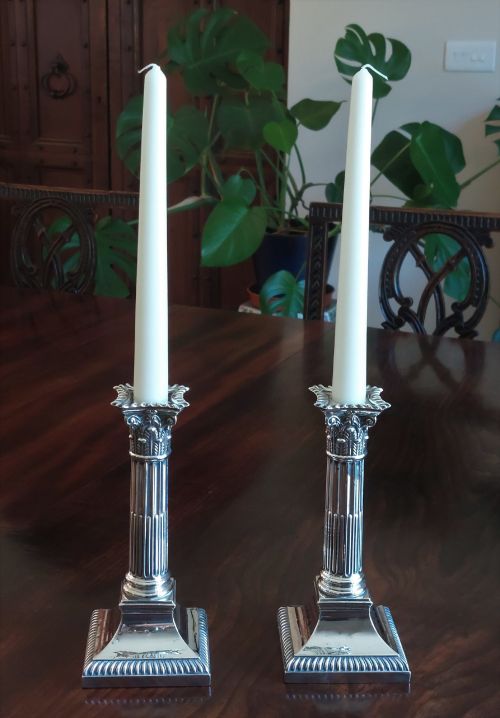
- Corinthian Column
- A classical architectural order replicated in candlestick stems featuring ornate acanthus leaf capitals. The fluted shafts mirror ancient stone columns.
Silvered Candle Holders: Frequently Asked Questions
How do I clean silver plated candle holders?
Maintenance requires a soft cloth and a gentle silver cream formulated to protect thin plating layers. Avoid abrasive cloths that strip the metallic surface.
Regular dusting prevents tarnish buildup in recessed chasing and embossed decorative motifs on older pieces.
What is the difference between Sheffield plate and electroplate?
Old Sheffield plate involves mechanically fusing silver and copper sheets together under heat before shaping. This method creates a durable composite material unique to earlier manufacturing.
Electroplate relies on an electrical current to deposit a thin layer of silver onto a base metal substrate, a process introduced during the nineteenth century.
How do I date antique silver candle holders?
Hallmarks stamped into sterling silver items reveal exact assay office locations and specific year ciphers. Maker marks and stylistic cues assist in dating unmarked silver plated items.
Construction seams and weight distribution further indicate whether a piece originates from the Georgian, Victorian, or Edwardian eras.
Can I use modern candles in antique holders?
Standard modern tapers often vary in base diameter compared to historical sockets. Tapers may require slight trimming at the base to fit securely.
Using dripless wax minimises the risk of hot wax pooling against delicate silvered surfaces during extended burning.