






Silvered Brass Table Lamp
These silvered brass table lamps bring period character to a room, ranging from Victorian columns to maritime gimbals.
Silvered Brass Table Lamp
A silvered brass table lamp combines the warmth of metal bases with plated finishes, offering illumination suited to period interiors. When searching for a silvered brass table lamp, buyers encounter lighting forms that span the Victorian, Edwardian, and Art Deco eras.
The selection here includes converted oil lamps, Corinthian columns, and adjustable desk lamps alongside maritime gimbal lights. Many pieces utilise silver plating, nickel, or brass, reflecting the manufacturing methods of their respective decades.
Construction and materials
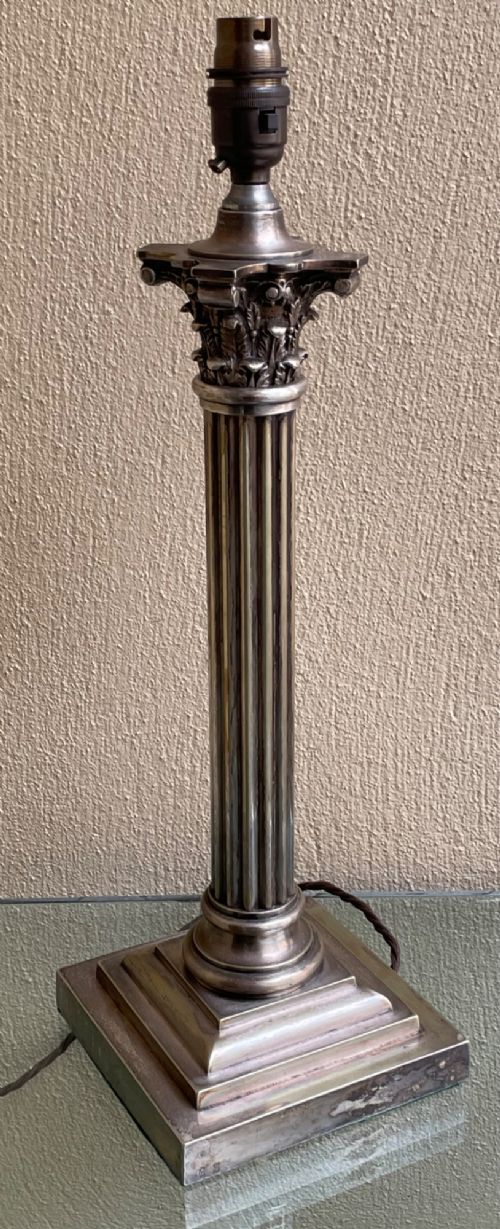
Makers shaped these lamps from brass, copper, and base metal, frequently applying silver or nickel plating to achieve a reflective surface. Surface enrichment involved intricate metalwork, cast architectural details such as Corinthian capitals, and occasional satin glass elements.
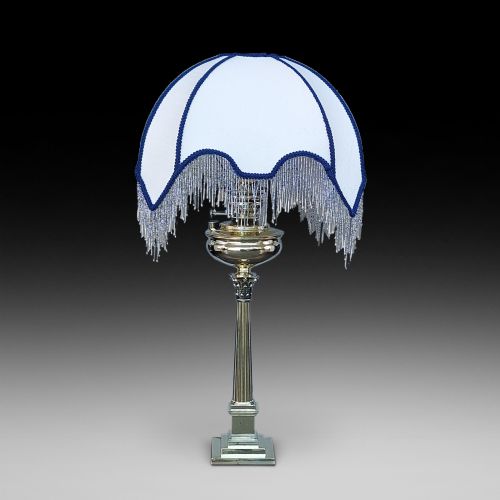
Conversion from earlier oil or paraffin systems to electricity accounts for the wiring seen in many surviving examples. Structural stability often relied on weighted metal bases, stands, or gimbal mechanisms designed for marine environments.
Listings feature items spanning the 1850s to the 1920s, employing brass, nickel, copper, and glass across various lighting forms.
Assessing quality
Distinction in these pieces rests on the crispness of cast ornamentation and the integrity of the original plating over the underlying brass or metal. Superior examples retain defined architectural details on columns and robust mechanisms on adjustable or gimballed fittings.
The presence of maker marks, stamps, or integrated components like original burners and glass fonts elevates an item above standard production. Proportion and balance across multi-branch candelabra or tall column lamps further separate standard utility lighting from finer workshop output.
The Silvered Brass Table Lamp Glossary
- Corinthian column
- A classical column form featuring ornate acanthus leaves at the top, frequently utilised for Victorian and Edwardian lamp bases.
- Gimbal lamp
- A pivoted ring mounting that keeps a lamp level on a moving surface, common in maritime contexts.
- Peg oil lamp
- A small oil lamp fitted with a peg base designed to drop directly into a separate candlestick or stand.
- Duplex burner
- A double-wick burner system developed in the Victorian era to produce a brighter flame for paraffin lighting.
- Silver plate
- A thin layer of silver applied over a base metal such as brass or copper to give the appearance of solid silver.
Silvered Brass Table Lamp: Frequently Asked Questions
Are these lamps converted from oil?
Many traditional table lamps and column designs started as oil or paraffin burners before later conversion to electricity. This evolution preserves the original metal bodies while updating the internal fittings for modern use.
Collectors often find examples retaining remnants of their burner mechanisms alongside contemporary wiring. Such adaptations allow period lighting to function safely in domestic settings.
How do I identify a maritime lamp?
Maritime lamps typically feature gimbal rings and weighted brass or nickel-plated construction designed to counteract movement on ships. Their utilitarian yet robust build distinguishes them from domestic parlour lighting.
These pieces often display stamps or indicators pointing to naval or nautical origins. The presence of swivel mountings remains the primary visual marker of this group.
What periods do these lamps cover?
The available lighting spans from the mid-nineteenth century through the Edwardian period and into the 1920s. Victorian pieces often showcase heavy Corinthian columns or elaborate silver plating.
Later Edwardian and 1920s examples introduce adjustable desk forms and French candelabra styles. Each era utilises distinct plating techniques and decorative motifs.
How do I care for silver-plated brass?
Maintaining plated metal requires gentle dusting and the avoidance of harsh abrasive cleaners that can wear away the thin silver layer. Soft cloths preserve the existing patina without stripping the historic finish.
Storing pieces in stable humidity environments prevents accelerated tarnishing of the brass beneath. Regular light cleaning maintains the reflective quality of the metal.