



Silver Walnut Box
A silver walnut box combines rich timber and precious metal to house the treasures of a dressing table or writing desk.
Silver Walnut Box
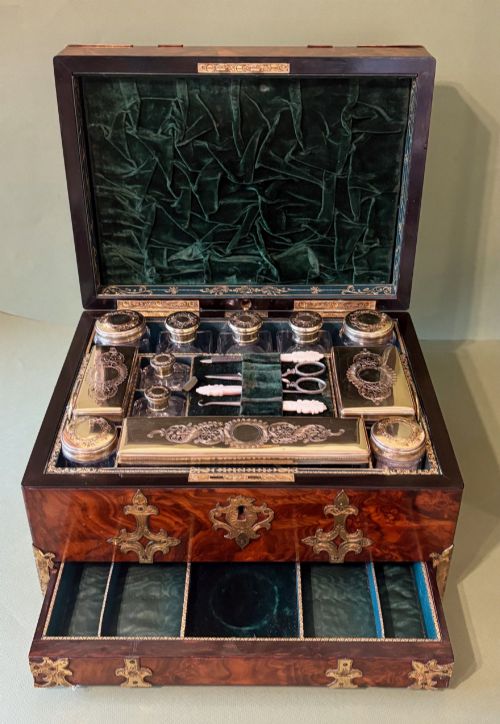
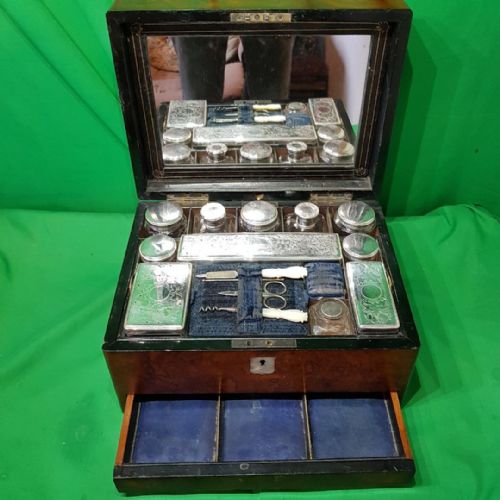
A silver walnut box is typically encountered as a Victorian travelling set, dressing case, vanity box, or jewellery cabinet. These pieces frequently utilise burr walnut for its striking grain patterns, complemented by silver or silvered metal mounts, escutcheons, and internal fittings.
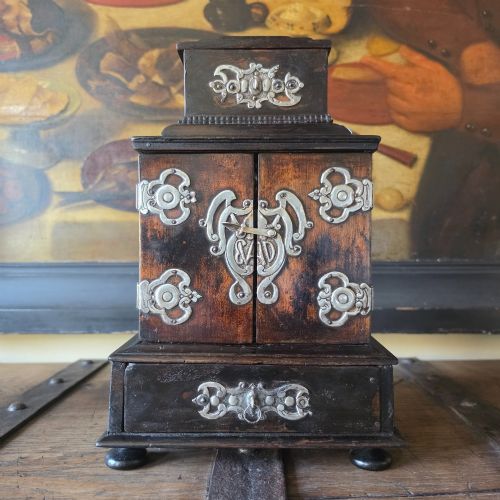
Beyond the predominant Victorian examples, the category extends to earlier forms including George II solid red walnut chests and 18th century jewelery cabinets. Formats range from fitted cutlery canteens and knife boxes to compact jewellery boxes and chest-on-stand configurations.
How they were made
Makers fashioned these pieces from walnut and burr walnut timber, often incorporating brass for structural binding, locks, and handles. Interiors were lined with velvet and fitted with glass bottles and jars featuring silver lids.
Construction techniques involved careful veneer selection to display the distinctive swirling patterns of burr walnut across the lid and front panels. Metal fittings were meticulously embedded flush into the timber surfaces to withstand regular travel and handling.
Silver Walnut Box Retail Price Guide 2026
Typical asking prices for silver walnut box among the pieces listed under this phrase on Sellingantiques today, from the lower quarter to the upper quarter. They describe what is for sale here now, not the wider market.
Listings span from the 18th century through the Victorian era to 1910, incorporating materials such as silver, walnut, burr walnut, glass, velvet, brass, and oak.
What varies in quality
Quality rests upon the selection and matching of the walnut timber veneers, particularly the richness of the burr figures across the primary surfaces. Superior examples display seamless exterior joinery and substantial brass binding.
The sophistication of the internal fitments distinguishes finer pieces, notably the completeness of the silver-lidded glass jars, velvet-lined compartments, and working locks with original keys. The presence of identifiable maker signatures adds further distinction to the execution.
Parkins and Gotto
The Silver Walnut Box Glossary
- Burr walnut
- A prized timber harvested from growth excrescences on walnut trees, yielding highly decorative and swirling grain patterns. It was extensively utilised by cabinetmakers for high-end Victorian dressing cases.
- Dressing case
- A fitted portable box designed to hold grooming implements, cosmetics, and jewellery during travel. These interiors typically organise glass jars with silver tops and velvet-lined compartments.
- Escutcheon
- A protective metal plate surrounding a keyhole, usually fashioned from brass or silver. It prevents the surrounding walnut timber from sustaining damage when inserting the key.
- Canteen
- A fitted box or chest specifically constructed to store and transport cutlery or silverware. Examples appear in walnut and oak formats from the Georgian and Edwardian periods.
Silver Walnut Box: Frequently Asked Questions
What is a silver walnut box?
A silver walnut box is a portable container or cabinet constructed from walnut timber and accented with silver mounts, handles, or internal fittings. They most commonly appear as Victorian dressing cases, vanity boxes, and jewellery cabinets.
These pieces were designed to hold personal valuables, grooming bottles, and trinkets. The combination of figured wood and precious metal reflects the high standards of nineteenth-century craftsmanship.
How were these boxes used?
These boxes served as portable storage for wealthy travellers and ladies of the household. They organised grooming accessories, cosmetics, and jewellery while on journeys.
Inside, compartments held glass bottles with silver lids, alongside velvet-lined trays for rings and brooches. Many remained on dressing tables as permanent fixtures for daily use.
How do I date a walnut box?
Dating relies on observing the overall style, construction methods, and materials present in the piece. Victorian examples often feature burr walnut veneers and extensive brass binding, while 18th century pieces display simpler lines and solid red walnut.
Internal fittings and locks also provide clues. Machine-cut screws and velvet linings typically point towards the nineteenth century, whereas earlier pieces show hand-cut joinery.
How do I care for burr walnut?
Burr walnut requires stable humidity and protection from direct sunlight to prevent the timber and delicate veneers from drying out. Dust the surface gently with a dry, soft cloth.
Avoid using modern silicone sprays or harsh chemical polishes. Occasional application of appropriate wax preserves the natural lustre of the wood.