




Silver Topped Spirit Bottles
Silver topped spirit bottles combine useful barware with metalwork mounts from the Victorian and Edwardian eras.
Silver Topped Spirit Bottles
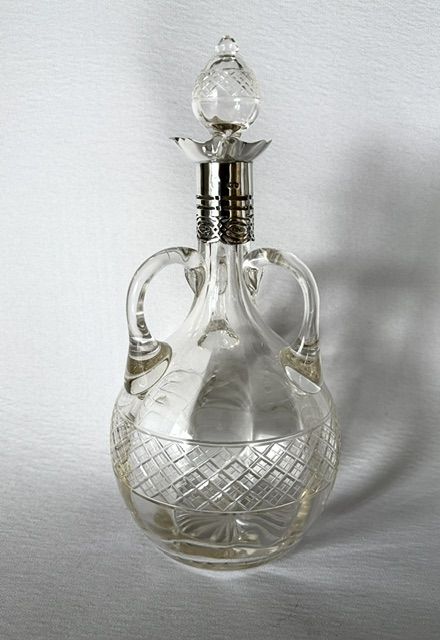
Silver topped spirit bottles and related barware encompass decanters, flasks, and whisky noggins designed for serving or carrying liquor. These pieces predominantly date from the Victorian, Edwardian, and George V periods, reflecting the social drinking habits of the nineteenth and early twentieth centuries.
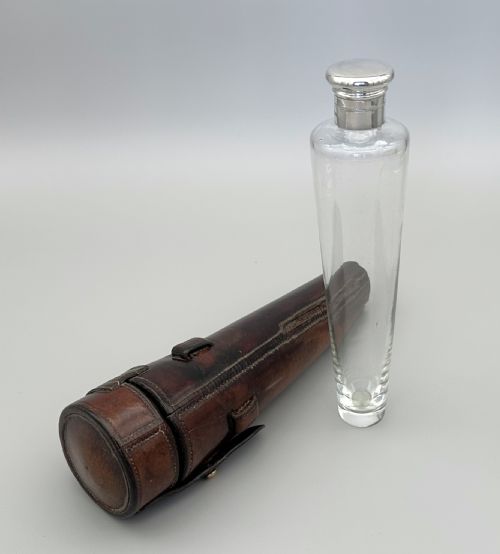
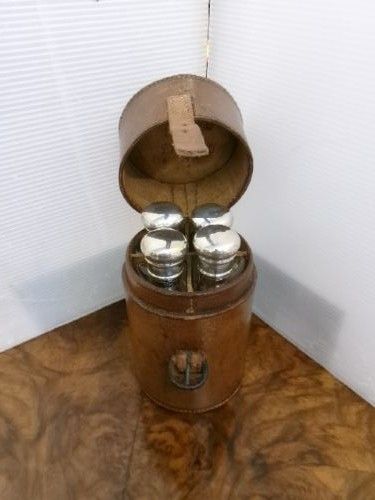
The glassware varies considerably in form, ranging from cut glass decanters and miniature champagne bottles to hand-blown vessels in Bristol blue, amethyst, and green glass. Some examples feature leather cases housing multiple flasks, while others incorporate silver labels and collars.
Makers such as Hukin & Heath appear in the London-made pieces, demonstrating the high standard of metalwork applied to domestic glassware during the late nineteenth century.
Materials and construction
The bodies of these vessels are formed from clear cut glass or coloured glass, including cobalt and amethyst variants, occasionally incorporating hand-blown techniques. Metal mounts in sterling silver or silver plate are fitted closely around the necks or used as complete collars.
Leather cases are constructed to house specific flask sets securely, matching the contours of the glass bottles within them. Associated components include silver whisky noggins accompanied by small hanging labels.
Silver Topped Spirit Bottles Retail Price Guide 2026
Typical asking prices for silver topped spirit bottles among the pieces listed under this phrase on Sellingantiques today, from the lower quarter to the upper quarter. They describe what is for sale here now, not the wider market.
Listings feature items spanning the Victorian and Edwardian eras, utilising sterling silver, leather cases, and coloured glass.
Assessing quality and craftsmanship
The standard of the piece often rests on the weight and clarity of the glass, alongside the crispness of the cut or the depth of the coloured hue. Superior examples show precise fitting between the silver mount and the glass neck without excess adhesive or movement.
Completeness dictates much of the standing within this category, particularly when original fitted leather cases, matching spirit labels, or associated tots remain intact with the bottles.
Hukin & Heath
The Silver Topped Spirit Bottles Glossary
- Whisky noggin
- A small spirit decanter or jug, typically featuring a silver collar and handle, designed for an individual serving of whisky.
- Cut glass
- Glassware shaped and decorated by abrasive wheel cutting to create geometric facets that catch the light.
- Silver plate
- A base metal substrate covered with a thin layer of silver, utilised for mounts and collars on various bottles.
- Bristol blue
- A deep cobalt blue glass traditionally produced in the Bristol area during the eighteenth and nineteenth centuries.
- Sterling silver
- A silver alloy containing a fixed proportion of pure silver and other metals, standard for hallmarked bottle mounts.
Silver Topped Spirit Bottles: Frequently Asked Questions
What are silver topped spirit bottles?
These are glass decanters, flasks, and noggins fitted with sterling silver or silver-plated mounts on their necks or stoppers.
They were produced primarily during the Victorian and Edwardian eras for domestic entertaining or personal travel use.
How were whisky noggins used?
Whisky noggins served as individual measures of spirits on dining and drawing room tables, often accompanied by a small matching label.
They allowed hosts to pour a single drink without passing a heavy full-sized decanter.
How do I care for antique glass?
Wash the glass gently by hand in warm soapy water, avoiding harsh abrasives that might scratch the surface or damage the silver mounts.
Keep silver polished with a suitable cloth while ensuring polish does not come into contact with the glass interior.
How can I tell the period of a bottle?
Examine the style of the silver mounts, the depth and colour of the glass, and any hallmarks stamped into the metal.
Victorian pieces often feature deep-cut crystal or coloured glass, whilst Edwardian examples tend toward lighter mounts and refined proportions.