




Silver Topped Smelling Bottle
A silver topped smelling bottle brings miniature Victorian and Edwardian glasswork to your palm, offering a tactile piece of nineteenth-century dressing table history.
Silver Topped Smelling Bottle
When you search for a silver topped smelling bottle, you are looking at small personal flasks designed to hold volatile salts for reviving the faint or weary. These pocket accessories date primarily from the Victorian and Edwardian eras, spanning the mid-nineteenth century up to the reign of George V.
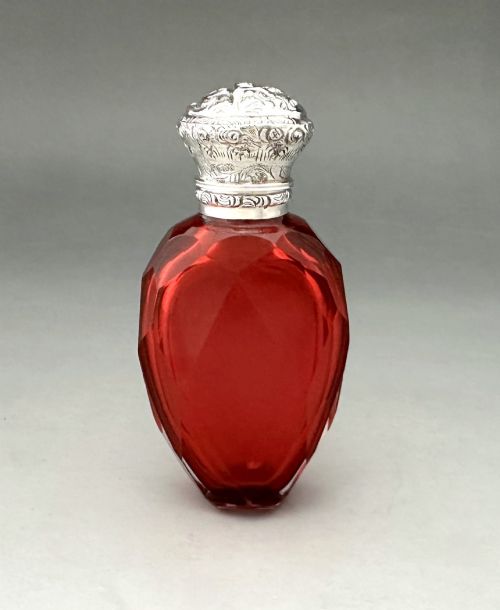
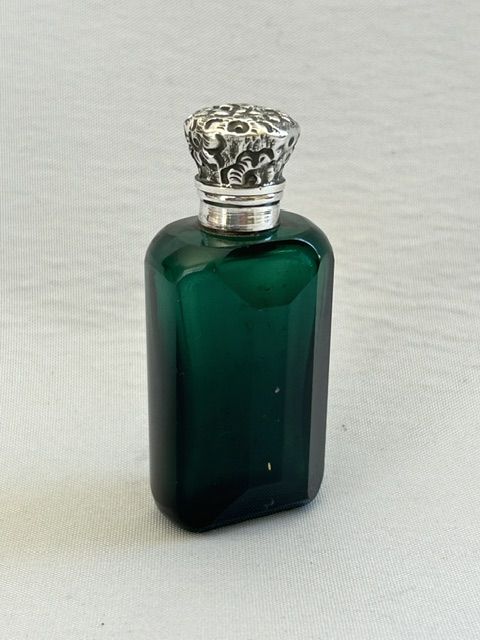
The pieces you are most likely to meet on this page pair sterling silver mounts and hinged caps with colourful blown glass bodies. Common forms include cylindrical, icicle, and egg shapes, sometimes executed in miniature or shaped playfully as champagne and liquor bottles.
Makers of these scent bottles utilised rich hues such as ruby, cranberry, Bristol green, amethyst, and opaline glass to catch the dressing table light. Alongside plain glass, you will occasionally encounter ceramic bodies and glass overlaid with decorative metalwork.
How they were made
The body of each piece begins in the glasshouse, where artisans blew and shaped molten material into specialised moulds or free-blown forms like the elongated icicle bottle. Distinctive coloured glass, including cranberry and ruby, relied on mineral oxides added during the melting process to achieve deep, saturated tones.
Silversmiths then fashioned matching metal mounts, collars, and hinged caps to fit the glass necks precisely, often working in hubs like Birmingham. These silver components frequently received chased or embossed decoration to complement the smoothness of the glass beneath.
Silver Topped Smelling Bottle Retail Price Guide 2026
Typical asking prices for silver topped smelling bottle among the pieces listed under this phrase on Sellingantiques today, from the lower quarter to the upper quarter. They describe what is for sale here now, not the wider market.
What varies in quality
The distinction between ordinary and superior examples lies in the ambition of the glass form and the crispness of the silver work. Moulded designs featuring speckled finishes or overlay glass demand greater technical skill than plain cylindrical vessels.
Weight and balance also set pieces apart, as thicker glass walls and substantial sterling silver mounts provide a more satisfying heft in the hand. The precision with which the silver collar fits the glass neck indicates the level of care taken in the workshop.
Macintyre
The Silver Topped Smelling Bottle Glossary
- Sterling silver
- An alloy comprising ninety-two point five percent silver by mass, used for the caps and mounts of these bottles. It provides durability and a bright reflective finish.
- Cranberry glass
- A translucent pinkish-red glass created by adding gold to the molten batch. It is a defining material of Victorian decorative glassware.
- Opaline glass
- An opaque or semi-translucent glass, often pale blue in these listings, showing a milky pastel appearance. It gained popularity during the nineteenth century for vanity items.
- Overlay glass
- A technique involving a layer of coloured glass cased over a contrasting base layer, sometimes cut away to reveal the colour beneath. This adds depth and visual texture to small scent flasks.
- Assay mark
- A stamp indicating the purity of the silver, the town of testing, and the date of manufacture. These small punches help anchor the piece to specific decades like the 1890s.
Silver Topped Smelling Bottle: Frequently Asked Questions
What are silver topped smelling bottles?
These small flasks were portable containers for smelling salts, historically carried in pockets or reticules to combat fainting or dizziness in crowded rooms during the Victorian and Edwardian periods.
They combine functional glass vessels with secure metal lids, ensuring the pungent salts remained contained until needed.
How do I date a silver smelling bottle?
Dating relies heavily on hallmarks stamped onto the silver mounts, which indicate specific assay years, alongside stylistic clues in the glass colour and shape.
Victorian pieces often feature rich ruby or cranberry glass, while Edwardian examples show subtle shifts in form and mounting techniques.
How were smelling bottles used?
Owners unscrewed or unclipped the silver top to release the aromatic vapours held within a sponge or directly in the glass chamber.
They served as essential personal accessories for fashionable individuals attending social gatherings or travelling.
How should I clean the silver mounts?
Maintenance requires gentle care with a soft cloth to avoid scratching the delicate glass bodies attached to the metal collars.
Specialist silver polish keeps the sterling components bright without transferring harsh chemicals onto historical glass surfaces.