



Silver Thimble Case
When handling a silver thimble case, you hold a miniature work of Victorian and Edwardian craftsmanship designed to protect delicate sewing tools.
Silver Thimble Case
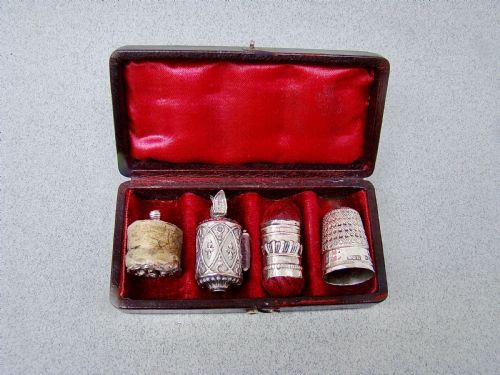
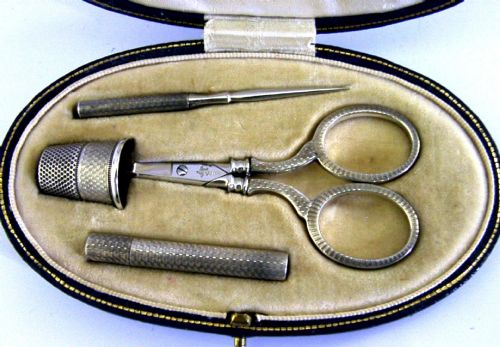
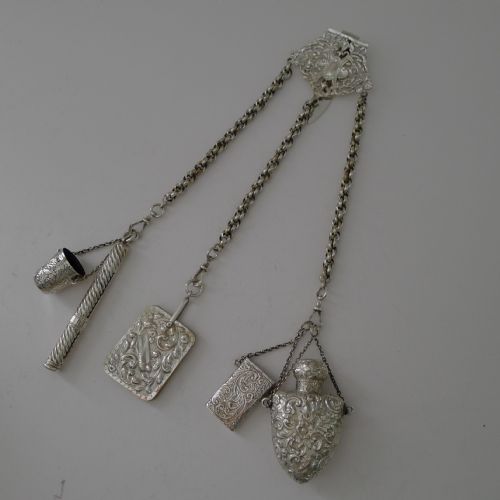
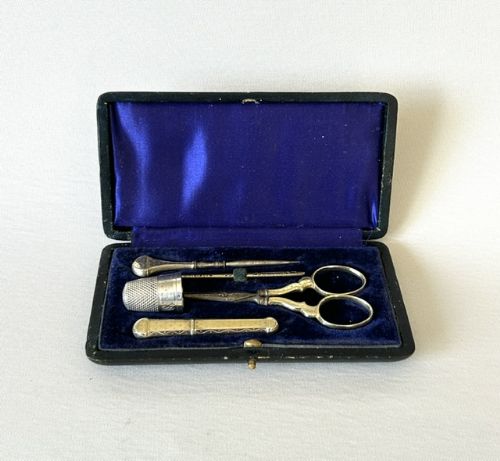
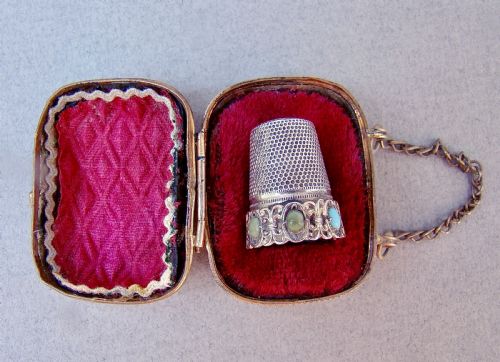
A silver thimble case is a small protective container created to house sewing implements safely during the nineteenth and early twentieth centuries. These pieces appear frequently as part of sewing sets, fitted boxes, or chatelaine accessories meant to hang from a belt.
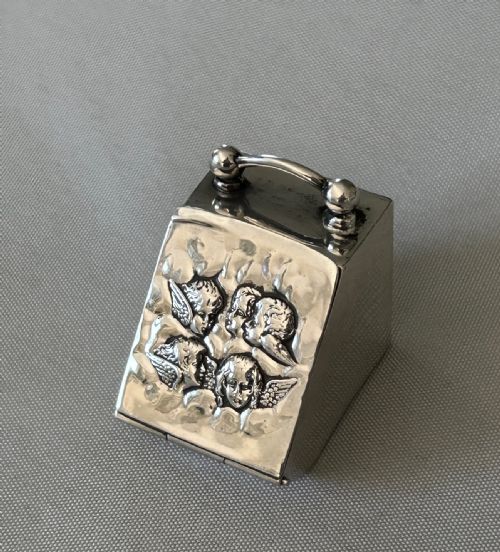
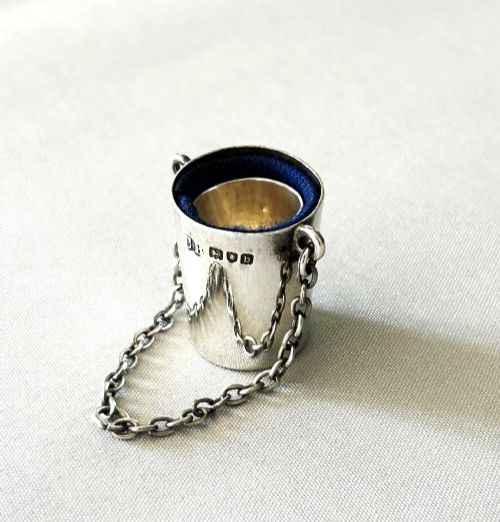
The options span simple utilitarian holders to elaborate novelty designs shaped like buckets, coal scuttles, eggs, and bins. Victorian and Edwardian periods dominate the selections, alongside nineteenth-century French imports featuring decorative gilt finishes and inlaid stones.
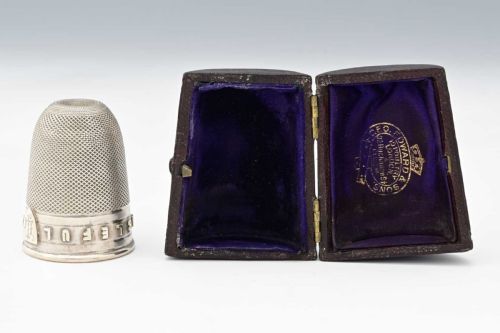
Many survivors include the original matching thimble inside, fashioned from sterling silver or silver gilt. Collectors encounter various forms ranging from fitted leather cases to nut-based holders and ornate ormolu chatelaine chatelaine eggs.
Materials and construction methods
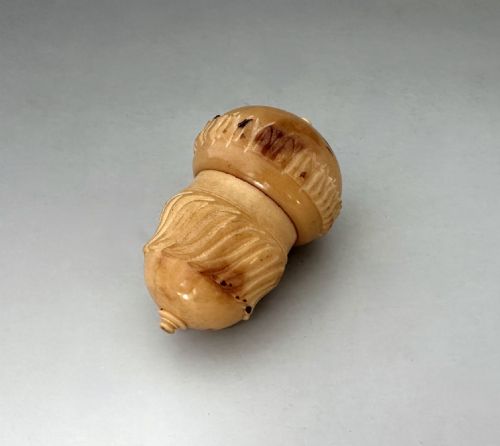
Maker workshops utilised sterling silver and silver gilt for the structural mounts and thimbles, often combining them with organic materials such as mother of pearl, tortoiseshell, corozo nut, coquilla nut, and bone. Interior compartments frequently featured velvet or silk linings to cushion the metalwork securely.
Decorative cases incorporated ornate ormolu framing, intricate chasing, and inlaid semi-precious stones including agate, turquoise, and carnelian. Metal components were shaped through pressing, casting, and hand-engraving by specialised silversmiths operating in Birmingham, Chester, London, and continental centres.
Silver Thimble Case Retail Price Guide 2026
Typical asking prices for silver thimble case among the pieces listed under this phrase on Sellingantiques today, from the lower quarter to the upper quarter. They describe what is for sale here now, not the wider market.
The documented examples span Victorian and Edwardian periods, encompassing French chatelaine holders and British novelty forms.
Distinctions in execution and design
Quality rests upon the crispness of detail in novelty forms, the precision of the hinge and clasp mechanism, and the integrity of internal textile linings. Superior examples exhibit fully articulated components and well-preserved stones without chips in the agate or turquoise settings.
Makers known for specific marks, such as Charles Horner or Henry Griffith, often distinguish finer items through clearly struck hallmarks and robust construction. The inclusion of the original matching thimble bearing corresponding hallmarks elevates the completeness of the set.
Walter and George Myers·Charles Horner·Laurence Emanuel·Henry Griffith And Sons Ltd·Samuel Foskett·Henry Fowler·James Swann And Son·Carrington And Co
The Silver Thimble Case Glossary
- Chatelaine
- A decorative belt hook from which ladies suspended utilitarian items like sewing tools, keys, and watches. These hooks often anchored ornamental silver cases containing thimbles.
- Ormolu
- A gilded bronze or brass mounting used extensively in nineteenth-century decorative arts. It provides a rich golden framework for stone-set thimble holders.
- Corozo nut
- The hard seed of the tagua palm, frequently carved into compact containers. It served as an organic alternative to metal and ivory for small sewing accessories.
- Etui
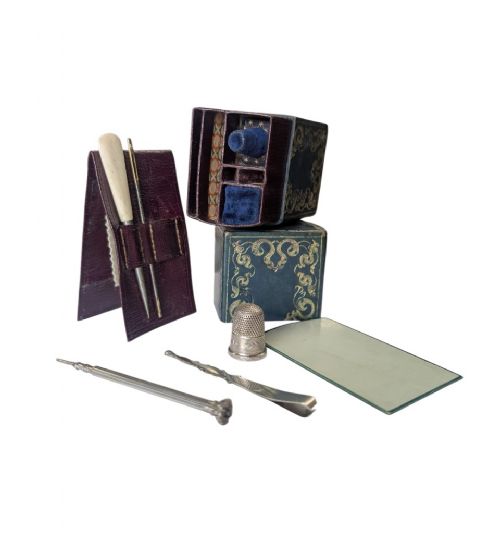
- A small ornamental case used for holding needles, scissors, and other sewing implements. These fitted boxes often contained a dedicated slot for a silver thimble.
- Silver gilt
- Silver that has been coated with a thin layer of gold through fire gilding or electroplating. This technique imparts a warm golden lustre to the interior or exterior of the case.
Silver Thimble Case: Frequently Asked Questions
How were novelty thimble cases used?
Novelty thimble cases served as both decorative conversation pieces and functional sewing tools for Victorian and Edwardian needlewomen. Shaped as miniature buckets, coal scuttles, eggs, or binocular cases, they added a touch of whimsy to sewing equipment.
Owners kept them on dressing tables or attached them to chatelaines for quick access during needlework sessions. The unusual shapes often disguised standard sewing tools inside charming miniature sculptures.
How do I identify a Victorian thimble case?
Victorian thimble cases are identified through their characteristic materials, styles, and maker hallmarks stamped onto the silver components. Common indicators include ornate repoussé work, ormolu chatelaine mounts, and organic elements like mother of pearl or tortoiseshell.
Examining the assay office marks and date letters on the silver provides precise verification of the manufacturing period. Cases from this era frequently pair with stamped sterling silver thimbles bearing matching hallmarks.
Are thimbles usually included with cases?
Many surviving thimble cases still contain their original matching silver thimbles, though some are found empty depending on how the items were separated over time. Fitted interiors with velvet or silk contours indicate that a specific thimble belonged inside.
Finds featuring an original marked thimble alongside its matching holder carry greater completeness for collectors. The presence of both pieces confirms the intended pairing from the workshop.