





Silver Tea Waiter
A silver tea waiter provides a sturdy and elegant surface for carrying pots and cups, standing among the most useful serving pieces from the nineteenth and twentieth centuries.
Silver Tea Waiter
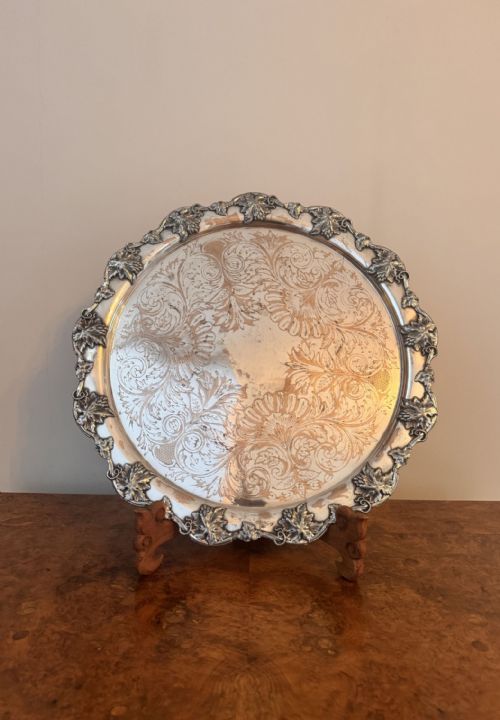
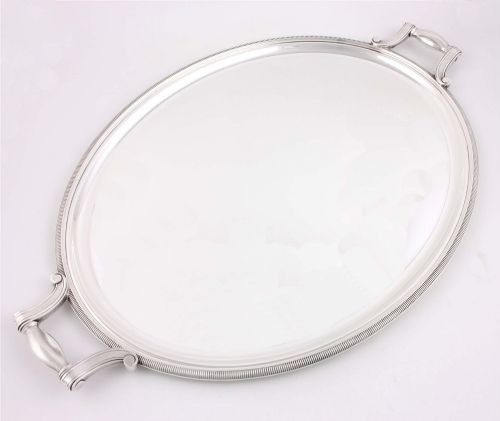
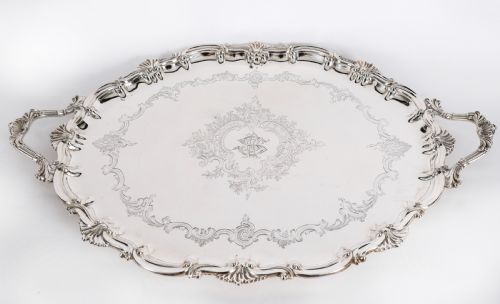
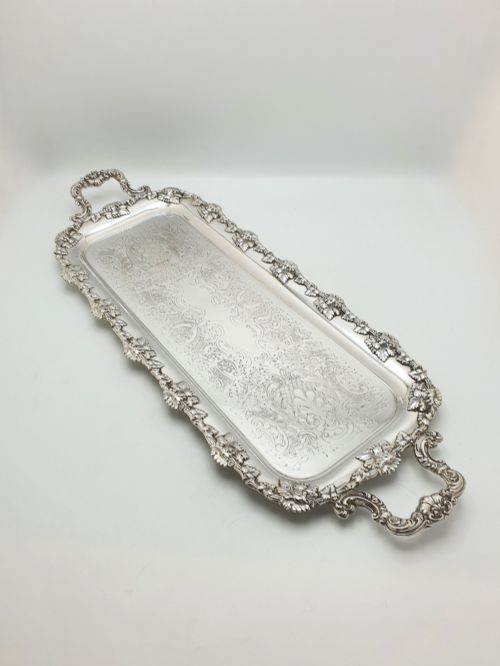
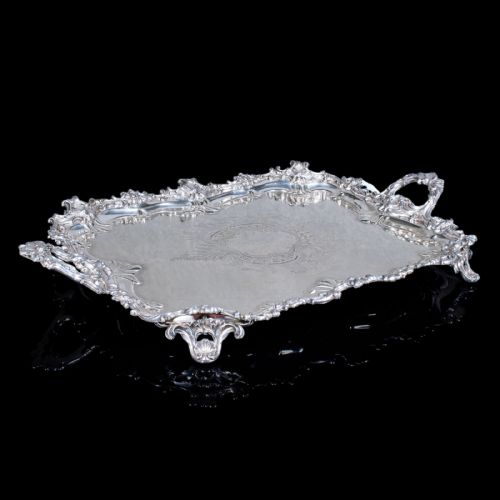
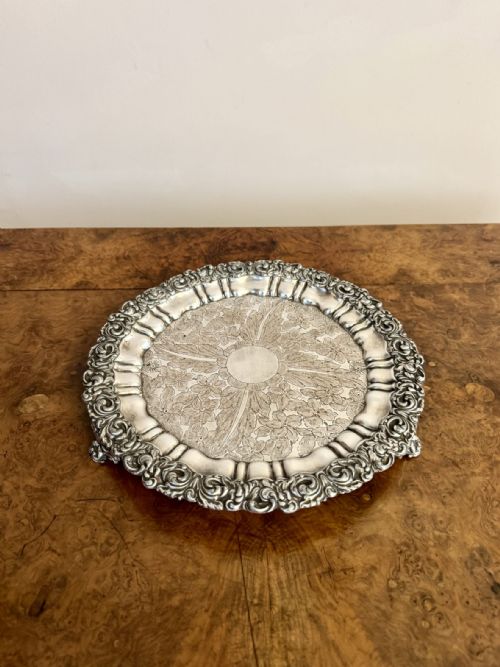
A silver tea waiter designates the large serving trays and salvers used during afternoon tea and formal gatherings. The pieces seen here range from compact circular salvers to monumental twin-handled platters designed for afternoon tea and cocktails.
Victorian and Edwardian examples dominate the selection, often taking circular or oval forms with cast borders. Makers also produced geometric Art Deco trays during the 1920s and 1930s alongside earlier nineteenth-century Old Sheffield plate pieces.
Buyers encounter forms varying from plain surfaces with engraved centres to raised gallery trays and heavy platters fitted with handles. Most pieces utilise silver plate or electroplated nickel silver over base metal, while select examples comprise sterling silver.
Assessing Quality and Craftsmanship
Quality rests in the weight of the metal and the crispness of the chased or engraved decoration across the surface. Superior trays display deep, sharp hand-engraving that remains clear through years of use, whereas lesser pieces rely on shallow machine stamping.
The method of plating dictates longevity, with thick layers of silver plate and Old Sheffield fusion plates wearing down far more gracefully than thin electroplate. Makers who invested time in hand-cast borders and robust handle joints produced pieces that retain their structural integrity.
Listings feature Victorian, Edwardian, and Art Deco periods alongside Old Sheffield plate and sterling silver.
Christofle·Thomas Bradbury & Sons·John Harrison·J B Chatterley & Sons·Walker & Hall·James Dixon & Sons·Elkington·Atkin Brothers
The Silver Tea Waiter Glossary
- Silver Plate
- A thin layer of silver bonded to a base metal core such as copper or nickel silver. This technique allowed manufacturers to produce substantial serving pieces at a fraction of the cost of solid silver.
- Salver
- A flat serving tray, typically circular and raised on small feet. These pieces frequently display engraved coats of arms or presentation inscriptions in the centre.
- Gallery Tray
- A serving tray featuring a pierced or solid upright metal wall around the perimeter. This architectural rim kept teapots and glasses secure during transit.
- Old Sheffield Plate
- An early fusing technique where a sheet of silver is fused to a thick copper ingot before rolling. This process creates a rich depth of metal that shows hints of copper through wear on high points.
- EPNS
- An acronym for electroplated nickel silver, designating a durable alloy base coated with silver via an electrical bath. This method became standard for British tableware from the mid-nineteenth century onwards.
Silver Tea Waiter: Frequently Asked Questions
Can I use an antique tray for daily serving?
These pieces were built for active household use and handle everyday drinks service with ease. The durable construction of silver plate and solid silver suits modern entertaining.
Take care to place felt pads underneath heavy teapots or decanters to protect the antique surface from unnecessary scratching during regular use.
What is the difference between a tray and a salver?
A salver typically describes a flat circular serving vessel raised on small feet, traditionally used for presenting letters or glasses. Trays generally include handles and elongated oval or rectangular shapes designed for carrying larger tea services.
Both forms served similar domestic functions in formal nineteenth-century drawing rooms.
How do I date a silver serving tray?
Examine the style of decoration, the form of the handles, and any stamped maker marks or hallmarks on the underside. Aesthetic movements such as Art Deco or Victorian revival styles provide clear clues to the decade of manufacture.
Makers often stamped registration numbers or specific trade ciphers that allow collectors to trace the exact period of production.