




Silver Taper Candle Stands
These silver taper candle stands combine utility and grace, offering refined illumination from the Georgian period through the twentieth century.
Silver Taper Candle Stands
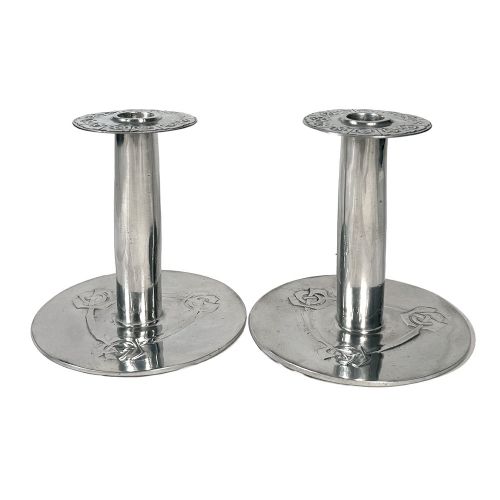
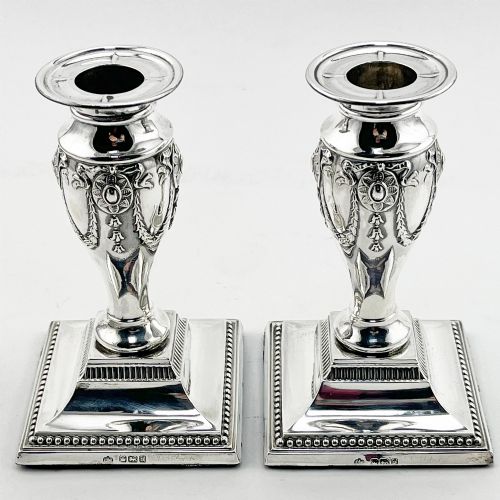
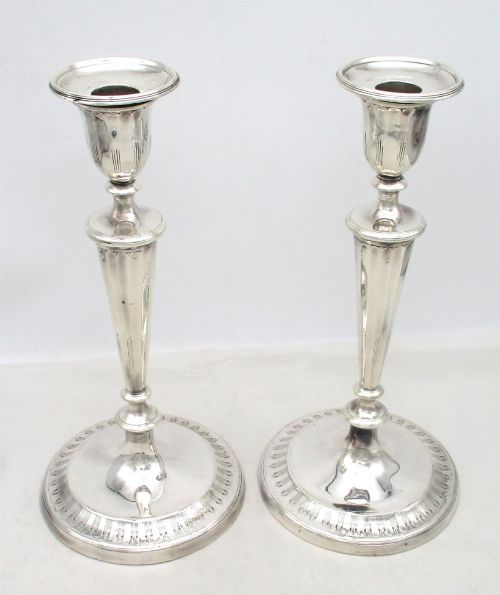
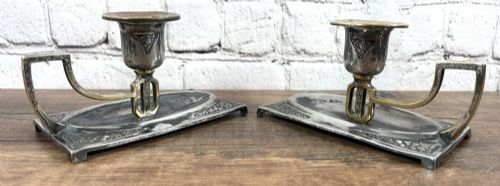
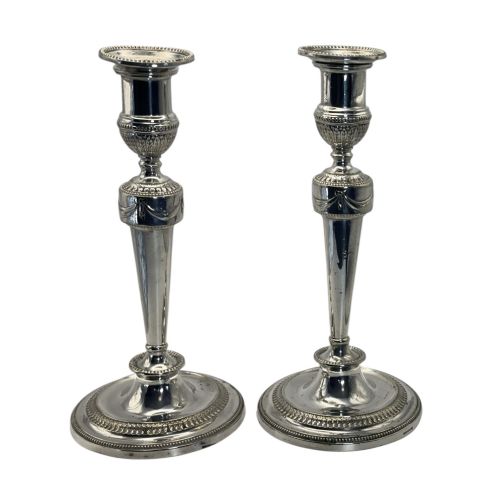
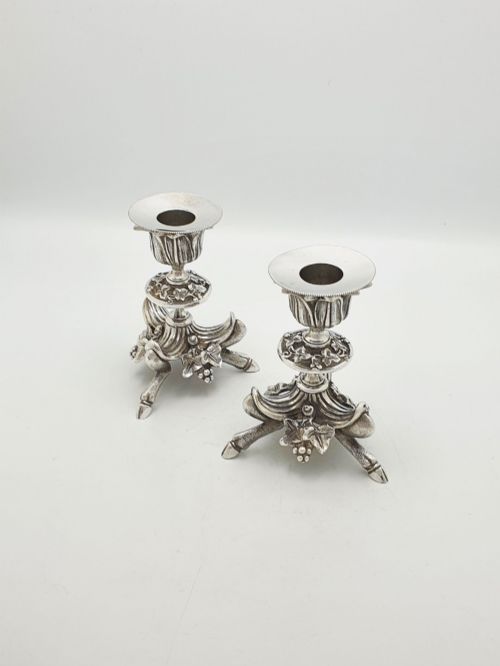
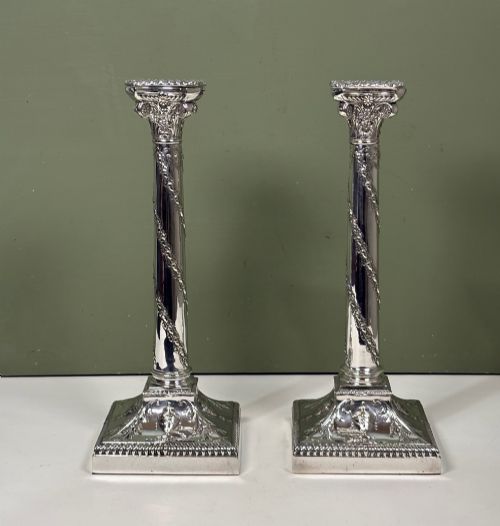
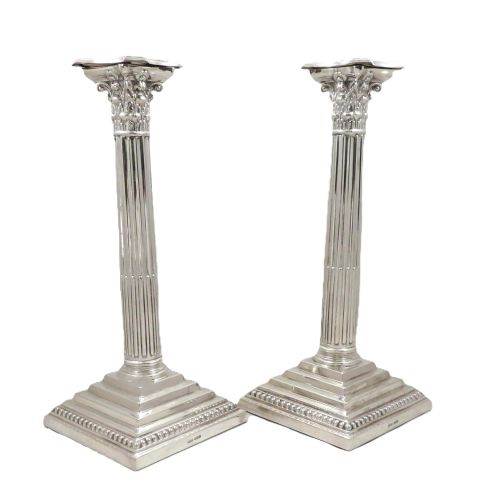
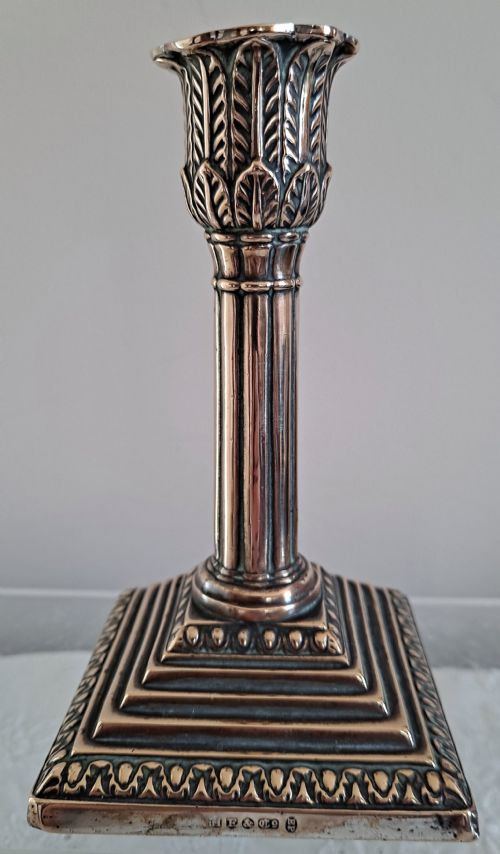
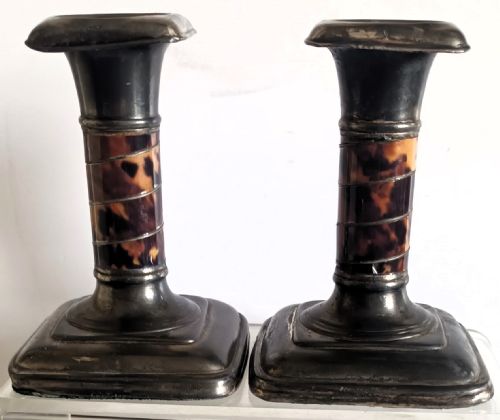
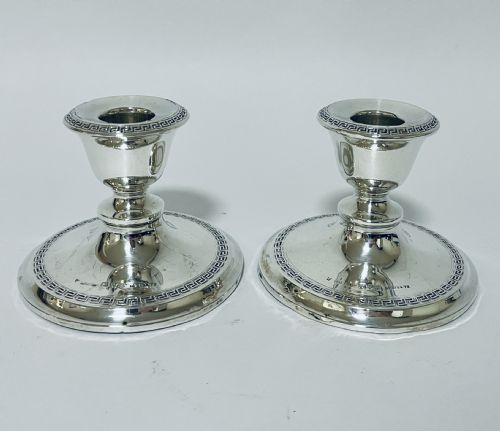
Silver taper candle stands comprise small domestic lighting fixtures designed to hold narrow candles upon desks, mantels and dining tables. When you search for silver taper candle stands, you encounter various forms including column sticks, desk variants, figural designs and chambersticks. The selection here leans heavily towards nineteenth-century Victorian pairs and Edwardian examples in silver plate and sterling silver.
Makers and manufacturers ranging from Elkington & Co to Liberty & Co produced these items in stylistic idioms spanning Georgian, Neoclassical, Art Nouveau and Art Deco. Buyers meet both grand hallmarked sterling pieces and sturdy silver-plated brass or copper pieces designed for everyday domestic illumination.
Materials and construction
Makers utilised sterling silver, Old Sheffield Plate and electroplated nickel silver over base metals like copper, brass and pewter. Many sterling examples incorporate weighted bases filled with resin or plaster to ensure stability, whilst pewter variants sometimes integrate enamel, tortoiseshell or glass elements.
Techniques varied from traditional hand-raised sheet silver and Sheffield plating to industrial electroplating introduced in the nineteenth century. Cast figural components and Corinthian capitals required skilled chasing and assembly by specialist metalworkers.
Silver Taper Candle Stands Retail Price Guide 2026
Typical asking prices for silver taper candle stands among the pieces listed under this phrase on Sellingantiques today, from the lower quarter to the upper quarter. They describe what is for sale here now, not the wider market.
Victorian desk candlesticks often feature integrated matchboxes, ensuring writers could strike a light without leaving their chairs.
Assessing quality
Quality rests upon the crispness of cast ornament, the integrity of the plating or hallmarking, and the overall balance of the form. Superior examples display sharp definition in acanthus leaves, fluting and figural details without the softening of edges often seen in worn electroplate.
Weight distribution and structural rigidity also distinguish finer pieces from lighter utilitarian items. Original matching pairs that retain their intended height, proportion and surface patination command greater appreciation than mismatched or heavily polished alternatives.
Mappin & Webb·WMF·Liberty & Co·Barker Ellis·Garrard & Co Ltd
The Silver Taper Candle Stands Glossary
- Hallmark
- Official stamps struck into precious metal to indicate purity, maker and the year of assay. These marks provide definitive evidence of origin for sterling silver pieces.
- Old Sheffield Plate
- An early fusing technique where a thin sheet of sterling silver was fused to a copper core before rolling. This method predates modern electroplating.
- Silver Plate
- A thin layer of silver applied to a base metal such as copper or nickel brass. Electroplated nickel silver became the dominant method by the mid-nineteenth century.
- Corinthian Column
- A classical architectural order featuring an ornate capital decorated with acanthus leaves. Many nineteenth-century candlesticks adopt this columnar form.
- Taper
- A slender wax candle designed for melting sealing wax or providing minor illumination. The holders made for them possess appropriately narrow sockets.
Silver Taper Candle Stands: Frequently Asked Questions
How do I clean silver candle stands?
Use a soft cloth and a gentle, non-abrasive silver polish to remove tarnish gently. Avoid harsh dips that can strip thin electroplating or damage weighted bases.
Keep polish away from felted bases and decorative inserts like enamel or tortoiseshell. Regular, light dusting helps preserve the metal surface without frequent polishing.
Are these candle stands weighted?
Many sterling silver candlesticks contain a weighted interior filling of resin, plaster or pitch. This provides stability to prevent the tall, slender forms from tipping over.
Silver-plated and solid metal variants often rely on thicker base metals rather than internal filling. Check the underside to see if the base is sealed with green felt or a metal plate.
How do I date a silver candlestick?
Examine any hallmarks present on sterling pieces to find the town mark, standard mark and date letter. Reference tables link these symbols to specific years of assay.
For silver-plated items without assay marks, look to stylistic cues such as Victorian ornamentation, Edwardian proportions or Art Deco geometric lines. Maker marks also help narrow down the period of production.