


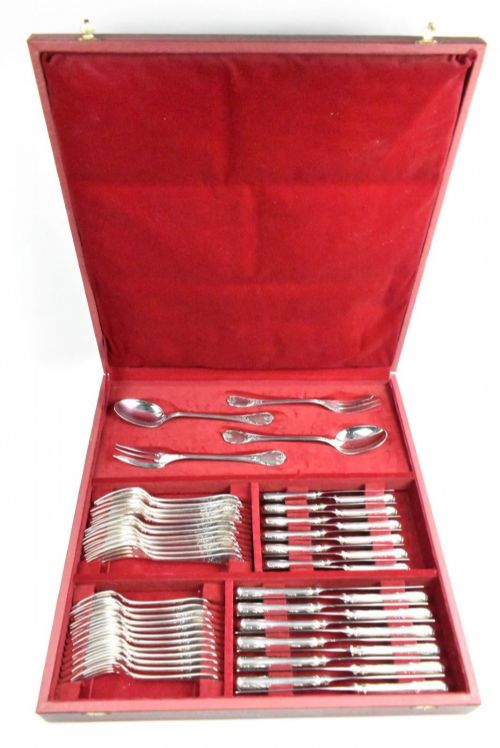


Silver Table Service Set
A silver table service set gathers matched utensils, cruets and serveware for dining, offering functional elegance from Georgian to Art Deco periods.
Silver Table Service Set
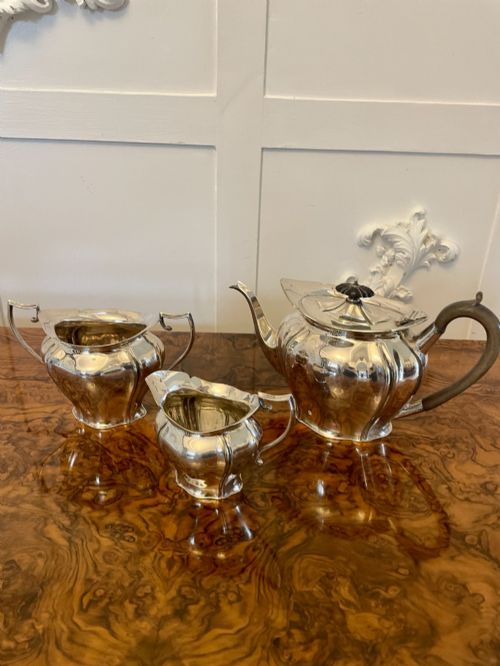
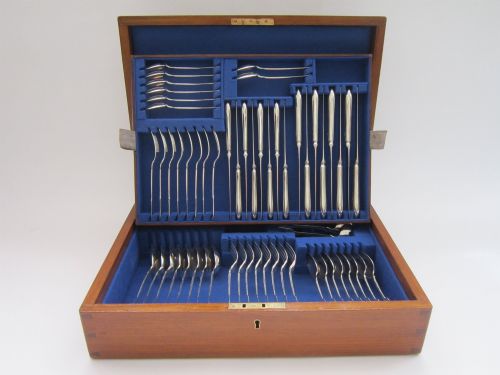
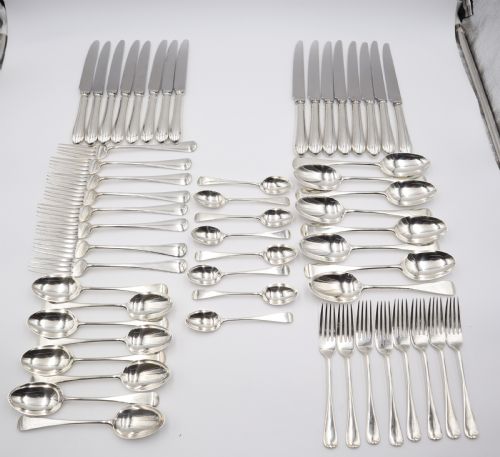
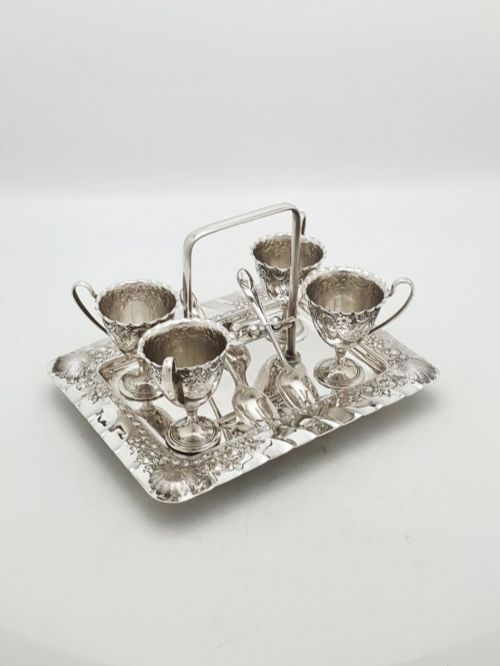
A silver table service set covers matched collections intended for dining and dressing tables, encompassing everything from large canteens of cutlery to condiment cruets and dressing sets. You encounter these most frequently in Edwardian silver plate and sterling silver, alongside Art Deco and Victorian iterations.
The configurations vary widely according to their original purpose, ranging from multi-piece flatware canteens and fruit and nut serving sets to four-bottle condiment cruets and sugar and creamers. Makers span traditional British workshops and esteemed international houses like Christofle and Tiffany.
Dating ranges from the Georgian era through Victorian and Edwardian decades into the 1920s, 1930s and 1940s. Forms include fitted cases, velvet-lined boxes and standalone service pieces bearing crested engraving or restrained modernist lines.
Materials and methods of construction
Silver plate and sterling silver form the primary structural metals across these sets, often combined with cut glass bottles, brass fittings, steel knife blades and velvet linings. Silver plating techniques apply a layer of silver over a base metal foundation, while sterling pieces utilise solid silver hallmarked to indicate purity.
Decorative work incorporates embossing, engraved crests and specific handle patterns such as Fiddle and Faneuil. Glass cruet bottles and chargers pair with metal frames, requiring specialised smithing to secure fitted condiment bottles and multi-piece cutlery canteens.
Silver Table Service Set Retail Price Guide 2026
Typical asking prices for silver table service set among the pieces listed under this phrase on Sellingantiques today, from the lower quarter to the upper quarter. They describe what is for sale here now, not the wider market.
An 1814 Georgian dressing table set includes a stag crest, proving that even eighteenth-century aristocrats needed help organising their morning routine.
Distinctions in quality and execution
Quality separates sets by the integrity of the silver or plating thickness, the precision of maker hallmarks and the completeness of fitted cases and original glass components. Premier examples display crisp embossing, fully matched cutlery counts and robust construction from recognised makers.
Lesser pieces show wear to silver plate, mismatched replacement bottles within cruet sets or absent components from larger canteens. The presence of original fitted presentation cases or bespoke crests elevates the distinction of a service.
Christofle·Tiffany·Bricks and Sons·Jonathan Douglas·Mappin and Webb·Wilmot Manufacturing Co
The Silver Table Service Set Glossary
- Cruet set
- A collection of small bottles or jars for condiments such as oil, vinegar, salt and mustard, held within a metal frame. These sets often include fitted spoons.
- Canteen
- A fitted box, chest or case designed specifically to store a complete set of cutlery safely. They frequently feature velvet or cloth linings with designated slots for each piece.
- Sterling silver
- An alloy containing ninety-two point five percent silver and seven point five percent other metals, typically copper, used to ensure structural strength while maintaining high purity.
- Silver plate
- A base metal object coated with a thin layer of pure silver through electroplating or older techniques. This method provided the appearance of solid silver at a lower cost.
- Fiddle pattern
- A traditional cutlery handle shape featuring a narrow stem that broadens outward toward the terminal in a distinctive violin outline. It gained widespread popularity during the Georgian and Victorian periods.
- Charger
- A large decorative plate placed underneath the main dinner plates during formal meals. They serve an ornamental function to frame the table setting.
Silver Table Service Set: Frequently Asked Questions
How do I clean tarnished silver cruet sets?
Use a dedicated silver polish and a soft cloth to gently remove tarnish without scrubbing away thin plating. Avoid harsh abrasive cleaners that damage embossed details or scratch the metal surface.
For sets with cut glass bottles, remove the glass inserts before polishing the metal frame to prevent cleaning agents from lodging in crevices.
Were all cutlery canteens originally matched?
Many canteens left workshops as complete matched services, particularly those by major makers. Some sets accumulated pieces over time as households expanded their dining collections.
Examining hallmarks and matching patterns across the utensils helps determine whether a canteen remains in its original configured state.
What is the difference between a cruet set and a condiment set?
Cruet sets traditionally hold liquid seasonings and powders in dedicated glass bottles fitted with stoppers or shakers. Condiment sets often describe open salt cellars, mustard pots and pepperettes.
Both serve the dining table function of providing guests with seasoning options during a meal.
How can I date an unmarked silver plated service?
Look to the overall style, such as Art Deco geometric lines or Victorian Rococo Revival scrolls, along with the construction of handles and any accompanying case design. Maker registry numbers stamped on the base often point to specific production decades.
Materials like cut glass bottle shapes and velvet interior linings also provide strong stylistic clues for dating.