






Silver Table Knives
These silver table knives and associated dining accessories bring period craftsmanship and substantial weight to the table, spanning multiple centuries of dining history.
Silver Table Knives
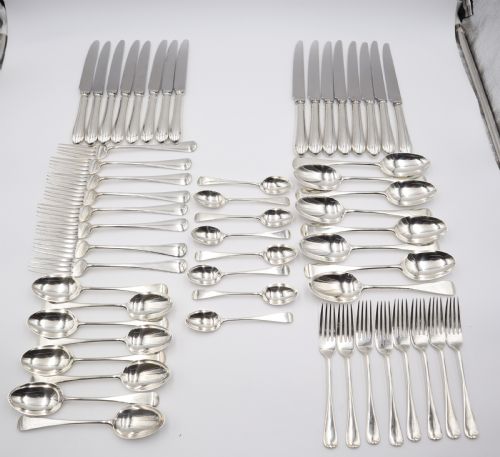
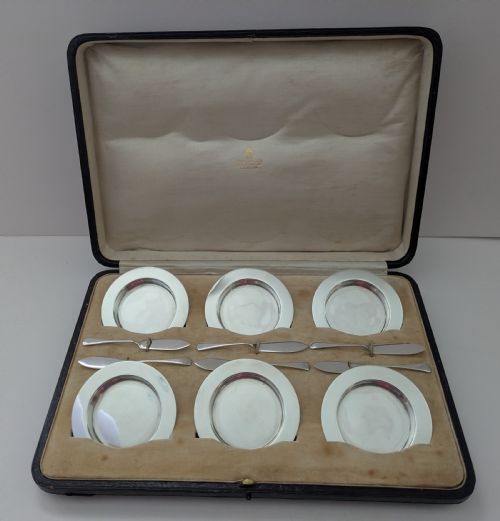
When you search for silver table knives, you encounter a range of dining implements and associated serving pieces spanning the nineteenth and twentieth centuries. The selection includes full cutlery sets, boxed butter knives with mother of pearl handles, and specialised blades paired with agate or ebony handles. These items originate from periods such as the Victorian, Edwardian, and Art Deco eras, alongside Georgian and Regency influences.
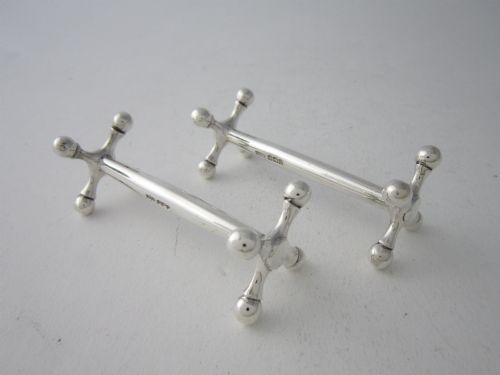
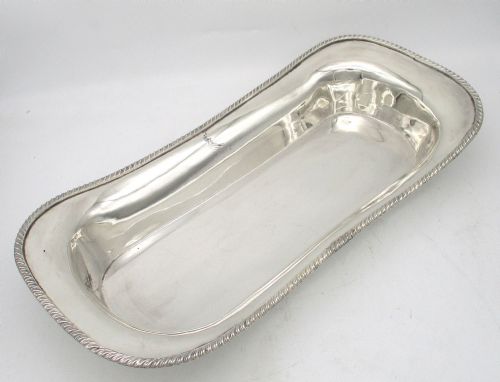
Beyond standard place settings, the available pieces encompass related table accompaniments like knife rests, trays, and fish slices. Materials extend from solid sterling silver and silver plate to steel and stainless steel blades. Makers and origin points range from Sheffield assay offices to continental European workshops.
How they were made
Manufacturing methods rely on the combination of precious metals or plated surfaces with durable cutting edges. Blades are frequently formed from steel or stainless steel, secured to handles fashioned from sterling silver, silver plate, mother of pearl, agate, or ebony. Ferrow construction and silver plating techniques apply decorative finishes to base metals.
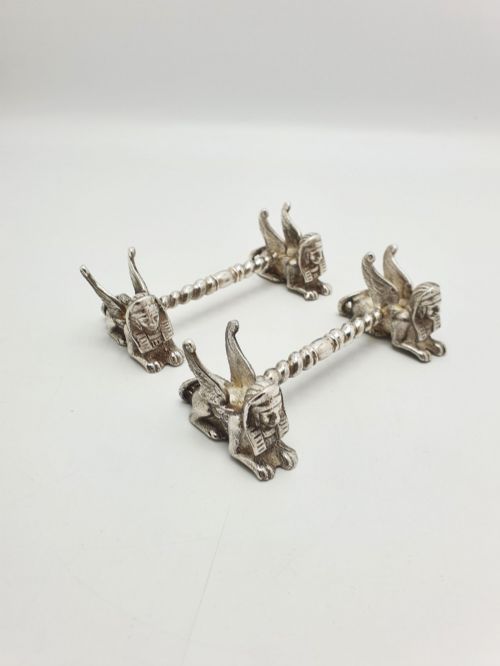
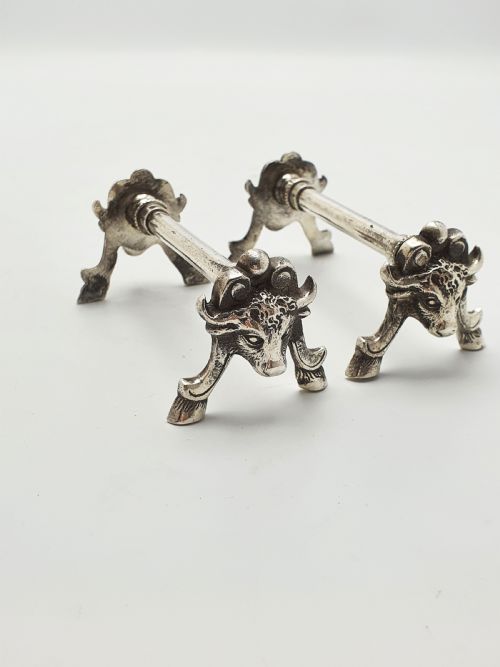
Makers utilise traditional casting and stamping methods for decorative elements such as sphinxes, bull heads, and rampant lions on knife rests. Handles often incorporate patterned designs like the Faneuil or Queens pattern, stamped or cast in heavy gauges of silver.
Silver Table Knives Retail Price Guide 2026
Typical asking prices for silver table knives among the pieces listed under this phrase on Sellingantiques today, from the lower quarter to the upper quarter. They describe what is for sale here now, not the wider market.
Design styles span Victorian, Art Deco, Edwardian, Egyptian Revival, Traditional, Regency, George IV, and Late Victorian periods.
What varies in quality
Quality rests in the weight of the silver gauge and the integrity of the materials used for handles and blades. Heavy gauge silver plate and solid sterling silver pieces demonstrate superior substance compared to lighter counterparts.
The precision of decorative details, such as cast animal motifs on knife rests or crispness in patterned flatware handles, dictates the distinction between standard and finer examples. Preservation of original fitted boxes and matching sets further elevates the standing of the pieces.
Tiffany·Asprey And Co·International Silver Co·Adie Brothers
The Silver Table Knives Glossary
- Sterling silver
- A silver alloy containing substantial pure silver content, traditionally marked to denote its standard.
- Silver plate
- A base metal foundation coated with a layer of silver, common in nineteenth century dining wares.
- Knife rest
- A small support used to keep carving or table knives elevated above the tablecloth between courses.
- Mother of pearl
- An iridescent inner layer of mollusc shell utilised for decorative knife and utensil handles.
- Old Sheffield Plated
- An early fusion technique uniting a thin sheet of silver to a thicker copper core.
- Fish slice
- A wide, flat serving utensil designed for portioning fish at the dining table.
Silver Table Knives: Frequently Asked Questions
What periods do these knives span?
The pieces encompass items from the nineteenth century through to the mid twentieth century. Styles reflect Victorian, Edwardian, Art Deco, and Georgian influences.
Specific dates on items range from the early eighteen hundreds up to nineteen fifty eight, covering various British and European manufacturing periods.
Are blades always made of solid silver?
Blades are frequently formed from steel or stainless steel to ensure a durable cutting edge. Handles and mounts utilise sterling silver, silver plate, mother of pearl, agate, or ebony.
Solid silver is more commonly found on butter knives, decorative servers, and specific flatware components rather than main table knife blades.
What ancillary pieces accompany the knives?
Listings frequently feature matching knife rests, cutlery sets, butter dishes, and serving trays. These accessories share period characteristics with the cutlery.
Items such as knife trays in silver plate or Old Sheffield Plate provide complementary storage and presentation for the table settings.
How do I identify maker marks?
Makers and assay offices stamp hallmarks onto sterling silver and silver plated items to denote origin and date. Names like Asprey or Adie Brothers appear alongside city marks such as Sheffield and Birmingham.
Examination of the metal surface reveals these stamps, which indicate the workshop and the year of production.