

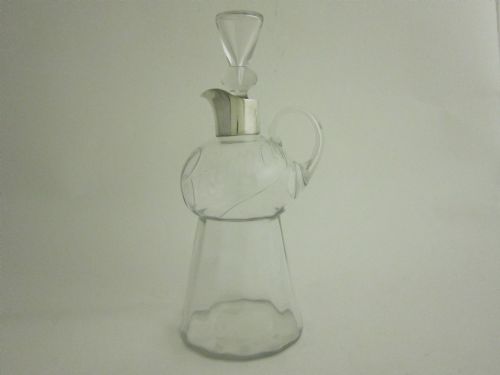

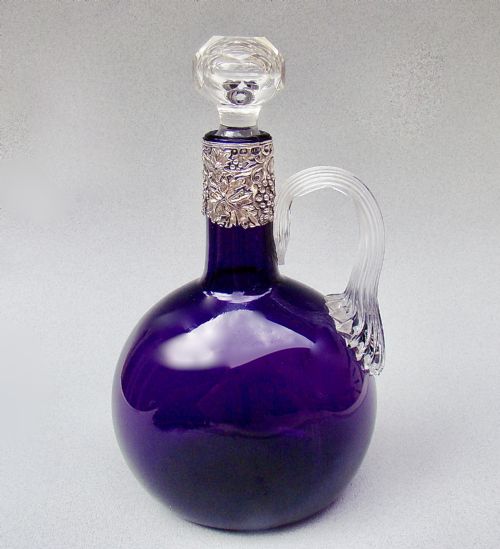
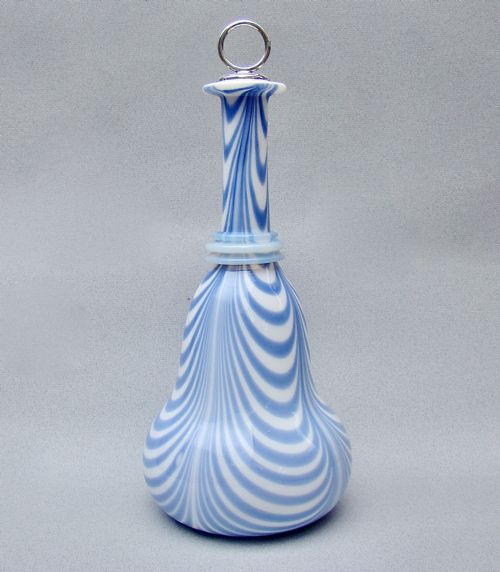


Silver Stopper Glass Decanter
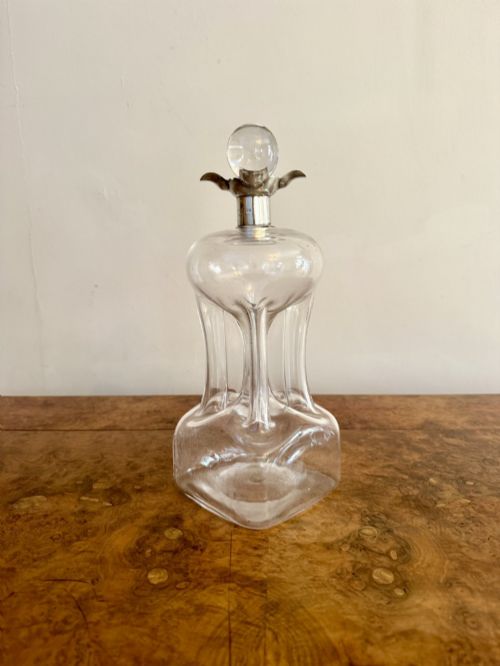
A silver stopper glass decanter brings functional elegance to a sideboard, pairing heavy crystal or coloured glass with polished metal mounts.
Silver Stopper Glass Decanter
A silver stopper glass decanter combines blown or cut glass vessels with metal closures, serving spirits, wine, and liqueurs at the table. These pieces emerge from the Victorian, Edwardian, and Art Deco periods, spanning the nineteenth and twentieth centuries.
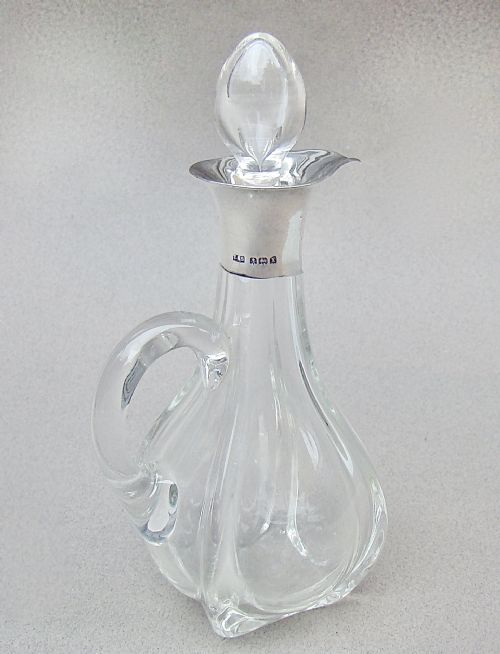
The selection includes claret jugs, whisky and brandy bottles, scent bottles, and complete decanter sets with matching glasses. Many examples feature English hallmarks on silver collars, mounts, or stoppers.
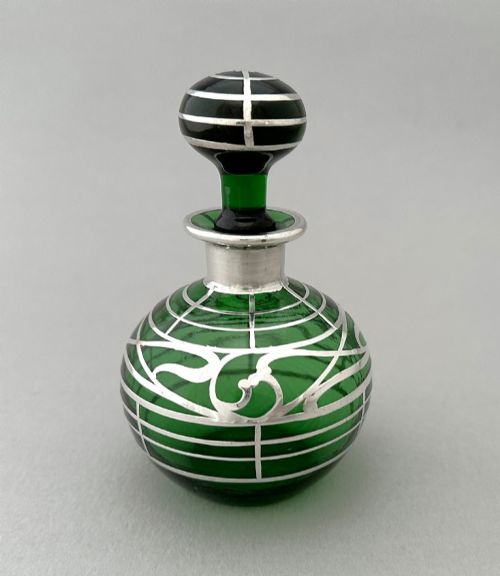
Vessels range from clear cut crystal to amethyst and green glass bodies. Makers mount them in sterling silver, silver plate, or Old Sheffield plate, occasionally incorporating locking mechanisms.
How they were made
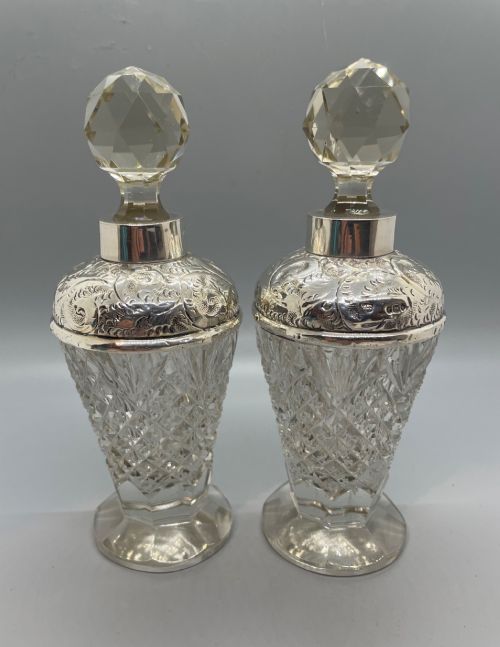
Glass bodies were formed through blowing, moulding, or cutting, producing smooth surfaces or deep geometric facets in clear, amethyst, or green glass. Nailsea glass techniques also appear among the earlier wine carafes.
Silver mounts, collars, and stoppers were fashioned from sterling silver or plated metals, secured around the neck or base of the glass. Silversmiths applied hallmarks to indicate the standard of metal, origin, and year of production.
Silver Stopper Glass Decanter Retail Price Guide 2026
Typical asking prices for silver stopper glass decanter among the pieces listed under this phrase on Sellingantiques today, from the lower quarter to the upper quarter. They describe what is for sale here now, not the wider market.
The selection includes specialised forms such as locking decanters, scent bottles, claret jugs, and novelty vessels shaped like Scottish thistles.
What varies in quality
The weight and clarity of the glass establish the baseline of a piece, with deep hand-cut crystal holding more presence than light moulded vessels. Coloured glass variants, such as amethyst and green examples, introduce distinct material depth.
The integration between the metal mount and the glass body dictates structural success. Secure collars, well-fitted stoppers, and crisp silversmith hallmarks elevate the standing of a decanter.
Henry Matthews·Betjemann Brothers·Hukin and Heath·Mappin & Webb
The Silver Stopper Glass Decanter Glossary
- Sterling silver
- A silver alloy containing 92.5 percent pure silver and 7.5 percent other metals, typically copper. This standard appears frequently in English hallmarked bottle mounts.
- Cut glass
- Glass decorated by grinding facets or patterns into the surface using a wheel. This technique adds weight and sparkle to decanter bodies.
- Silver plate
- A layer of silver applied to a base metal core such as copper or brass. It provided an accessible alternative to solid sterling mounts.
- Claret jug
- A pouring vessel designed specifically for serving red wine. These items often feature hinged silver lids and mounts.
- Hallmark
- An official stamp applied to precious metals indicating the maker, assay office, and year of testing. These marks help date the silver collars and stoppers.
Silver Stopper Glass Decanter: Frequently Asked Questions
How do I date a silver stopper glass decanter?
Dating relies heavily on the hallmarks stamped into the silver collars, mounts, or stoppers. These marks indicate the assay office and specific year of testing.
Stylistic cues in the glass cutting and the silhouette, such as Victorian facet-cutting or Art Deco geometry, also help narrow down the period.
Were these decanters meant for daily use?
These vessels served spirits, wine, and liqueurs at dining tables and sideboards in the nineteenth and twentieth centuries. They were built for hospitality and entertaining.
Today, they function equally well for serving drinks or displaying coloured and cut glass on a sideboard.
How do I clean an antique decanter?
Cleaning requires warm water and mild dish soap, avoiding harsh abrasives that could scratch the interior or damage the silver mount. Special bottle brushes help reach the base of narrow necks.
Silver components should be cleaned with a soft cloth, keeping polish away from the glass surface.
What is the difference between a decanter and a claret jug?
A standard decanter typically uses a glass or metal stopper to seal spirits like whisky, brandy, or sherry. These bottles often feature simple geometric or cut glass bodies.
A claret jug is specifically designed for pouring red wine and usually incorporates a hinged silver lid with an integral handle.