




Silver Service Pieces
Silver service pieces bring formal hospitality to the table, uniting sterling and plate in sets for tea and coffee.
Silver Service Pieces
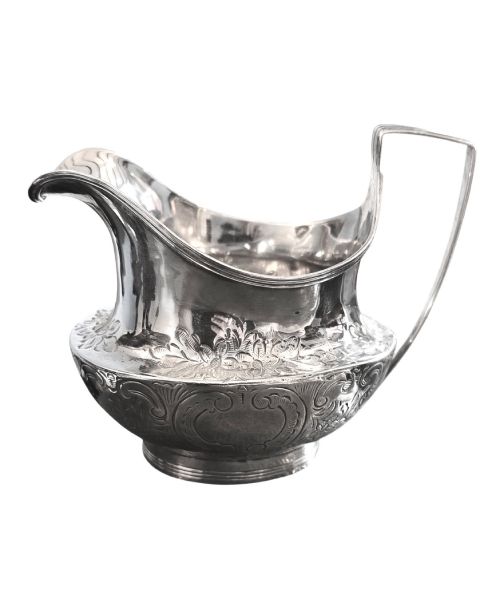
Silver service pieces encompass matching sets and individual items designed for tea, coffee, and dining service. When searching for silver service pieces, buyers encounter extensive collections spanning the Georgian, Victorian, and Edwardian eras, alongside later twentieth-century examples.
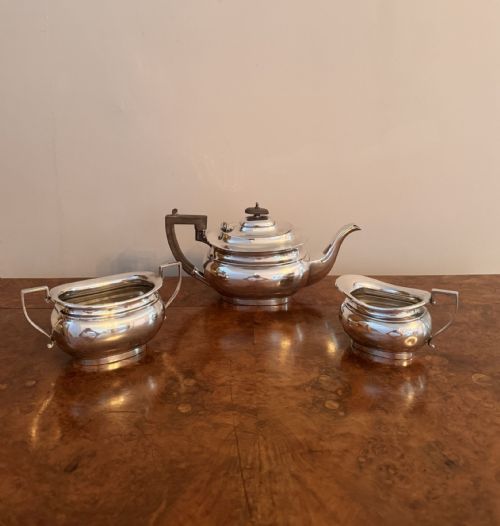
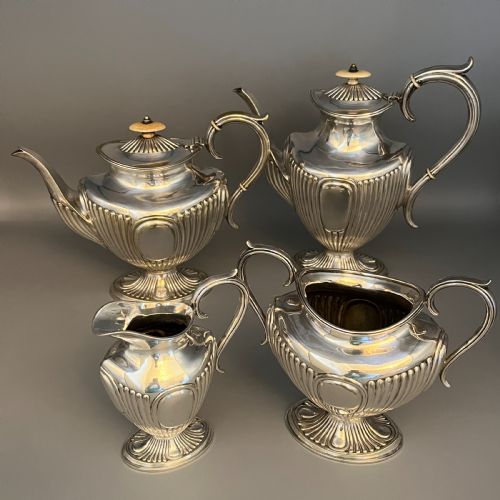
Tea and coffee sets dominate the selection, appearing alongside individual cream jugs, teapots, and extensive cutlery services. These objects range from three-piece settings to complete five-piece services with matching pots, jugs, and bowls.
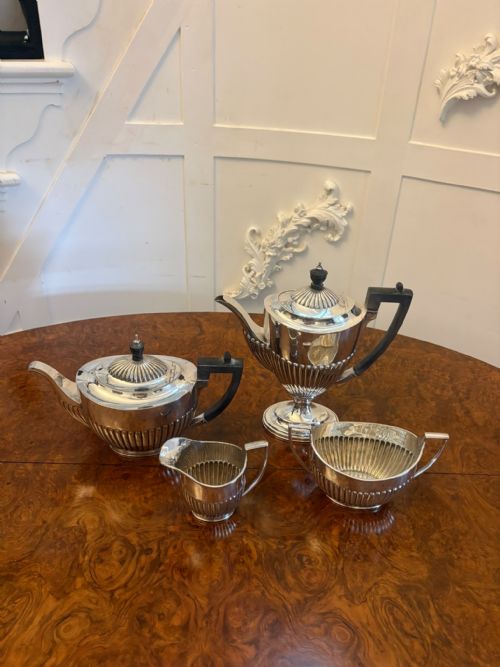
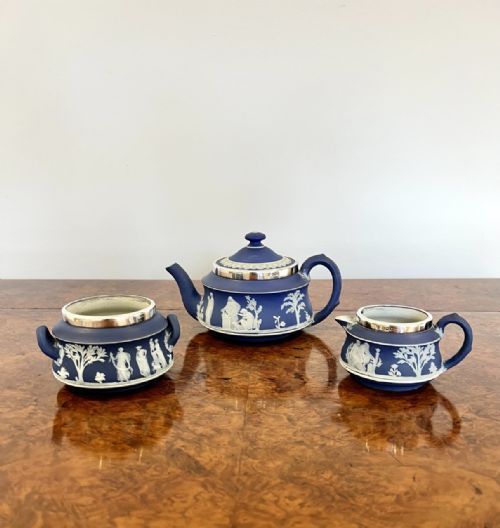
The material composition varies between solid sterling silver and silver plate over base metals. Sets frequently incorporate utilitarian handles and mounts fashioned from wood, ebony, bone, or ebonised wood alongside ceramic elements like Wedgwood Jasperware.
How they were made
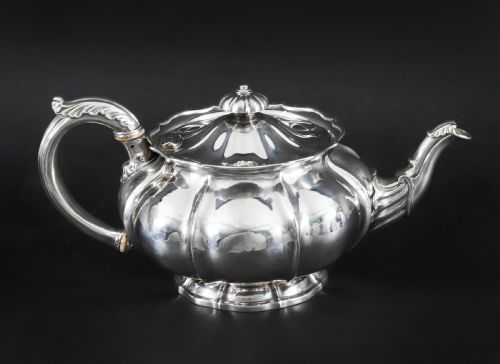
Silversmiths utilised traditional manufacturing techniques such as hammering, casting, and piercing for sterling silver creations, whilst silver-plating methods applied thin layers of silver over base metals like nickel silver. Makers incorporated decorative vocabularies spanning Neoclassical restraint, Rococo Revival exuberance, and ornamental grapevine detailing.
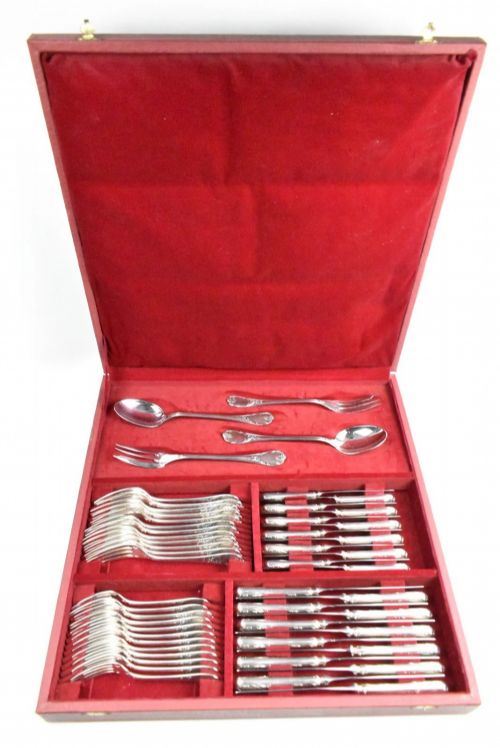
Handles and insulators on teapots and coffee pots required materials that resisted heat conduction, leading to the integration of wood, ebony, bone, and ebonised elements. Fitted wooden cases lined with fabric were constructed to house complete cutlery and tea services safely.
Silver Service Pieces Retail Price Guide 2026
Typical asking prices for silver service pieces among the pieces listed under this phrase on Sellingantiques today, from the lower quarter to the upper quarter. They describe what is for sale here now, not the wider market.
Certain antique tea sets arrive with original fitted wooden cases designed to keep every pot and spoon securely nestled in velvet.
What varies in quality
The standard of execution separates utilitarian tableware from master silversmithing, visible in the crispness of chased decoration and the weight of the metal. Substantial gauge silver provides structural rigidity, whereas lighter plate shows wear more readily through extended use.
Completeness dictates distinction, particularly when sets retain their original fitted presentation cases and matching components without later replacements. Maker attribution to notable workshops adds historical weight to the physical execution.
George Burrows·Paul Storr·Joseph Rodgers & Sons·Walker and Hall·Christofle·Joseph Craddock·Jonathan Douglas·George Fox·Harry Atkin·Goldsmiths & Silversmiths Co.
The Silver Service Pieces Glossary
- Sterling silver
- A silver alloy containing 92.5 percent pure silver by mass and 7.5 percent other metals, usually copper. This standard alloy provides durability whilst maintaining a bright metallic lustre.
- Silver plate
- A layer of silver applied to a base metal, such as copper or nickel silver. This technique offered an accessible alternative to solid sterling for large dining services.
- Electroplated nickel silver
- A copper-nickel-zinc alloy coated with a thin layer of silver through an electrolytic process. It served as a durable foundation for twentieth-century tea sets and cutlery.
- Jasperware
- A type of stoneware developed by Josiah Wedgwood characterised by its matte unglazed finish and contrasting moulded reliefs. It appears mounted in Victorian tea services.
- Crest
- An heraldic design engraved or cast onto silver items to denote family lineage. These devices frequently accompany mottoes and armorial bearings.
Silver Service Pieces: Frequently Asked Questions
What items make up a standard tea service?
A standard tea service usually comprises a teapot, a cream jug, and a sugar bowl. Larger configurations often add a coffee pot and a hot water kettle.
These pieces share matching stylistic motifs, materials, and maker marks to form a cohesive ensemble for entertaining guests.
How do I care for silver plated items?
Silver plated items require gentle cleaning with non-abrasive polishes specifically formulated for silver. Avoid harsh scrubbing that can wear away the thin silver layer over the base metal.
Store pieces in dry environments away from direct sunlight, and utilise lined wooden cases to prevent tarnishing when not in use.
What is the difference between sterling and plate?
Sterling silver is a solid precious metal alloy regulated by strict purity standards throughout its body. Silver plate consists of a base metal substrate coated with a thin layer of pure silver.
Hallmarks stamped into the metal usually indicate whether an object is solid sterling or silver-plated.
Why do teapots have wooden handles?
Teapots feature handles and insulators made from wood, ebony, bone, or ebonised materials to prevent heat transfer from boiling liquids. These natural additions ensure the handle remains cool to the touch during pouring.
They also provide a contrasting texture against polished silver surfaces.