

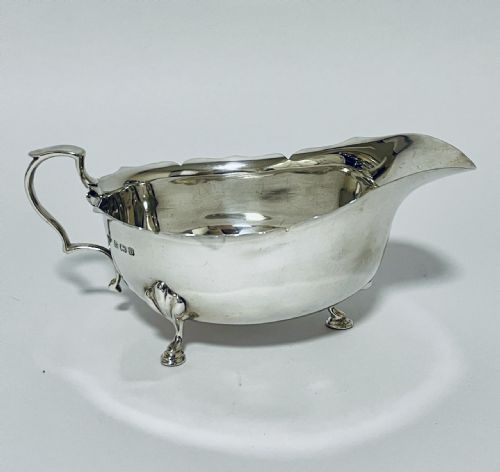
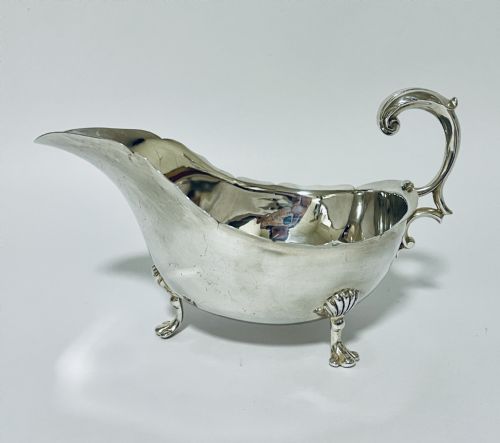

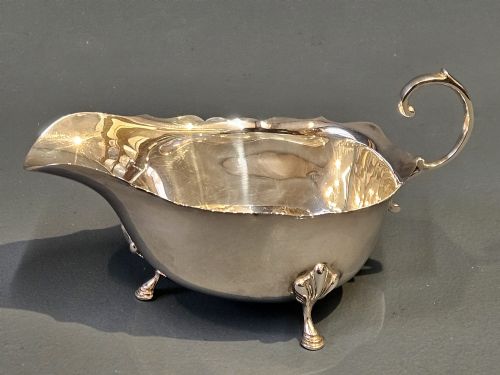
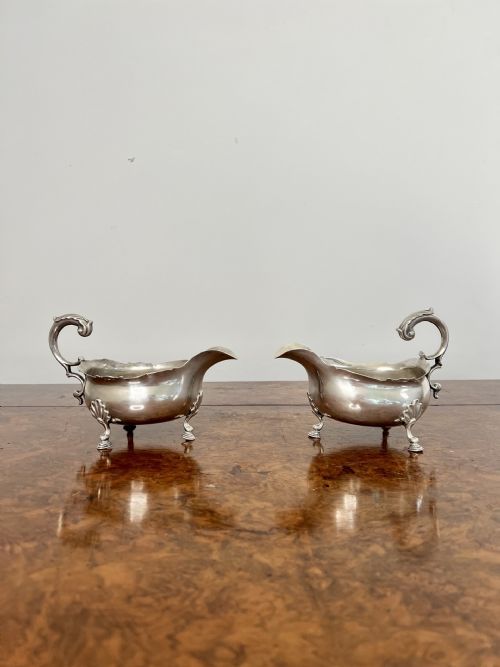


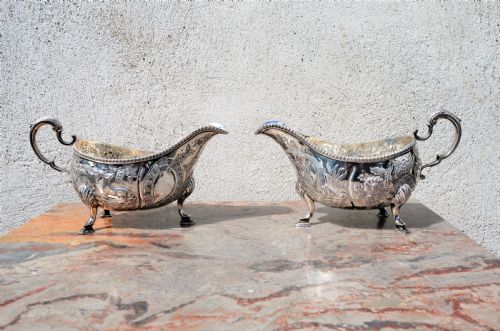
Silver Sauce Boat Feet
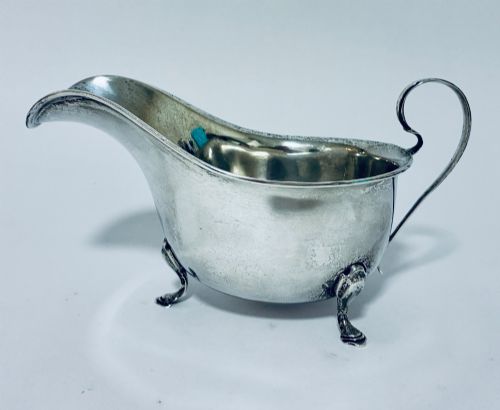
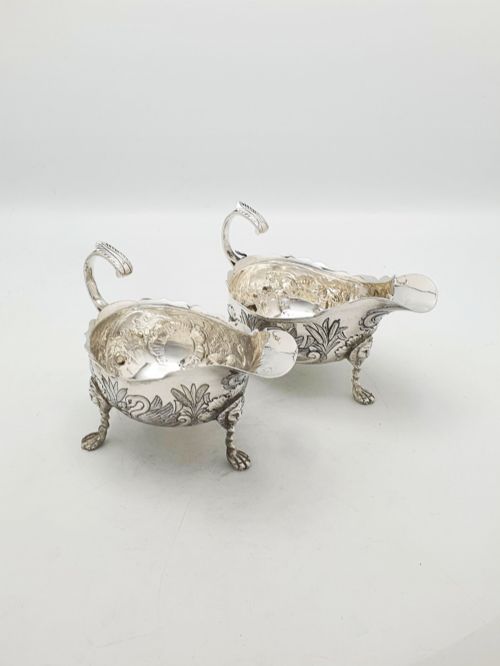
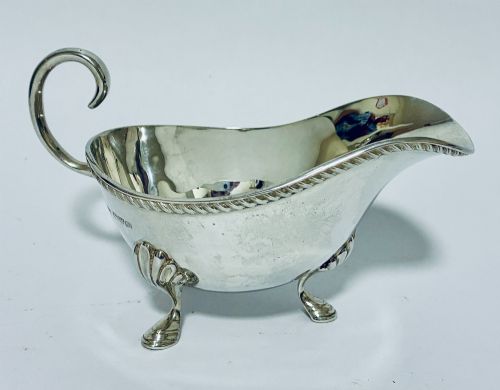
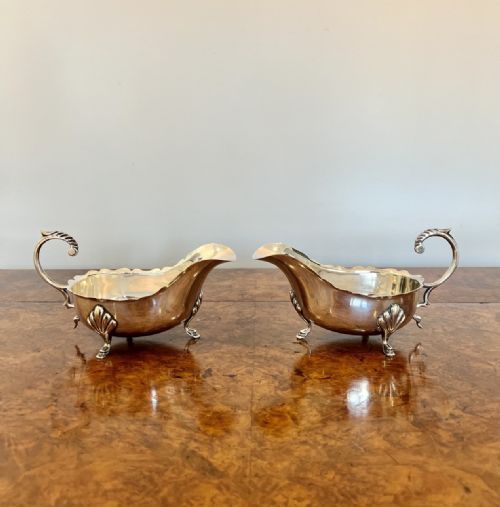
Silver sauce boat feet support the vessels that bring gravy and melted butter to the table, and these silver sauce boat feet show the craft of several centuries.
Silver Sauce Boat Feet
Silver sauce boat feet anchor the serveware that has graced dining tables across the Georgian, Victorian, and Edwardian eras. When searching for silver sauce boat feet, a buyer encounters everything from solid sterling pieces to silver plate and Old Sheffield plate.
The pieces on this page span from the eighteenth century through to the mid twentieth century. Single vessels appear alongside matched pairs, showing styles from George II and George III up to George V and later twentieth-century work.
Makers and workshops across England, including Birmingham and London, produced these vessels in forms that range from plain polished silver to embossed designs with naturalistic acorn motifs.
Materials and construction
Silversmiths formed these vessels using sterling silver, silver plate, electroplated nickel silver, and Sheffield plate, sometimes incorporating copper as a base material. Each technique determined the weight and longevity of the supporting feet.
Craftsmen shaped the metal through hammering, casting, and soldering, attaching distinct feet to the body of the sauce boat. Decorative elements such as embossing and engraving often appeared around the rim and down the handle and feet.
Silver Sauce Boat Feet Retail Price Guide 2026
Typical asking prices for silver sauce boat feet among the pieces listed under this phrase on Sellingantiques today, from the lower quarter to the upper quarter. They describe what is for sale here now, not the wider market.
Some nineteenth-century sauce boats stand firmly on tiny metallic acorns, proving that even gravy vessels enjoyed a walk in the woods.
Distinctions in quality
The balance between the weight of the silver body and the stability of the feet marks the standard of manufacture. Solid sterling silver and early Old Sheffield plate display crisper casting in the feet than later electroplated wares.
Hand-embossed details and chased decoration require high skill, separating standard production pieces from those with naturalistic motifs like acorn designs.
William Neale Ltd·Viners
The Silver Sauce Boat Feet Glossary
- Sterling silver
- A silver alloy containing 92.5 percent pure silver by mass, providing the durable material used for many sauce boats.
- Old Sheffield plate
- A composite material made by fusing a layer of silver to a copper base, found on nineteenth-century sauce boats.
- Electroplated nickel silver
- A base metal alloy of copper, nickel, and zinc coated with a thin layer of silver through electrolysis.
- Georgian
- The period covering the reigns of the first four Georges, known for refined decorative styles on domestic silver.
- Embossed
- A technique where the metal is raised from behind to create a three-dimensional design on the surface of the vessel.
Silver Sauce Boat Feet: Frequently Asked Questions
What periods do these sauce boats come from?
The listings include examples from the eighteenth, nineteenth, and twentieth centuries. Periods range from George II and George III eras through to Victorian and Edwardian times.
Later pieces from the nineteen twenties, thirties, and sixties also appear, showing how the design of sauce boats and their feet evolved over time.
Are these sauce boats sold in pairs?
Many listings offer matched pairs of sauce boats, which collectors often prefer for a formal dining table. Single vessels also appear frequently in the selection.
Pairs often share identical foot designs and handle shapes, having been produced together in workshops or factories.
What materials were used to make them?
Makers utilised solid sterling silver as well as various plated materials. Old Sheffield plate and electroplated nickel silver appear alongside copper-based pieces.
The choice of material often points to the date of manufacture and the workshop methods of the period.
How do I identify the style of a sauce boat?
Styles follow the prevailing tastes of their era, ranging from the ornate naturalistic acorn designs of the Victorian period to simpler Georgian forms. Examining the shape of the feet, the rim, and the handle helps determine the stylistic period.
Maker marks and town marks stamped into the metal can provide further confirmation of origin and date.