


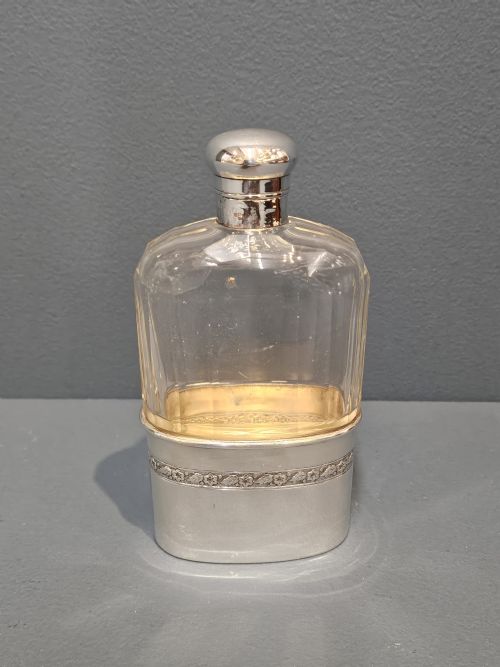


Silver Pocket Cup
A silver pocket cup is a portable drinking vessel designed for outdoor pursuits, offering refined hospitality in a compact form.
Silver Pocket Cup
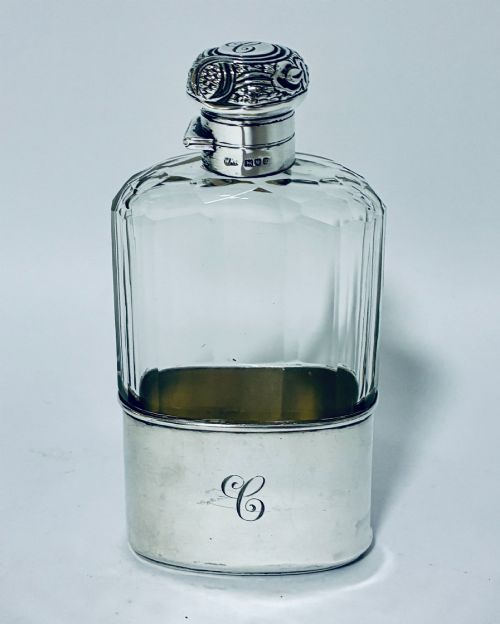
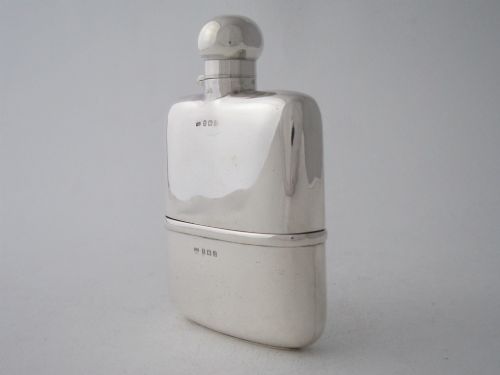
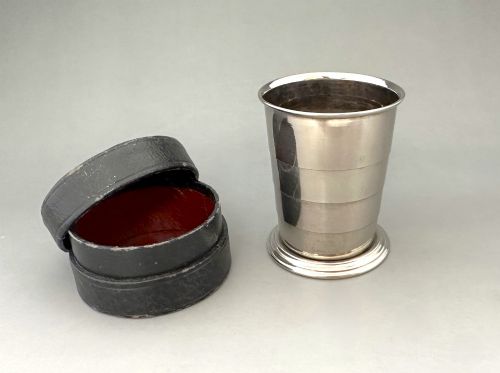
When searching for a silver pocket cup, buyers encounter a selection of historic flasks and drinking vessels originating from the late Victorian, Edwardian, and Art Deco periods. These items typically take the form of hip flasks, spirit flasks, and collapsible stirrup cups intended for travel and field sports.
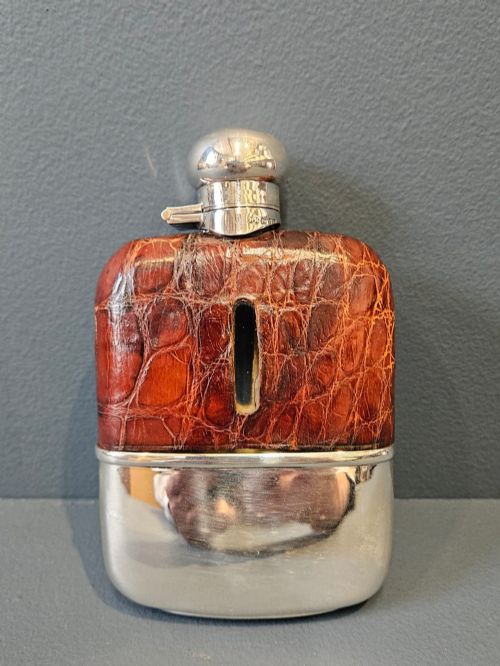
The objects span from the 1870s through the 1940s, encompassing both solid sterling silver and silver-plated wares. Many examples combine precious metal mounts with cut glass bodies or protective leather and crocodile skin coverings.
Makers and retailers such as Asprey, Hukin & Heath, and James Dixon & Sons appear frequently among the listings. The inventory reflects a tradition of portable luxury designed to slide easily into a pocket or hunting case.
How they were made
Silversmiths constructed the metal components using sterling silver or silver plate, sometimes applying a hammered finish or gilding the interior. Glass bodies feature deep hand-cutting to catch the light while providing a sturdy reservoir for spirits.
Leather and crocodile skin or leather-style coverings are stitched and fitted tightly around the glass or metal central bodies to protect the flask during travel. Removable cups slide onto the base of the flask and lock into place with secure mounts.
Silver Pocket Cup Retail Price Guide 2026
Typical asking prices for silver pocket cup among the pieces listed under this phrase on Sellingantiques today, from the lower quarter to the upper quarter. They describe what is for sale here now, not the wider market.
Listings span from the Victorian era through the 1940s, featuring materials such as cut glass, crocodile skin, sterling silver, and silver plate.
What varies in quality
The distinction between standard examples and finer pieces lies in the weight of the metal and the precision of the mechanics. Solid sterling silver mounts and fully integrated removable cups represent higher standards than plated alternatives.
The integration of exotic materials such as genuine crocodile skin alongside crisp hallmarks and clear maker attribution elevates the standing of an individual piece.
Hukin & Heath·Asprey London·James Dixon & Sons·W A Ellwick Ltd
The Silver Pocket Cup Glossary
- Sterling silver
- A silver alloy containing 92.5 percent pure silver and 7.5 percent other metals, usually copper, ensuring durability for portable items.
- Silver plate
- A base metal coated with a thin layer of silver, offering the appearance of solid silver at a different cost.
- Stirrup cup
- A traditional drinking vessel handed to a rider while seated on a horse before a hunt, often designed with a flat bottom so it cannot be set down.
- Hallmark
- An official stamp applied to precious metals indicating the standard of purity, the assay office, and the year of manufacture.
- Gilt
- A thin layer of gold applied to the interior surface of a silver cup or mount to prevent the metal from reacting with acidic spirits.
Silver Pocket Cup: Frequently Asked Questions
What is a silver pocket cup used for?
These vessels were originally carried by travellers, hunters, and sportsmen to hold spirits during outdoor excursions.
Many examples feature a detachable bottom cup that slips off the main body for drinking.
How do I identify the date of a flask?
British pieces typically bear hallmarks stamped into the metal mounts, including assay office symbols and date letters.
Matching these marks against official assay records reveals the exact year of manufacture.
Are these flasks made of solid silver?
The listings include both solid sterling silver and silver-plated items, alongside glass bodies mounted in precious metal.
Maker marks and hallmarks generally confirm whether the metalwork is solid or plated.
Why do some flasks have leather coverings?
Leather and crocodile skin wraps provided a secure grip for cold or gloved hands during field sports and travel.
These organic coverings also protected the glass body from accidental knocks.