





Silver Platter Dish
A silver platter dish brings traditional hospitality to the table, taking forms from Georgian meat domes to Edwardian serving trays.
Silver Platter Dish
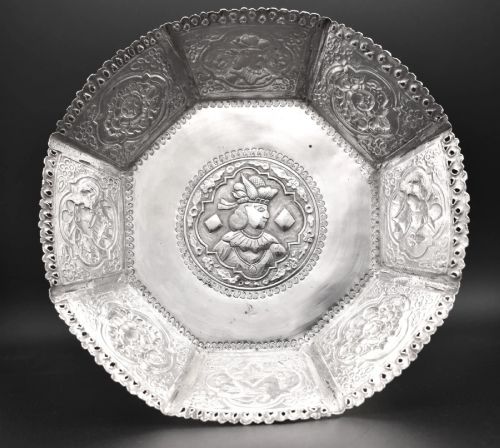
A silver platter dish encompasses a broad variety of serving vessels, trays, and meat covers designed for formal dining and display. The selections on this page range from solid sterling silver chargers and Irish platters to silver plate, Old Sheffield Plate, copper, pewter, and bronze pieces.
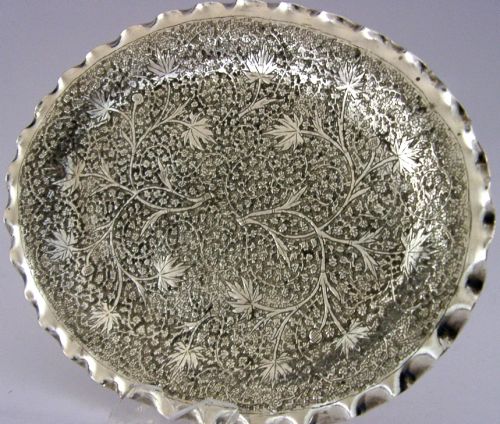
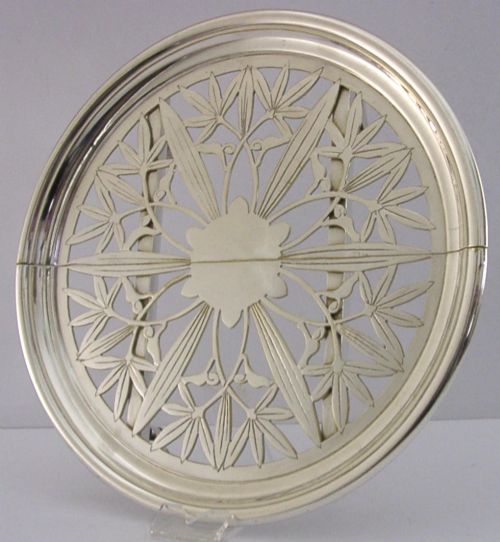
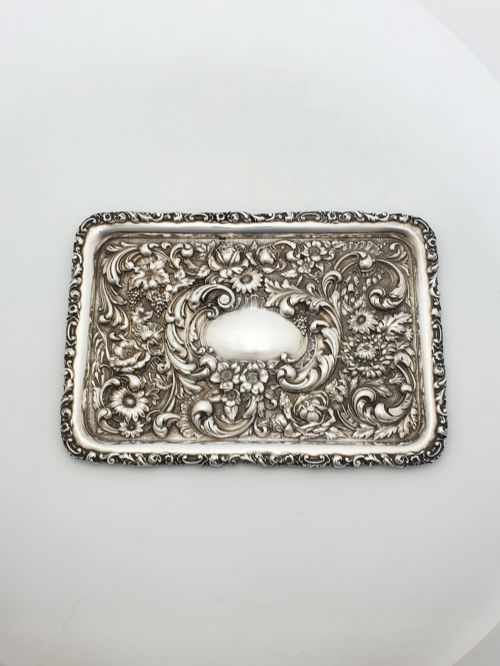
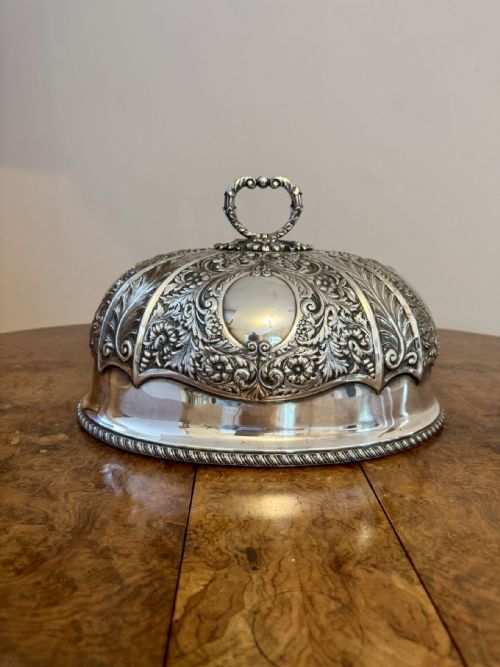
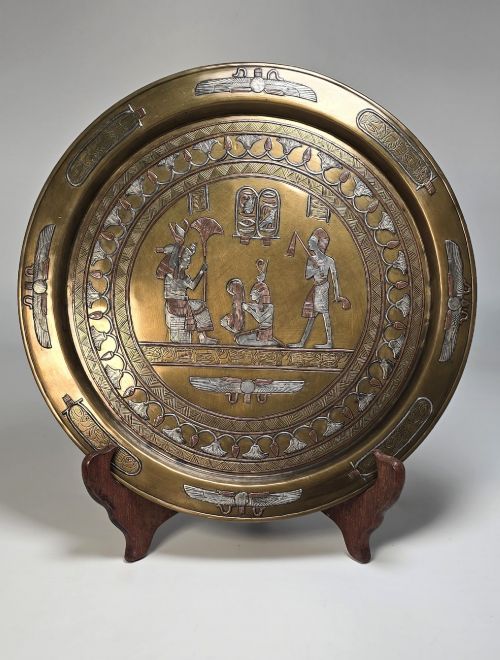
Buyers frequently encounter Edwardian silver plated entree dishes, Victorian meat domes, and Georgian serving pieces alongside decorative chargers influenced by Anglo-Indian, Egyptian Revival, and Islamic metalwork styles. Forms vary from simple rectangular warming trays to elaborate footed bowls and engraved tazzas.
The origins span English workshops, French silversmiths, and Middle Eastern or Asian centres, reflecting diverse dining customs across the eighteenth, nineteenth, and early twentieth centuries. Each piece serves either as a functional tableware item or a decorative sideboard dish.
Materials and Construction Techniques
Construction methods vary significantly between solid precious metals and plated wares, utilising techniques such as hand-beating, casting, and repoussé decoration. Solid silver and sterling pieces demonstrate detailed hammering and figural relief work, whereas many serving dishes rely on heavy silver plating over copper, bronze, or brass bases.
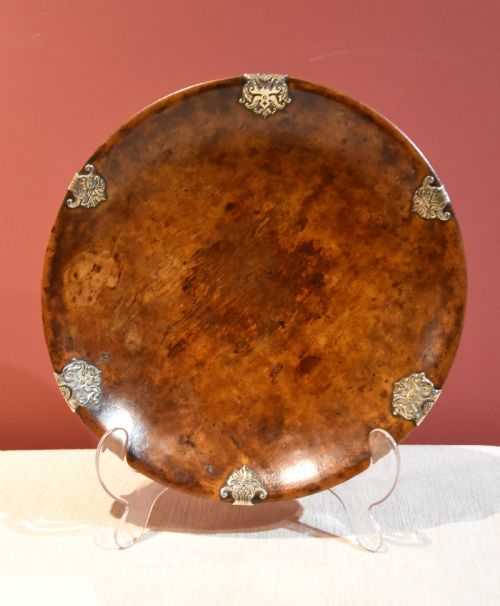
Old Sheffield Plate items employ a fused layer of silver upon a copper core, visible along exposed edges where the base metal shows through. Other pieces incorporate specialised techniques like silver inlay on patinated copper, gilt finishes, or combinations of silver mounts with wood and mirror glass.
Silver Platter Dish Retail Price Guide 2026
Typical asking prices for silver platter dish among the pieces listed under this phrase on Sellingantiques today, from the lower quarter to the upper quarter. They describe what is for sale here now, not the wider market.
Listings feature items spanning the eighteenth to the twentieth centuries, utilising materials from pewter and copper to solid sterling silver and Old Sheffield Plate.
Distinctions in Execution and Preservation
Quality in a silver platter dish depends heavily on the crispness of chased or repoussé ornament and the structural integrity of the base metal. Pieces featuring deep floral engraving, substantial weight, and well-preserved plating or patination stand apart from lighter, mass-produced items.
Maker execution dictates the finer details, seen in the balance of cast handles, the alignment of fitted covers, and the retention of original silver layers on Old Sheffield Plate or plated bronze. Marks of skilled craftsmanship remain evident in the hand-finished surfaces and integrated armorial or floral motifs.
Roberts Cadman·Henry Wilkinson·Matthew Boulton·Walker Knowles·Hamilton Inches·Robert Breading·Walker Hall·Puiforcat·Christofle
The Silver Platter Dish Glossary
- Old Sheffield Plate
- An early composite material made by fusing a sheet of silver to a copper ingot before rolling, common in Georgian tableware. Pieces often reveal thin lines of copper beneath worn silver edges.
- Repoussé
- A metalworking technique where the artisan hammers the design from the reverse side to form a raised relief on the front. This method creates decorative floral and figural scenes on chargers and trays.
- Entree dish
- A covered serving vessel designed to hold main course portions or side dishes at the dining table. They frequently feature removable handles and compartmented liners.
- Meat dome
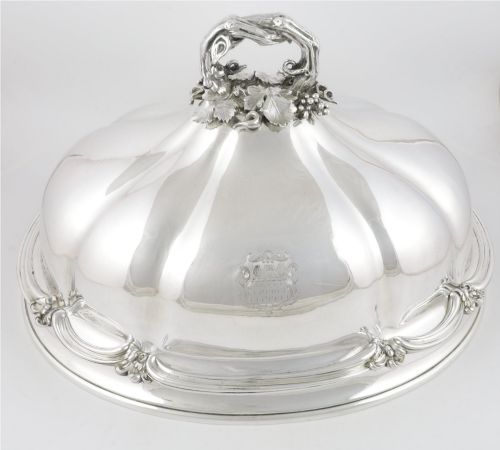
- A large, domed cover used to keep roasted joints warm on a serving platter. These pieces often include engraved crests or handles shaped as naturalistic foliage.
Silver Platter Dish: Frequently Asked Questions
What is the difference between a charger and a platter?
A charger is primarily a large decorative or base plate used beneath smaller dinner plates during formal dining. Platters are functional serving dishes specifically shaped for presenting meats, fish, or vegetables.
While both share wide rims and flat centres, chargers often feature heavier decorative chasing or figural battle scenes. Platters are typically plain or engraved with crests to suit the practical demands of food service.
How do I care for antique silver plated dishes?
Antique silver plated items require gentle cleaning with non-abrasive silver polishes to preserve the underlying metal layers. Avoid harsh scrubbing that can wear through thin plating, particularly on Old Sheffield Plate where copper may be exposed.
Store pieces in dry environments and use tarnish-resistant cloths if they are displayed on sideboards or walls. Regular, soft dusting prevents the accumulation of grime in chased or repoussé crevices.
Can these dishes still be used for serving food?
Many serving dishes, entree containers, and warming trays remain entirely functional for modern dining. Solid silver and thick silver plated items handle warm foods safely once thoroughly cleaned.
Pieces with delicate silver inlay, mirror glass bases, or worn plating are better suited for display rather than active food service. Checking the interior condition helps determine whether a vessel is appropriate for the table.
How do I distinguish Old Sheffield Plate from later electroplate?
Old Sheffield Plate shows a distinct copper line along cut edges or worn high points where the fused silver layer has thinned. This material dates primarily from the Georgian era up to the mid-nineteenth century.
Later electroplate, marked as EPNS or silver plate, displays an even silver coating across the entire surface without exposed base metal edges. Electroplated wares generally date from the Victorian period onwards.