


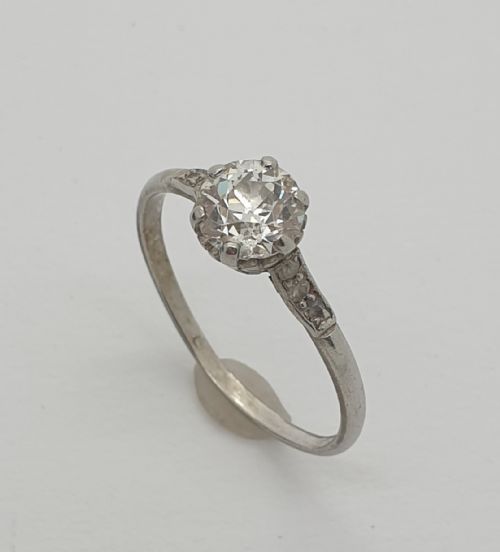
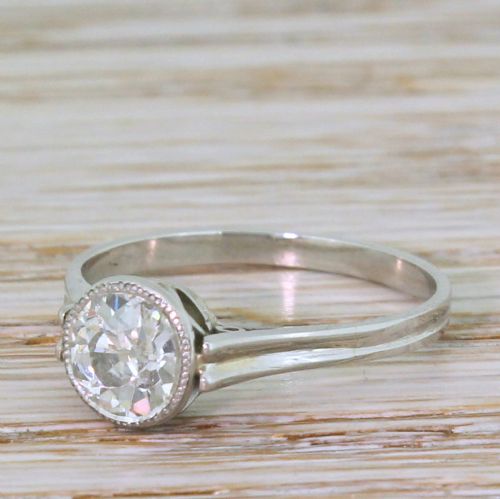


Silver Platinum Solitaire Ring
A silver platinum solitaire ring brings together classic stones and durable metals, offering an enduring choice for engagement jewellery.
Silver Platinum Solitaire Ring
A silver platinum solitaire ring focuses attention on a single central diamond mounted within robust metal settings. These pieces primarily emerge from periods spanning the early twentieth century through the mid-century decades.
Art Deco and mid-century aesthetics dominate the available forms, often showcasing geometric lines or minimalist profiles alongside the primary gemstone. Engagement rings form the core of what collectors encounter in this category.
The combination of diamond and platinum creates a bright, cohesive appearance that defines many examples from the 1920s and 1930s. White gold also appears occasionally as an alternative white metal framing the central stone.
Materials and construction methods
Craftsmen utilised durable platinum and white gold to secure central diamonds, ensuring the metal could support intricate detailing without losing structural integrity. Settings frequently feature old cut or old mine cut diamonds as the primary focal point.
Certain rings incorporate rose cut diamond shoulders to frame the central stone, adding texture and subtle sparkle to the band. Metalwork techniques from the Art Deco period prioritise secure prong or bezel mounts to hold substantial carat weights.
Listings span the 1920s to the 1960s, featuring platinum, white gold, and diamond materials across Art Deco and mid-century styles.
Factors distinguishing individual examples
The cut and carat weight of the central diamond largely determine the visual impact of each piece, with older cuts displaying distinct faceting patterns. Variations in shoulder design, such as additional rose cut stones, separate simpler bands from more elaborate iterations.
The precision of period metalwork and the condition of the platinum settings influence how light interacts with the mounted diamond. Art Deco examples often exhibit meticulous geometric arrangement that enhances the overall presence of the ring.
The Silver Platinum Solitaire Ring Glossary
- Solitaire ring
- A ring featuring a single mounting for one primary gemstone, most commonly a diamond. This setting style maximises the visibility of the central stone.
- Old cut diamond
- A diamond cut by hand during the late nineteenth or early twentieth century, characterised by a smaller table and larger facets. These stones produce a distinctive softer glow under candlelight.
- Old mine cut diamond
- An early cushion-shaped diamond cut with a high crown and deep pavilion, typical of older jewellery. This cut predates modern brilliant standards.
- Platinum
- A dense, durable white metal prized for its strength and hypoallergenic properties in fine jewellery. It holds secure settings for precious stones over long periods.
- Rose cut diamond
- A diamond cut with a flat base and a domed top covered in triangular facets resembling a rosebud. This style produces a translucent, subtle shimmer.
Silver Platinum Solitaire Ring: Frequently Asked Questions
What defines a silver platinum solitaire ring?
A silver platinum solitaire ring centres on a single diamond mounted in a bright white metal band, drawing influence from early twentieth century design.
These pieces typically date from the Art Deco and mid-century eras, balancing durability with refined aesthetic details.
How do I identify Art Deco rings?
Art Deco rings display distinct geometric lines, sharp angles, and precise symmetry in their metalwork and stone settings.
Such characteristics reflect the architectural influences prevalent during the 1920s and 1930s.
What are old cut diamonds?
Old cut diamonds are hand-faceted stones featuring larger facets and smaller tables compared to modern brilliant cuts.
They produce a unique, warmer twinkle that distinguishes antique jewellery from contemporary pieces.
How should I care for platinum settings?
Platinum requires gentle cleaning with warm soapy water and a soft brush to maintain its polished white surface.
Regular checks by a jeweller ensure the prongs holding the central diamond remain secure.