




Silver Plated Glass Cooler
A silver plated glass cooler brings sparkle to the table, combining clear vessels with gleaming metal mounts for chilling wine, ice or butter.
Silver Plated Glass Cooler
When you search for a silver plated glass cooler, you encounter a selection of vessels designed for chilling ice, wine, caviar, and butter at the dining table or bar. These pieces combine a transparent glass or crystal body with plated metal mounts, rims, or swing handles.
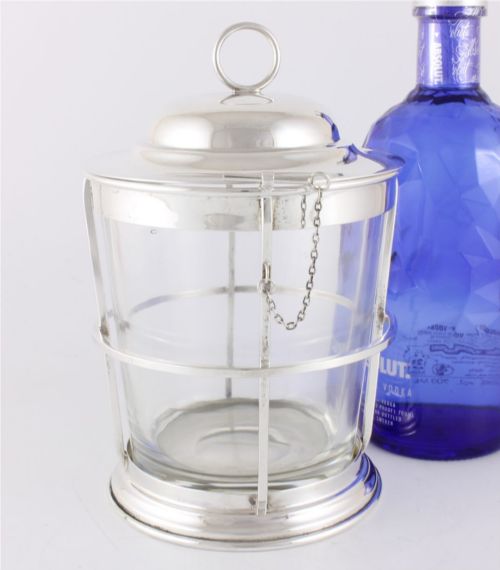
The versions most frequently met on this page date from the Victorian era through the mid-twentieth century, spanning Art Deco, Edwardian, and Scandinavian Modern styles. Forms range from heavy champagne buckets and ship's lantern ice pails to cut crystal ice servers and butter dishes with fitted glass liners.
Origin and period vary across the selection, including English and French examples alongside pieces from Scandinavian workshops. Makers such as PH Vogel and Mappin & Webb appear among the listings, marking higher production standards in barware and tableware.
Materials and construction
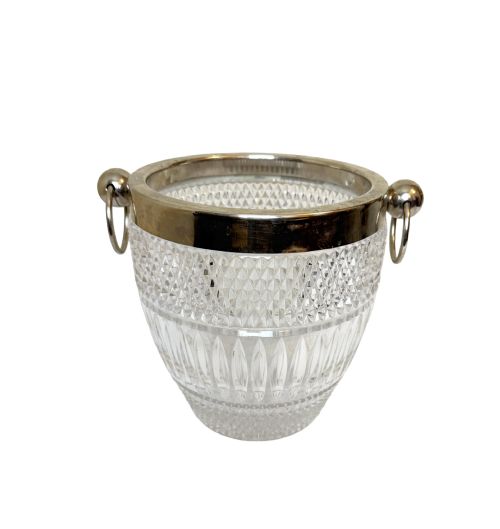
The primary bodies utilise lead crystal, cut glass, or pressed glass, often featuring deep hobnail cutting or smooth transparent walls designed to catch the light. Liners are custom-fitted to the glass or metal containers to hold ice and perishables.
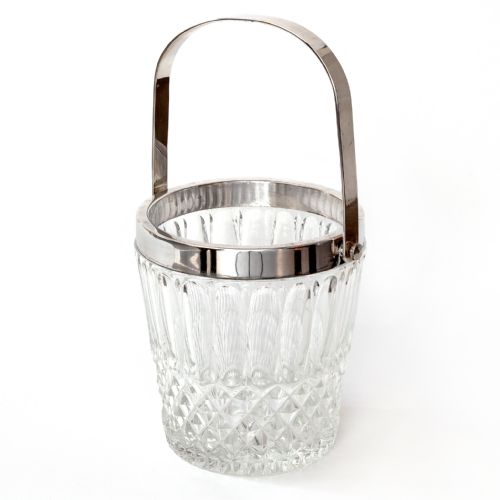
Mounts, handles, and frames are executed in silver plate or silverplate over a base metal, frequently shaped into swing bails, collars, and decorative rims. Metal components are secured to the glass vessels using collars and screws suited for table service.
Some Edwardian ice buckets resemble nautical ship's lanterns, letting you chill your gin and tonic while pretending you navigate stormy seas.
Assessing quality and craftsmanship
Quality separates through the weight and clarity of the glass vessel, where heavy lead crystal and sharp hand-cut facets distinguish finer pieces from simpler moulded glass. The depth and evenness of the silver plating across handles and rims also indicate superior manufacture.
Design sophistication dictates the value, with specialised forms like ship's lantern ice pails or hobnail cut water jugs with interior coolers demonstrating advanced craftsmanship compared to standard butter dishes.
PH Vogel·Mappin & Webb
The Silver Plated Glass Cooler Glossary
- Silver Plate
- A thin layer of silver bonded to a base metal such as copper, brass, or nickel silver. This technique provided the appearance of solid silver at a lower cost for nineteenth and twentieth-century tableware.
- Lead Crystal
- Glass containing a high proportion of lead oxide, which increases the weight, refractive index, and clarity of the material. It allows for deep, crisp facet cutting.
- Hobnail Cut
- A decorative glass-cutting pattern consisting of raised, rounded pyramidal facets resembling the hobnails on boots. It creates intense light refraction across ice buckets and water jugs.
- Butter Dish
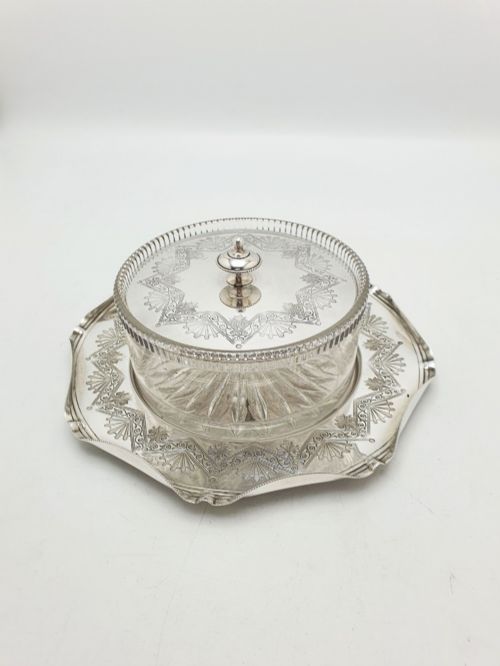
- A tabletop serving vessel typically comprising a silver plated cover, a base, and an interior glass liner to keep butter cool. Victorian examples often feature ornate engraved covers.
- Caviar Ice Server
- A specialised multi-part serving set designed to keep delicate roe chilled over crushed ice. Scandinavian Modern examples often pair minimalist silver plate with clean glass forms.
Silver Plated Glass Cooler: Frequently Asked Questions
What are silver plated glass coolers used for?
These vessels serve to chill ice, champagne, wine, butter, and caviar during dining and entertaining. The glass body holds the chilled contents while the silver plated mounts provide handles and rims for serving.
Many pieces include fitted glass liners or interior chambers specifically designed to keep ice separate from meltwater or to suspend food above the cooling element.
How do I clean and polish silver plate?
Silver plate requires gentle cleaning with a specialised cream and a soft cloth to avoid wearing through the thin silver layer to the base metal. Warm soapy water cleans the glass components safely.
Harsh abrasive dips and aggressive scrubbing must be avoided, particularly around engraved or faceted areas where residue can accumulate in the recesses of the cut glass.
How do I date a silver plated glass cooler?
Dating relies on stylistic clues, such as the geometric lines of Art Deco pieces from the 1920s versus the elaborate ornamentation of Victorian butter dishes from the 1880s. Maker marks stamped on the silver plated mounts also help narrow down the production decade.
Glass manufacturing techniques further assist with dating, as heavy hand-cut lead crystal differs distinctively from mid-century Scandinavian modern forms.
Can I use antique ice buckets for daily dining?
Sturdy lead crystal and heavy silver plate withstand regular use on the dining table or home bar. Care must be taken with antique glass to prevent thermal shock from extreme temperature changes.
Hand washing preserves both the glass clarity and the delicate silver plating far better than automatic dishwashers.