

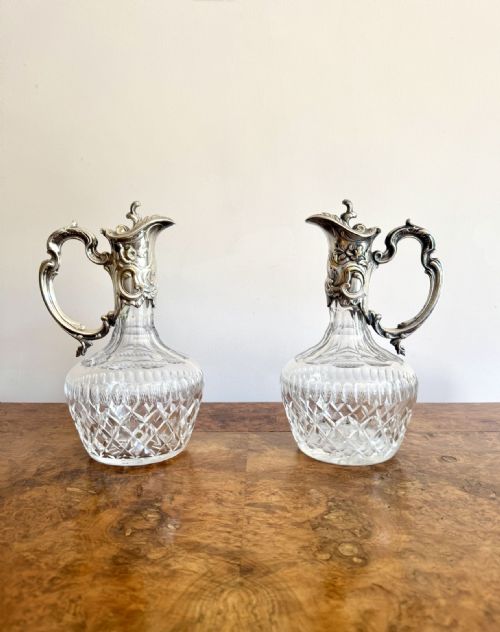


Silver Plate Wine Jug
A silver plate wine jug brings the rich materiality of the nineteenth and early twentieth centuries directly to the table.
Silver Plate Wine Jug
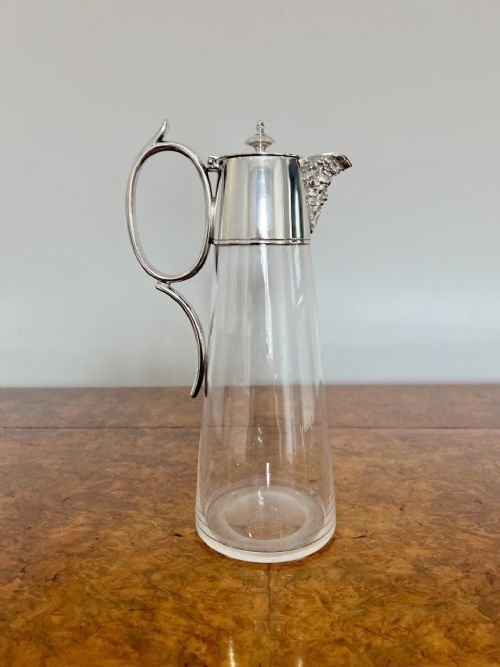
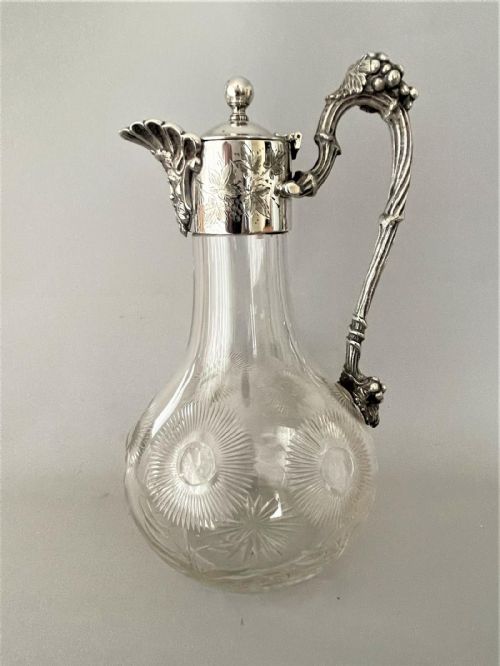
A silver plate wine jug is a serving vessel designed for claret, wine, or water, commonly taking the form of a claret jug, pitcher, ewer, or decanter. These pieces appear frequently from the Victorian and Edwardian eras, alongside items originating in the nineteenth century.
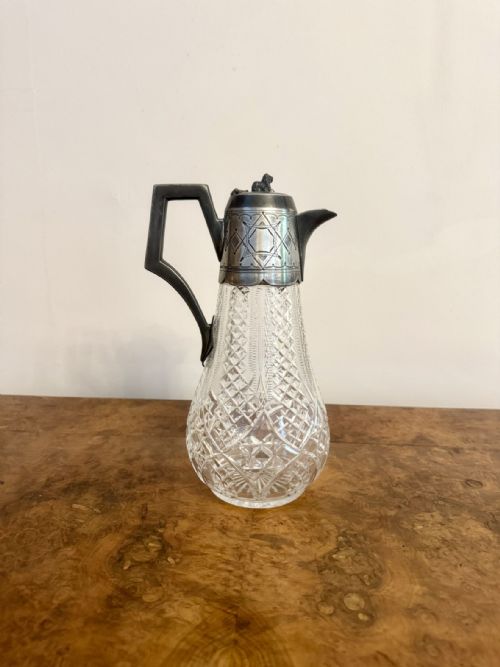
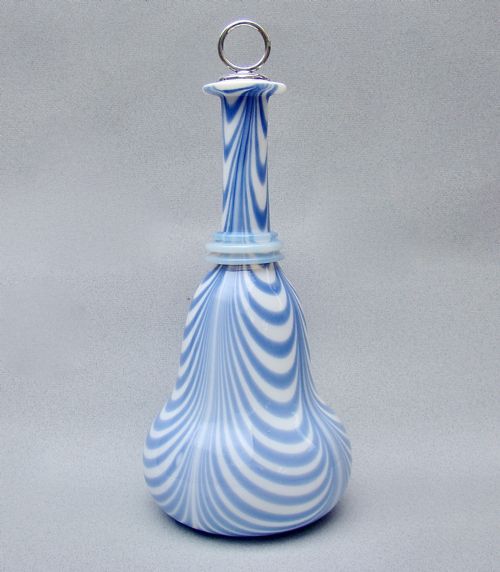
The dominant design encountered on this page pairs a glass or crystal body with silver plated mounts, hinged covers, and handles. Vessels also incorporate cut glass, etched glass, cranberry glass, Nailsea glass, and Old Sheffield Plate.
Forms extend beyond standard table service to include wine flagons, ewers, and specialised vessels bearing coats of arms or commemorative inscriptions. Makers and designers such as Henry Bourne, Elkington, Hukin & Heath, Dr Christopher Dresser, Valenti, and WMF contribute distinctive silhouettes ranging from classic revival styles to Art Nouveau and Arts and Crafts forms.
How they were made
Makers combined metalwork and glass production, uniting silver plate or Old Sheffield Plate mounts with blown bodies of cut glass, crystal, or coloured glass. Mounts were cast, chased, or electrotyped to form hinged lids, collars, and handles.
Techniques varied from traditional fused plate methods in earlier pieces to later electroplating processes on base metals. Glass bodies featured wheel-cutting, etching, or specialised glass-making traditions like Nailsea and cranberry glass.
What varies in quality
Quality rests in the weight and clarity of the glass body, the crispness of the chasing or cutting on the silver plate mounts, and the integration of handle and lid mechanisms. Superior examples exhibit substantial crystal bodies paired with heavy, well-balanced metal mounts.
Design distinction elevates certain pieces, particularly those bearing the marks of recognised designers or firms that introduced forward-thinking lines. The precision of execution in figural details, etching, and handle attachments separates standard production items from exceptional works.
Henry Bourne·Elkington·Hukin & Heath·Dr Christopher Dresser·Valenti·WMF
The Silver Plate Wine Jug Glossary
- Old Sheffield Plate
- A fused composite material made by melting a sheet of silver to a thicker copper base before rolling. This technique predates modern electroplating.
- Claret Jug
- A specialised pouring vessel created specifically for serving red wine, typically featuring a glass body with a metal handle, collar, and hinged lid.
- Electrotype
- A metal object produced by electrodeposition in a bath, allowing complex three-dimensional forms and surface details to be built up over a mould.
- Ewer
- A large pitcher with a wide spout and a curved handle, traditionally used for holding and pouring liquids at table.
- Nailsea Glass
- Glassware characterised by distinctive loopings, trails, or splashed colour effects within the clear or coloured glass body.
Silver Plate Wine Jug: Frequently Asked Questions
What is a silver plate wine jug used for?
These vessels were originally manufactured to serve claret and other table wines during formal dining services in the nineteenth and early twentieth centuries. The combination of glass and metal allowed hosts to present and pour wine cleanly at the table.
Today, they function as decorative dining accessories or functional decanters for contemporary gatherings. Their aesthetic presence makes them popular display items on sideboards and dining tables.
How do I clean silver plate?
Silver plate requires gentle cleaning with a specialised silver polish and a soft cloth to avoid wearing away the thin silver layer over the base metal. Harsh abrasives and chemical dips should be avoided to preserve the original finish and any chasing.
Glass bodies can be washed separately in warm soapy water using a bottle brush if necessary. Care must be taken around hinged mounts and organic handles during washing.
How do I date a silver plate wine jug?
Dating relies on a combination of stylistic clues, registration marks, and maker's stamps found on the metal mounts. Victorian and Edwardian pieces often display distinct design motifs, such as Aesthetic Movement geometry or flowing Art Nouveau lines.
Materials also offer clues, as Old Sheffield Plate points towards earlier nineteenth-century manufacture before electroplating became widespread. Glass cutting styles and manufacturing techniques further narrow down the production period.
Can I use these jugs for serving wine today?
These antique vessels are fully functional and can be used to decant and serve wine for meals and gatherings. The glass bodies hold liquid safely while the spouts and hinged lids facilitate smooth pouring.
Hand washing is essential after use, and wine should not be left stored inside plated vessels for extended periods. Proper care ensures the integrity of both the glass and the silver plate is maintained.