


Silver Plate Dining Candlesticks
These silver plate dining candlesticks bring light and proportion to a dining table, built from metal and silver plate to last through generations of dinners.
Silver Plate Dining Candlesticks
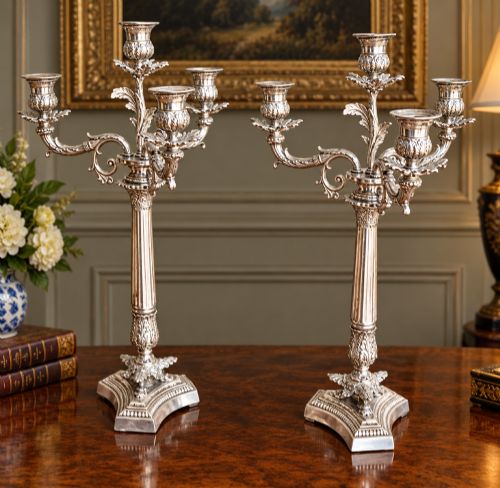
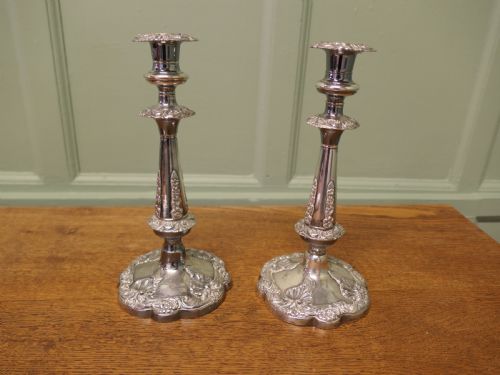
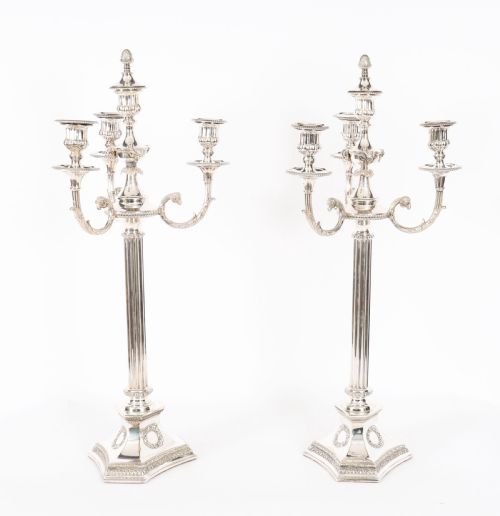
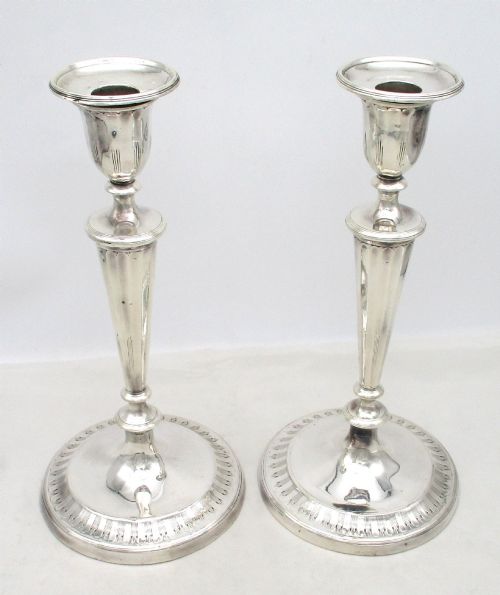
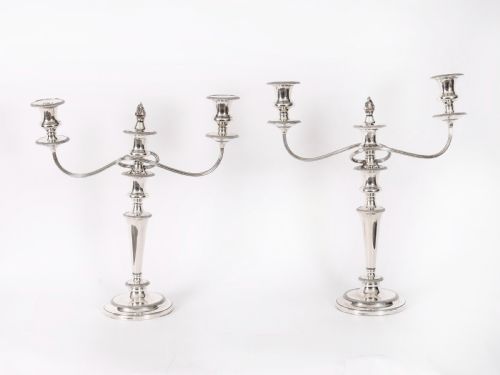
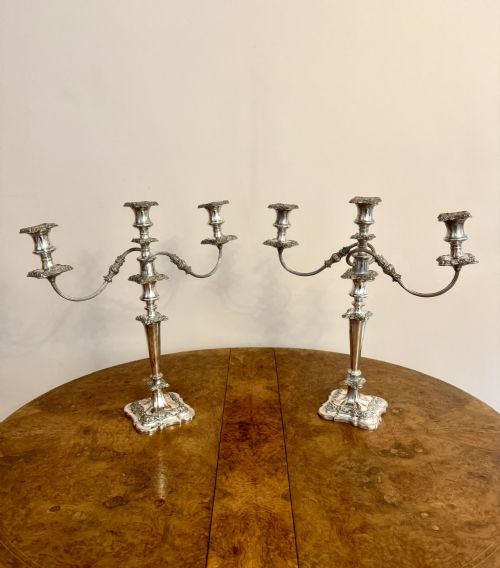
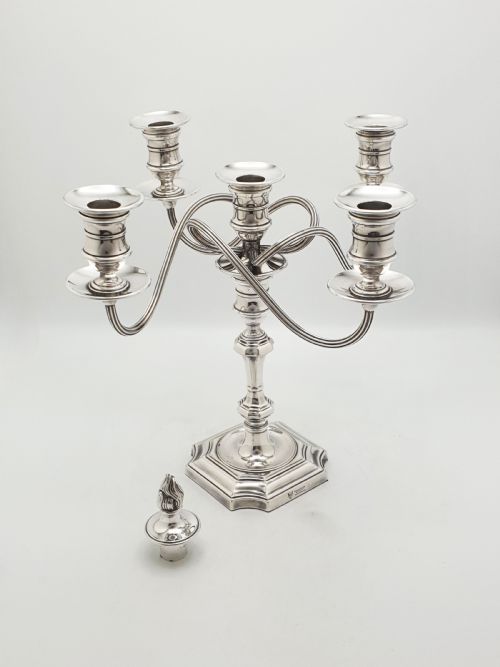
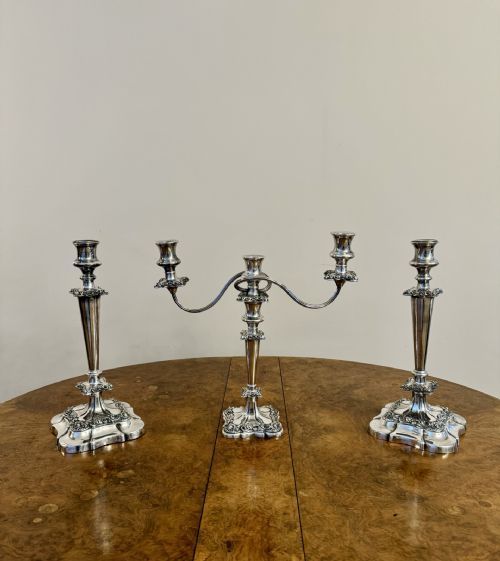
Silver plate dining candlesticks appear in various forms, from simple pairs to large multi-light candelabras designed for formal tables. The selection spans single candlesticks, branching candelabras, and sets, often featuring detachable sconces.
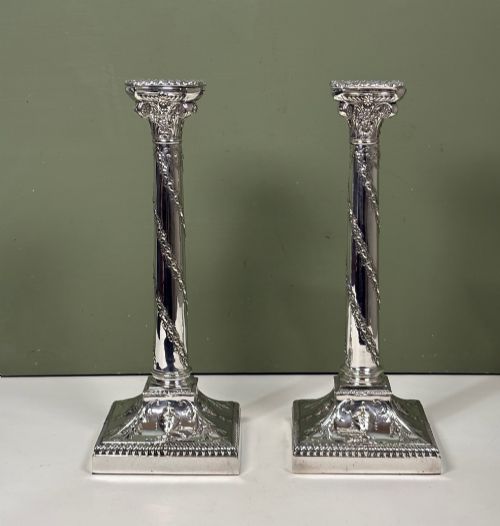
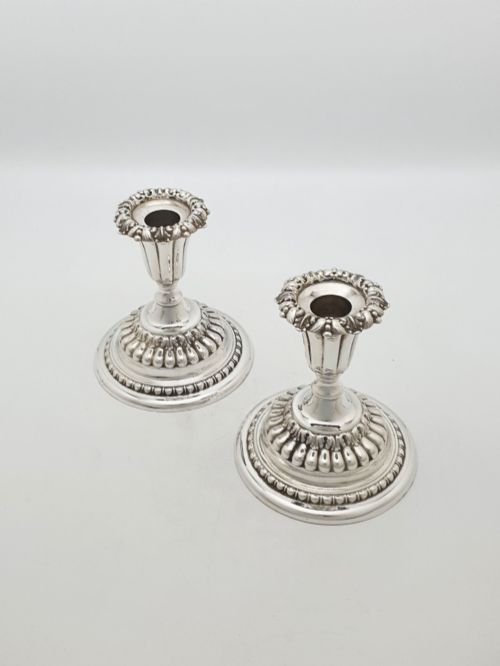
Most examples originate from the nineteenth and twentieth centuries, encompassing Victorian, Edwardian, and Georgian styles. Pieces range from low table models to tall column designs and telescopic forms.
Makers produced these lighting accessories in matching pairs and larger suites, frequently adopting neoclassical or revival aesthetics that echo earlier Georgian patterns.
Materials and construction
Silversmiths built these items using a foundation base metal such as copper, nickel silver, or standard metal, then applied a layer of silver via plating techniques or old Sheffield plate methods.
Makers constructed complex pieces with detachable parts, including multi-light branches and sconces, which allowed the objects to function as single candlesticks or full candelabras.
Listings incorporate items spanning the Georgian, Victorian, Edwardian, and 1930s periods, constructed from copper, nickel silver, and standard silver plate.
Quality and craftsmanship
The standard of an example rests upon the weight of the base metal, the thickness and durability of the silver plating, and the crispness of any chased or cast ornamentation.
Superior items maintain structural integrity across joints and branches, while simpler productions display lighter gauge metals and more restrained surface decoration.
Elkington & Co·Smith & Sissons & Co·Barker Ellis·Blagden Hodgson & Co·Garrard & Co
The Silver Plate Dining Candlesticks Glossary
- Old Sheffield plate
- A fused composite material made by heating a sheet of copper and a sheet of silver together until metallurgically bonded.
- Candelabra
- A branched lighting fixture designed to hold multiple candles simultaneously on a central stem.
- Sconce
- The removable cup at the top of a candlestick that catches dripping wax and holds the candle in place.
- Telescopic
- A form of candlestick featuring an adjustable shaft that alters the overall height of the piece.
- EPNS
- Electroplated nickel silver, a common base material used underneath a silver coating in later manufacturing.
Silver Plate Dining Candlesticks: Frequently Asked Questions
How do I polish silver plate candlesticks safely?
Clean these items using a soft cloth and a gentle silver polish formulated specifically for plated surfaces. Avoid harsh abrasive cleaners that can wear away the thin silver layer over time.
Take extra care around raised ornamentation and stamped maker marks to preserve the finish without damaging the underlying copper or nickel silver base.
Can I convert candelabras back into single candlesticks?
Many multi-light candelabras feature detachable branches and central sconces that lift off the main column. This modular construction allows the items to function as standard single candlesticks.
Check the top socket of the main shaft to see if it accepts a standard taper candle once the branching top piece is removed.
How do I tell old Sheffield plate from electroplated items?
Old Sheffield plate often reveals thin lines of copper showing through where the silver layer has worn along sharp edges or high points. This technique involves mechanically fusing silver to a copper block before rolling.
Electroplated pieces, common in later nineteenth and twentieth-century production, typically use a white metal or nickel silver base that does not show a reddish copper tint underneath wear spots.
What is the best way to use these on a dining table?
Pair matching candlesticks at opposite ends of a table or use a central multi-light candelabra as a principal dining room centrepiece. Ensure the height permits guests to converse across the table without obstruction.
Utilise low table models for intimate settings and reserve taller five-branch examples for larger dining spaces and formal occasions.