
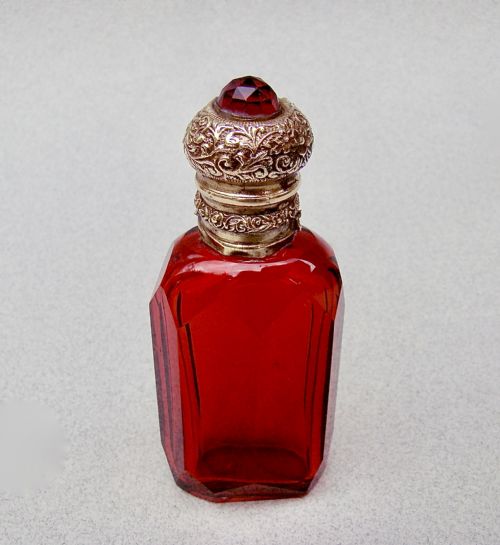


Silver Perfume Flacon
A silver perfume flacon brings pocket-sized luxury to a dressing table, combining precious metal mounts with colourful glass and enamel.
Silver Perfume Flacon
A silver perfume flacon is a small container designed to hold scent, most commonly found here in nineteenth-century and early twentieth-century forms. These pieces range from simple glass bottles with silver collars to elaborate cased trios and overlay glass designs.
Victorian and Edwardian examples dominate the selection, often featuring cut glass bodies paired with Birmingham or London silver mounts. Buyers will also encounter French glass pieces alongside geometric Art Deco designs from the nineteen thirties.
Materials and construction
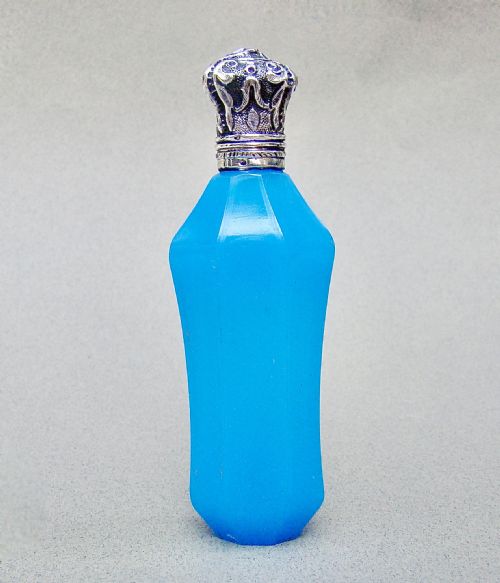
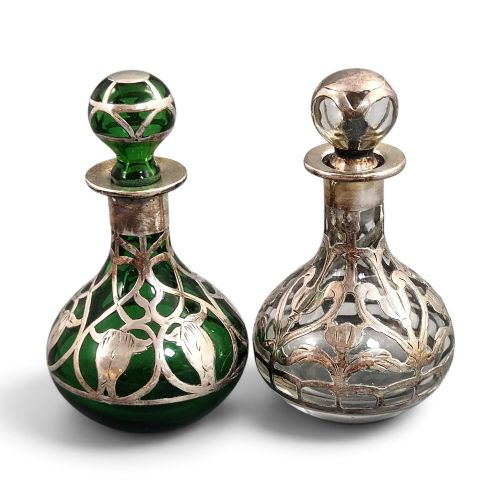
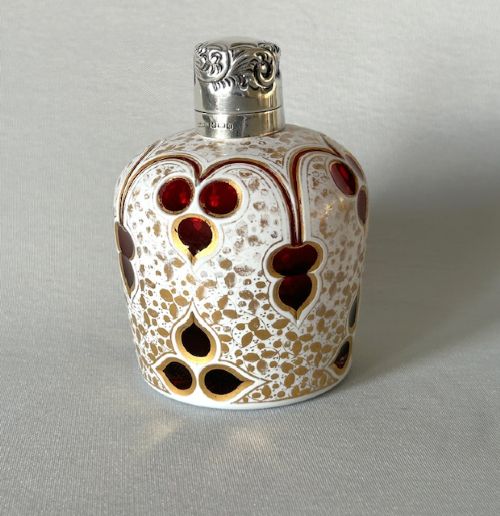
Maker's workshops combined sterling silver or silver-gilt with glass bodies, utilising techniques like silver overlay, cut glass, and guilloche enamel. Glass vessels appeared in ruby, opaline turquoise, and blue overlay varieties.
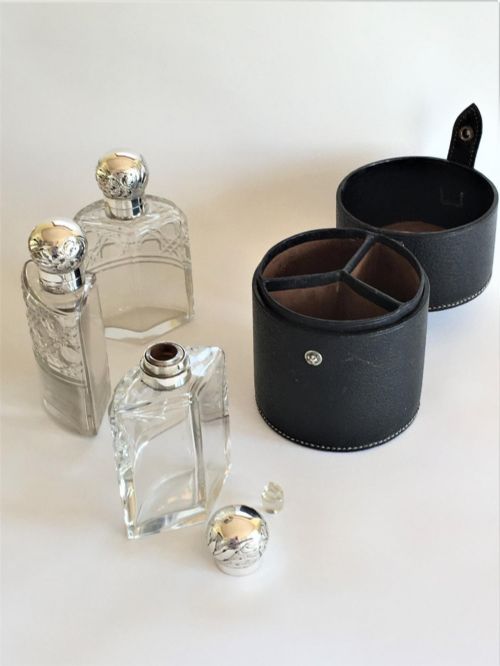
Mounts were cast or stamped in silver, fitted securely around glass necks, and sometimes paired with internal stoppers. Additional materials such as leather, velvet, and tortoiseshell completed fitted travel cases and decorative finishes.
Materials documented across the collection include ruby glass, opaline turquoise glass, tortoiseshell, and guilloche enamel.
Judging the pieces
Quality rests upon the execution of the decorative elements and the harmony between metal and glass. Intricate silver overlay, crisp facet cutting, and well-preserved enamel distinguish the finer examples from standard production.
The presence of original fitted cases or fully intact silver-gilt interiors elevates a piece. Maker attributions and documented assay marks also contribute significantly to the standing of an individual flacon.
Gorham·Karl Palda·Mappin & Webb
The Silver Perfume Flacon Glossary
- Flacon
- A small stoppered bottle used for perfume or scent. These vessels combine functional storage with decorative metalwork.
- Guilloche enamel
- A decorative technique where intricate geometric patterns are engraved beneath translucent enamel. This finish frequently appears on Art Deco pieces.
- Overlay glass
- Glass vessels created by casing one layer of coloured glass over another before cutting away sections. This technique exposes the contrasting colour underneath.
- Silver-gilt
- Silver that has been coated with a thin layer of gold. It provides a rich interior finish inside the bottle neck.
Silver Perfume Flacon: Frequently Asked Questions
How do I clean the inside of a glass scent bottle?
Resin and dried perfume residue often coat the interior of antique glass bottles over decades of use. Warm water mixed with mild cleaning beads or specialised brushes helps clear the glass without damaging the collar.
Care must be taken to keep moisture away from any cork or paper shims inside the silver mount. Thorough drying prevents clouding on the interior glass surface.
Can I travel with an antique perfume flacon?
Travelling with these pieces requires caution due to the delicate nature of historical glass and hinged silver lids. Fitted travel cases help secure the bottle against knocks and pressure changes.
Many antique stoppers rely on a ground-glass fit rather than modern rubber seals, meaning minor leakage can occur during transit. Carrying them empty remains the safest approach for fragile examples.
What is the difference between a scent bottle and a cologne bottle?
Cologne bottles generally served larger quantities meant for refreshing splashes, while scent bottles held concentrated perfume oils. Travelling cologne sets often contained multiple glass flasks housed within a leather case.
Smaller single flacons were designed for pocket use or evening bags, featuring secure screw caps or spring-loaded hinged lids.
How do I identify the date of a silver mount?
British silver mounts usually feature a set of hallmarks indicating the assay office, standard of silver, and a date letter. Birmingham and London hallmarks provide precise years of manufacture for Victorian and Edwardian items.
Foreign pieces, such as French or Bohemian imports, rely on maker marks and distinct regional metal stamps rather than standard British assay letters.