




Silver Overlaid Scent Flask
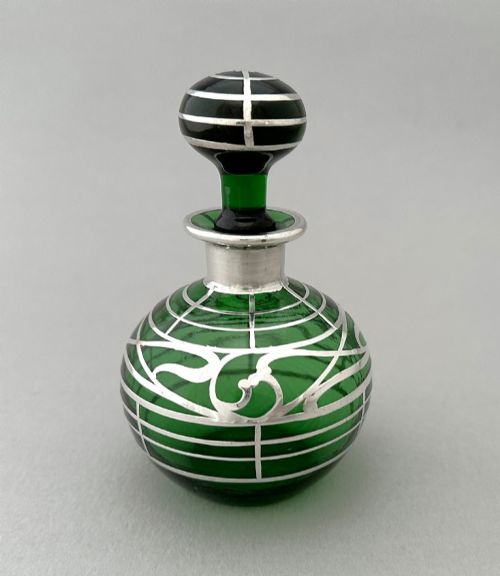
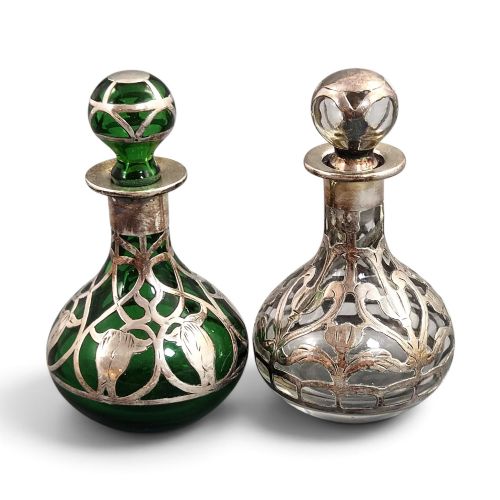
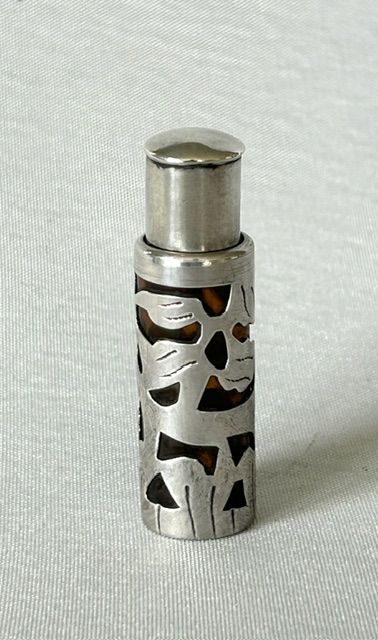
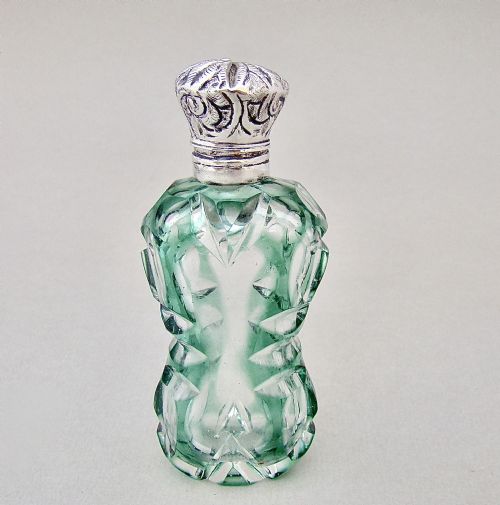
These silver overlaid scent flask examples combine precious metal work with richly coloured glass to hold fragrance in style.
Silver Overlaid Scent Flask
A silver overlaid scent flask is a portable perfume container encased or decorated with intricate metal tracery. Buyers searching this phrase will find a variety of small vessels designed for the pocket or dressing table.
The most common versions on this page date from the Victorian and Edwardian eras, often showing organic Art Nouveau motifs or classic French forms. These pieces pair gleaming sterling silver with contrasting glass bodies.
The selection includes specimens fashioned from clear cut glass as well as richly pigmented coloured glass. Forms range from simple table bottles to chatelaine flasks meant to hang from a belt.
Materials and construction methods
Maker techniques rely on fusing or securing thin sheets of silver directly onto blown glass vessels. This requires precise metalwork to follow the curves of the glass without placing undue stress on the material.
The glass bodies utilise diverse techniques including moulded cut glass, flashed mercury glass, and deeply toned translucent colours like amber, amethyst, green, and cranberry. Sterling silver is then pierced or chased into floral and ribbon patterns across the surface.
Silver Overlaid Scent Flask Retail Price Guide 2026
Typical asking prices for silver overlaid scent flask among the pieces listed under this phrase on Sellingantiques today, from the lower quarter to the upper quarter. They describe what is for sale here now, not the wider market.
These tiny flasks once held potent perfumes to help Victorian ladies survive poorly ventilated rooms and tight corsetry.
Distinguishing quality in silver overlaid scent flask items
Quality rests in the crispness of the silver overlay and the weight of the underlying glass. Finer examples display deeply chased metalwork with secure adhesion to the glass body, showing minimal gaps or lifting.
The artistic ambition of the metal design sets superior pieces apart from plain production. Elaborate Art Nouveau botanical motifs and French chateau influences demand greater skill from the silversmith than simple geometric banding.
Gorham
The Silver Overlaid Scent Flask Glossary
- Sterling silver
- A silver alloy containing 92.5 percent pure silver by mass and 7.5 percent other metals, usually copper. This standard provides the durability needed for intricate metal overlay.
- Mercury glass
- A type of blown double-walled glass filled with a liquid silvering solution and sealed at the pontil mark. It creates a highly reflective mirror finish beneath the silver overlay.
- Chatelaine
- A decorative belt hook worn from the waist with suspended chains and hooks for carrying small household items. Scent flasks made for chatelaines feature secure loops or rings.
- Art Nouveau
- An international style of art and architecture most popular between 1890 and 1910. It is characterised by asymmetrical lines and stylised floral motifs that translate well to silver overlay.
Silver Overlaid Scent Flask: Frequently Asked Questions
What is a silver overlaid scent flask?
A silver overlaid scent flask is a small personal perfume bottle encased in decorative silver metalwork. The silver is pierced, chased, or moulded directly onto the glass body.
These objects served as personal accessories for holding concentrated fragrances. They were produced extensively during the nineteenth and early twentieth centuries.
How were these bottles used historically?
Owners carried them in pockets or suspended them from chatelaine hooks attached to waistbands. They provided quick access to smelling salts or perfumes during long journeys or social gatherings.
At home, they sat on dressing tables as decorative and functional vanity items. The tight stoppers prevented the precious contents from evaporating.
How do I identify the period?
Period identification relies on stylistic cues and manufacturing techniques visible on the metal and glass. Victorian pieces often feature heavy cut glass and botanical patterns, while Edwardian examples lean towards flowing Art Nouveau designs.
Marks stamped into the silver can sometimes provide specific manufacturing years or assay office locations. The colour of the glass also points towards distinct nineteenth or early twentieth-century palettes.
How should I clean the silver?
Cleaning requires great care to avoid damaging the glass or loosening the delicate silver overlay. Gentle wiping with a soft, dry microfibre cloth removes everyday dust without abrasive friction.
Liquid silver dips should be avoided because chemical residue can become trapped beneath the overlay where the glass meets the metal. A soft brush can gently clear tarnish from the crevices of the chased patterns.