

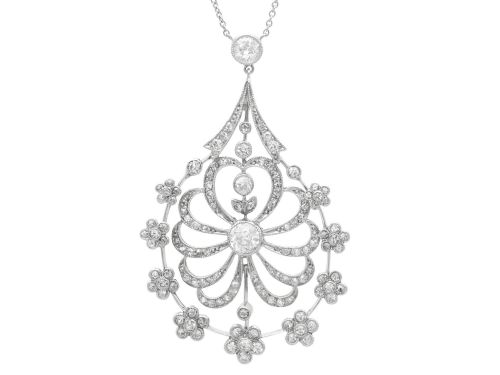
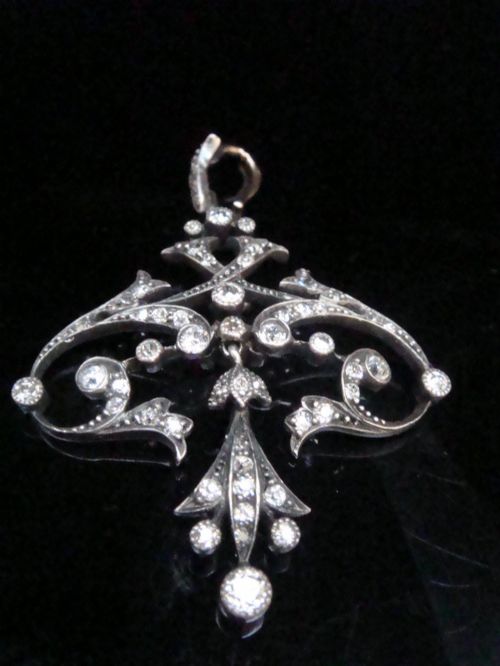


Silver Openwork Necklace
A silver openwork necklace brings intricate metalwork and stone settings together into a wearable piece of history.
Silver Openwork Necklace
The most common examples encountered on this page belong to the Edwardian and Arts and Crafts periods, often combining silver with paste, pearls, turquoise, or moonstones. Forms range from simple pendants on chains to complex multi-stone necklaces and convertible brooch-pendants.
Makers and designers from various European traditions contribute to the selection, including Danish silversmiths and English guilds. Pieces often integrate varied object types such as lavalieres, crosses, and floral drop pendants alongside standard necklace chains.
How they were made
Silversmiths constructed these necklaces using sterling silver, silver gilt, and platinum, frequently employing hand-piercing techniques to remove metal and form intricate openwork frames. Gemstones such as diamonds, sapphires, opals, and paste glass were then set into bezels or claw settings within the pierced framework.
Artisans incorporated pearls, turquoise matrix, moonstone, and chalcedony as focal points or dangling accents, suspended from delicate silver chains or linked metal sections. Gilding and platinum additions provided colour contrast and structural strength to finer Edwardian and Art Nouveau designs.
Silver Openwork Necklace Retail Price Guide 2026
Typical asking prices for silver openwork necklace among the pieces listed under this phrase on Sellingantiques today, from the lower quarter to the upper quarter. They describe what is for sale here now, not the wider market.
Several pieces double as brooches, offering a clever two-in-one Victorian trick for indecisive dressers.
What varies in quality
The calibre of a silver openwork necklace depends heavily on the precision of the piercing work and the harmony between the metal frame and the chosen stones. Superior pieces display crisp, clean apertures that enhance the lightness of the design without compromising the structural integrity of the silver.
Material selection also dictates the standard of the piece, distinguishing items set with genuine diamonds, sapphires, and natural opals from those utilising paste glass or turquoise matrix. Furthermore, documented attribution to notable workshops or specific designers elevates the standing of an individual necklace.
G. Hoppe·WH Haseler for Liberty and Co·Amy Sandheim·The Artificers Guild·Theodor Fahrner
The Silver Openwork Necklace Glossary
- Openwork
- Metalwork featuring cut-out or pierced patterns that let light pass through the design. This technique defines the airy aesthetic of Edwardian and Art Nouveau jewellery.
- Lavalier
- A pendant necklace featuring a central stone or drop suspended below a smaller connector. This style gained popularity during the Edwardian period.
- Paste
- Faceted glass cut and polished to imitate gemstones. Historic paste stones often exhibit distinct hand-cut facets and dark backing foils.
- Silver Gilt
- Silver covered with a thin layer of gold. This treatment adds warmth and richness to the underlying metal frame.
- Brooch-Pendant
- A dual-purpose piece equipped with both a pin fitting and a suspension loop. This allows the item to be worn pinned to clothing or hung from a chain.
Silver Openwork Necklace: Frequently Asked Questions
How do I clean a silver openwork necklace?
Clean silver openwork gently using a soft microfibre cloth to avoid catching delicate prongs or piercing edges. Keep harsh liquid dips away from softer stones like pearls, opals, and turquoise.
Store the necklace flat in a lined box to prevent the chain from tangling and to protect fragile openwork sections from bending under pressure.
Can I wear these necklaces every day?
Wearing historic silver jewellery daily is possible with mindful care, particularly with sturdier sterling silver or platinum settings. Items featuring softer gems or pearls require greater caution against knocks and cosmetics.
Remove the necklace before swimming, bathing, or sleeping to preserve the integrity of the delicate metal links and stone settings.
How can I tell an Edwardian piece apart?
Edwardian necklaces often showcase platinum or silver settings filled with delicate openwork, millegrain edges, and diamonds or pearls. The aesthetic leans towards light, lace-like structures and refined floral motifs.
In contrast, Arts and Crafts examples emphasise hand-beaten silver surfaces and cabochon stones like moonstone and opal, prioritising artisanal craftsmanship over glittering gemstones.
What is the difference between paste and real stones?
Paste refers to heavy, high-lead glass that artisans hand-cut and polished to imitate diamonds and coloured gemstones. Under magnification, paste shows tiny bubbles or rounded facet junctions rather than the crystalline structure of natural minerals.
Historic paste pieces often use closed-back settings with foil linings to enhance the sparkle and colour depth of the glass.