





Silver Oil Bottle
A silver oil bottle combines cut glass and silver mounts to serve oil and vinegar at the dining table with elegance.
Silver Oil Bottle
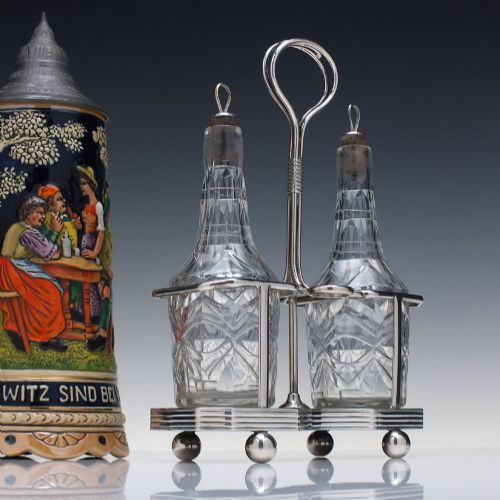
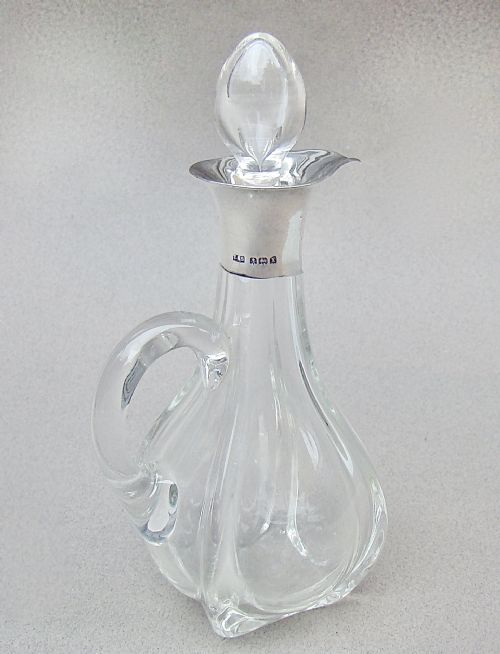
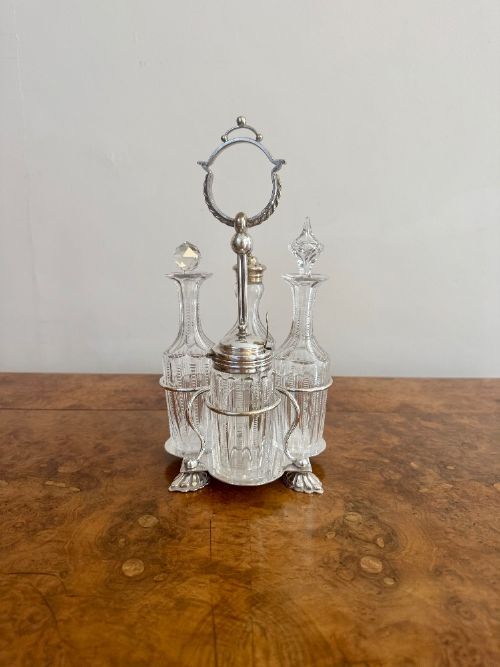
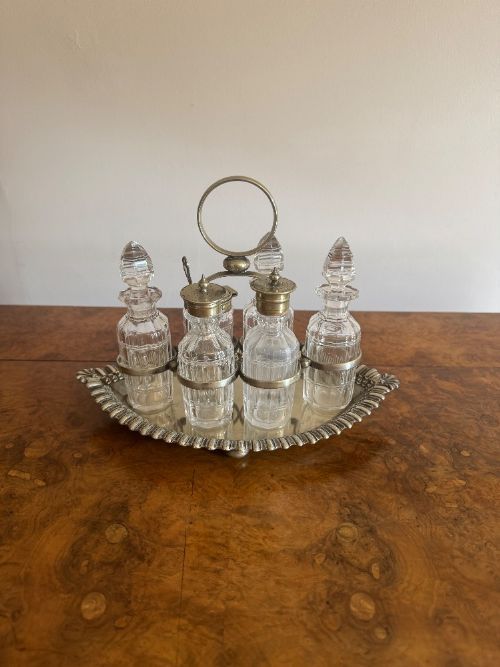
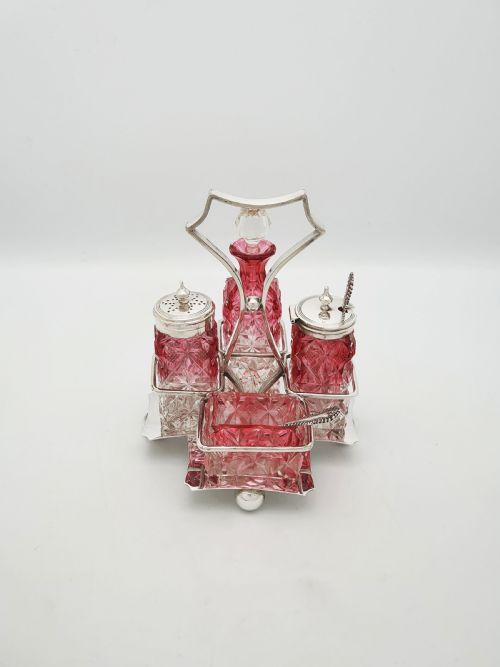
A silver oil bottle for a silver oil bottle search is typically a glass vessel fitted with a silver mount, cap, or handle, often appearing as a standalone piece or paired as oil and vinegar bottles. Buyers frequently encounter these items within Edwardian and Victorian cruet sets or as individual table bottles from the Georgian period.
Materials and construction
Makers combined clear, cut, or cranberry flashed glass with sterling silver or silver plate, utilising ebonised wood for specific stand bases. Glass bodies were blown and cut to create panels or flutes, while silver mounts, caps, and collars were shaped and hallmarked to fit the bottle necks precisely.
Techniques involved secure silver framing for glass vessels, ranging from simple hinged caps on single bottles to complex stands holding multiple condiment bottles and casters.
Silver Oil Bottle Retail Price Guide 2026
Typical asking prices for silver oil bottle among the pieces listed under this phrase on Sellingantiques today, from the lower quarter to the upper quarter. They describe what is for sale here now, not the wider market.
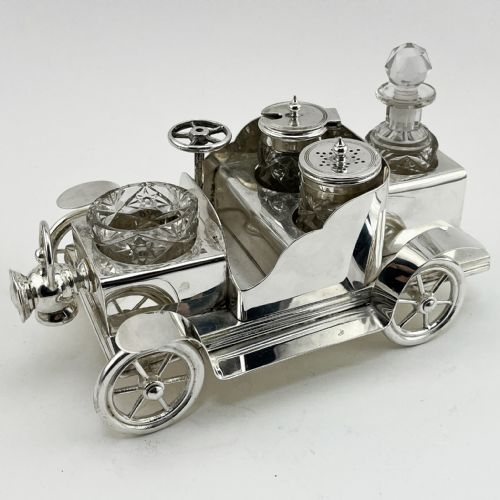
An unexpected vintage car cruet set proves that Victorian travellers took their condiments seriously on the road.
Judging quality in silver oil bottles
Quality rests on the crispness of the glass cutting and the weight and finish of the silver mount or stand. Pieces with clear hallmarks, original matched glass bottles, and substantial silver content demonstrate superior craftsmanship.
The distinction between standard silver plated examples and solid sterling silver pieces, particularly those bearing the marks of recognised makers, defines the upper tiers of the market.
Charles Thomas Fox·Elkington & Co·Hester Bateman·Robert and David Hennell·William Hutton & Sons
The Silver Oil Bottle Glossary
- Cruet set
- A collection of glass bottles or castors mounted on a frame for holding condiments at the table. These sets often included specific bottles for oil and vinegar alongside mustard pots and pepper castors.
- Cranberry glass
- A rich red glass created by adding gold chloride to the molten batch during manufacturing. It appears frequently in Edwardian cruet sets.
- Silver plate
- A base metal coated with a thin layer of silver using electroplating or older fusion methods. Many Victorian and Edwardian cruet stands utilise this technique.
- Sterling silver
- An alloy containing ninety-two point five percent silver by mass, with the remainder being other metals such as copper. It forms the primary material for high-end Georgian and Victorian pieces bearing official hallmarks.
Silver Oil Bottle: Frequently Asked Questions
What is a silver oil bottle used for?
A silver oil bottle holds and dispenses table oils and vinegars, combining a functional glass container with a decorative silver mount or cap. They were essential elements of formal dining service across the Georgian, Victorian, and Edwardian periods.
Standalone single bottles as well as paired oil and vinegar vessels allowed diners to dress salads or season dishes at the table. Their polished silver collars and stoppers prevented drips while adding a refined decorative touch to the dining room.
How do I identify a Georgian piece?
Georgian pieces display distinct architectural forms, heavier glass cutting, and often carry early London or provincial hallmarks stamped directly onto the silver mounts. These items typically date from the eighteenth to early nineteenth century.
Examining the style of the cut glass and the shape of the cruet stand helps separate these earlier examples from later Victorian reproductions or Edwardian adaptations. Genuine Georgian silver mounts carry maker marks that link directly to recorded silversmiths of the era.
Are all oil bottles part of a cruet set?
Many oil and vinegar bottles were manufactured as individual pairs or standalone table items rather than part of larger cruet frames. Surviving examples include both single vessels and multi-bottle sets.
While some bottles originally sat within fitted stands alongside mustard pots and pepper castors, others were designed specifically as independent double cruets for oil and vinegar.
How should I clean silver mounts on glass?
Cleaning silver mounts requires avoiding harsh abrasive polishes that might scratch the surrounding glass or wear away thin silver plating. A soft cloth and a gentle, silver-specific cleaning cream applied carefully around the glass neck preserves the metal.
Keeping moisture away from any glued or fitted joints inside the collar prevents damage to the historic bonding between the glass bottle and the silver mount.