





Silver Mounted Whiskey Noggins
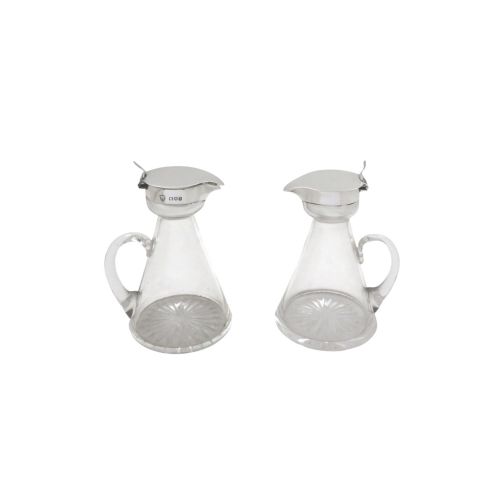
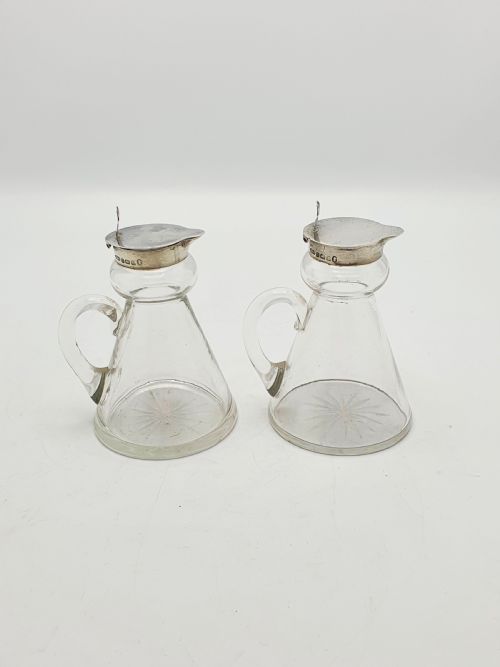
Silver mounted whiskey noggins are compact twentieth-century drinking vessels offering a sturdy glass body topped with sterling silver mounts.
Silver Mounted Whiskey Noggins
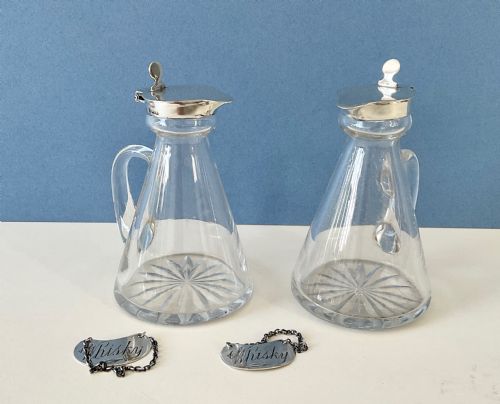
Silver mounted whiskey noggins are small decanters designed for single servings of spirits, frequently encountered from the Edwardian and George V periods. The form typically combines a clear or cut glass body with a hinged sterling silver lid, collar, and sometimes an accompanying label. Collectors searching for silver mounted whiskey noggins will find pieces originating primarily from the 1910s, 1920s, and 1930s.
The objects serve as functional barware, functioning both as individual decanters and as table jugs for spirits. The listings on this page span several decades of twentieth-century manufacture, reflecting standard domestic barware of the era. Buyers most commonly meet single pieces or matched pairs bearing hallmarks from the early decades of the twentieth century.
How they were made
The construction of silver mounted whiskey noggins relies on the combination of blown or cut glass and sterling silver metalwork. Glass bodies are formed into compact jug or decanter shapes, occasionally featuring cut glass detailing for visual texture. Sterling silver is then fabricated into fitted collars and hinged lids that secure directly to the neck of the glass vessel.
Makers utilised traditional silversmithing techniques to attach the silver mounts firmly to the glass, often incorporating hallmarks to designate the year of assay and the standard of the metal. The pairing of clear glass with hallmarked sterling silver creates a durable piece of barware designed for regular use.
Silver Mounted Whiskey Noggins Retail Price Guide 2026
Typical asking prices for silver mounted whiskey noggins among the pieces listed under this phrase on Sellingantiques today, from the lower quarter to the upper quarter. They describe what is for sale here now, not the wider market.
These miniature vessels ensured that nobody at the Edwardian dinner table could accidentally over-pour their nightly dram.
What varies in quality
The distinction between examples rests upon the crispness of the glass cutting and the weight of the sterling silver mounts. Heavier gauge silver on the collar and lid provides a more substantial feel in the hand, while finer cut glass patterns enhance the appearance of the piece.
Matching pairs and the presence of original silver labels or specific period assay marks differentiate certain pieces from standard single examples. The integration between the glass neck and the fitted metal mount also indicates the precision of the original silversmith's work.
Hukin and Heath
The Silver Mounted Whiskey Noggins Glossary
- Noggin
- A small drinking vessel or mug, used in this context for a small decanter holding a single measure of spirits.
- Sterling silver
- A silver alloy containing ninety-two point five percent silver by mass, standard for British plate and mounts.
- Hallmark
- An official stamp applied by an assay office indicating the metal standard, the year of testing, and the maker.
- Decanter
- A decorative glass vessel used for holding and serving wine or spirits.
- Edwardian
- The period of British history covering the reign of King Edward the Seventh, noted for specific stylistic traits in silver and glass.
Silver Mounted Whiskey Noggins: Frequently Asked Questions
What is a whiskey noggin?
A whiskey noggin is a small personal decanter designed to hold a single measure of spirits for individual service at the table.
These pieces typically combine a clear or cut glass body with a fitted sterling silver lid and collar.
How were silver noggins used?
They were used in Edwardian and George V domestic settings as individual serving vessels for whiskey or other spirits.
Guests could pour their own drink from the small decanter directly into a glass during evening gatherings.
Are pairs common for noggins?
Matching pairs do appear alongside single examples, though individual pieces are frequently encountered in barware collections.
Pairs often share identical hallmarks and glass patterns from the 1920s or 1930s.
How do you identify the date?
Dating relies upon the sterling silver hallmarks stamped onto the metal mounts of the vessel.
These assay marks indicate the specific year the silver component was tested and certified.