







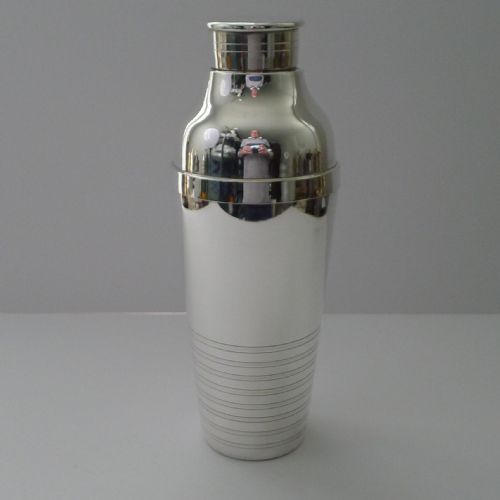

Silver Mixer
A silver mixer delivers the clean lines and polished weight of twentieth-century hospitality straight to your home bar.
Silver Mixer
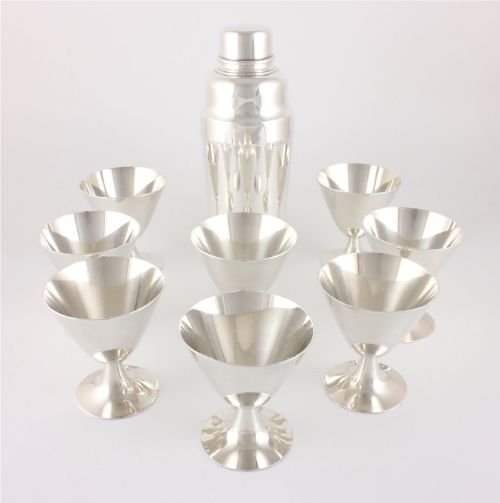
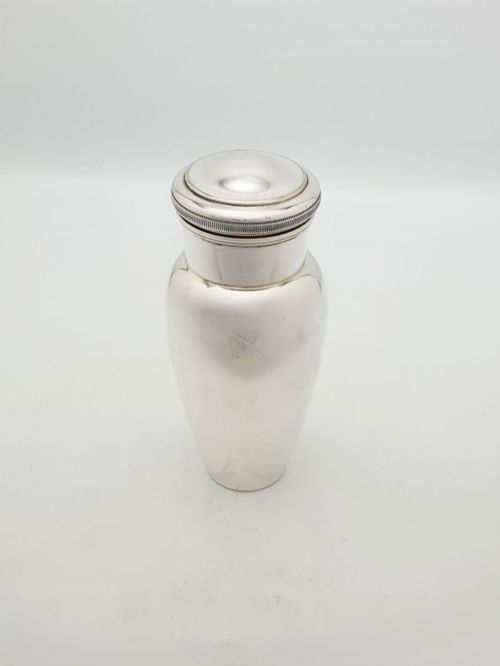
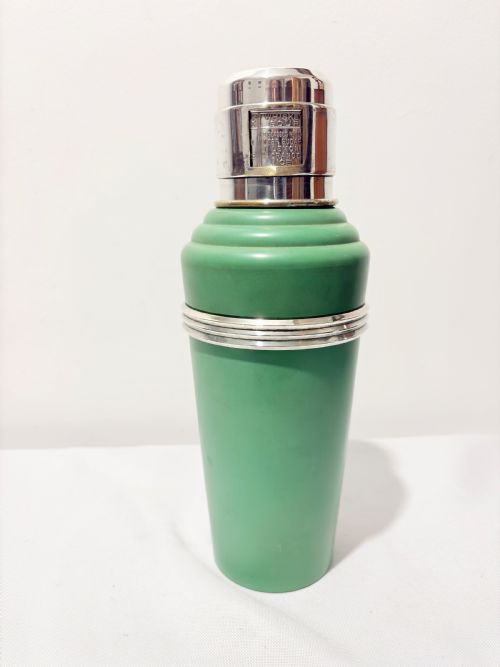
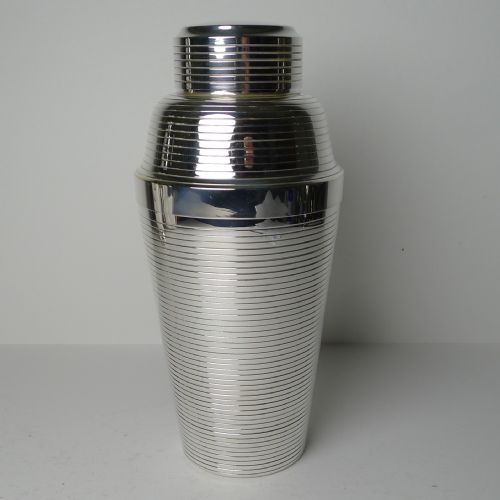
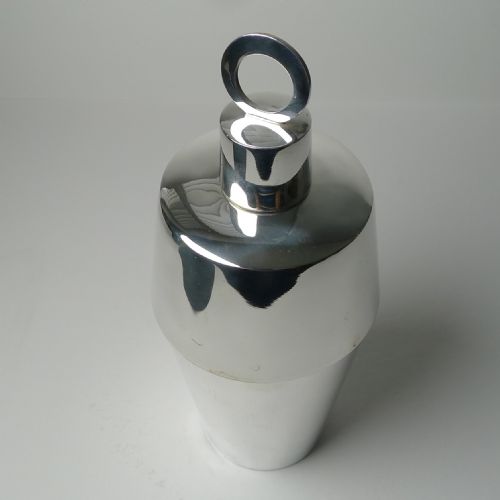
A silver mixer primarily takes the form of a cocktail shaker, spanning barware items designed to combine and aerate drinks. The most common version met on this page is the silver-plated Art Deco shaker from the nineteen-thirties, often incorporating functional novelties like built-in recipe bands or citrus squeezes.
These vessels arrive in various silhouettes, from sleek metal cylinders to combinations of glass and metal. Makers produced pieces ranging from modest one-pint measures up to large two-pint vessels intended for larger gatherings.
Materials and construction
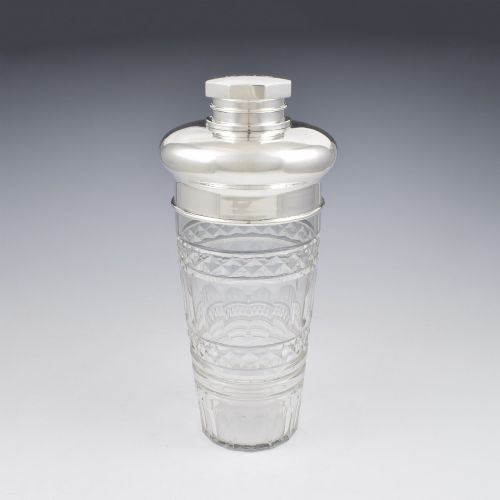
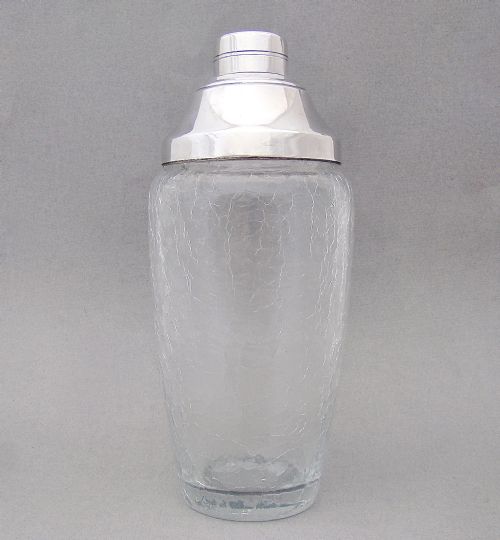
Makers utilised silver plate, electroplated nickel silver, and sterling silver over metal cores, frequently combining these metals with clear, crackle, or enamelled glass. Bakelite and cork also appear as functional components for handles, stoppers, and insulation.
Techniques relied on metal spinning, engine turning for geometric surface patterns, and secure soldering to attach spouts, strainers, and handles. Glass bodies were often moulded with ribs or decorative motifs before receiving metal collars and lids.
Silver Mixer Retail Price Guide 2026
Typical asking prices for silver mixer among the pieces listed under this phrase on Sellingantiques today, from the lower quarter to the upper quarter. They describe what is for sale here now, not the wider market.
Several shakers feature built-in mechanical dials that spin to reveal cocktail recipes through little windows.
Assessing quality and execution
Quality rests in the precision of the mechanics, such as how smoothly a rotating recipe band turns or how tightly a lid and cork seal the chamber. Heavier gauge metals and crisp engine turning distinguish superior pieces from standard production items.
Design attribution plays a significant role, with pieces bearing marks from known makers or specific designers exhibiting more deliberate proportions and refined surface detailing.
Hukin Heath·Asprey·Keith Murray·J. B. Chatterley And Sons·James Dixon And Sons·Lino Sabattini·William Suckling·Angelletti·C S Green And Co·Adie Brothers·Gaskell And Chambers
The Silver Mixer Glossary
- Electroplated Nickel Silver
- A base metal alloy of copper, nickel, and zinc coated with a layer of silver. This material provided a durable and affordable alternative to solid sterling silver for twentieth-century barware.
- Engine Turned
- A mechanical decoration technique that etches intricate geometric patterns into metal surfaces. It creates a textured, light-catching finish popular on modernist barware.
- Novelty Shaker
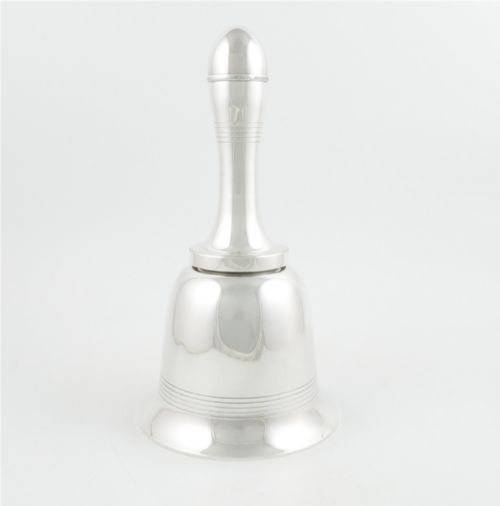
- A cocktail shaker shaped to resemble a specific object, animal, or device rather than a standard cylinder. Examples include bells, roosters, and rotating recipe cylinders.
- EPNS
- An abbreviation for electroplated nickel silver found stamped on the base of silver-plated vessels. It indicates the underlying metal composition beneath the silver coating.
- Bakelite
- An early form of synthetic plastic used for heat-resistant handles and decorative finials on mid-century barware. Its rich colours contrast sharply with polished metal surfaces.
Silver Mixer: Frequently Asked Questions
What is a silver mixer?
A silver mixer is a metal or metal-and-glass vessel used for blending cocktails, most frequently encountered as an Art Deco cocktail shaker from the early twentieth century.
These pieces combine functional barware utility with decorative metalwork, often featuring integrated strainers, squeezes, or rotating recipe bands.
How were they used historically?
Hosts utilised these shakers to mix spirits, ice, and mixers efficiently before pouring the chilled drinks through built-in strainers.
They stood at the centre of home entertaining during the height of the cocktail era, particularly through the nineteen-twenties and nineteen-thirties.
How do I clean a silver mixer?
Maintenance requires gentle washing with warm soapy water and a soft cloth to protect silver-plated surfaces and glass bodies.
Harsh abrasives and immersion in chemical dips should be avoided to preserve original engine turning, enamel, and maker marks.
How can I tell the period?
Dating relies on stylistic clues like geometric Art Deco lines, modernist minimalism, and stamped maker marks or registration numbers on the base.
Materials such as Bakelite, crackle glass, and specific plating stamps also point towards exact decades between nineteen-twenty and nineteen-sixty.