





Silver Light Fixtures
Silver light fixtures bring bright illumination and metallic gleam to rooms, spanning chandeliers, wall lights and lanterns from the Victorian era to Art Deco.
Silver Light Fixtures
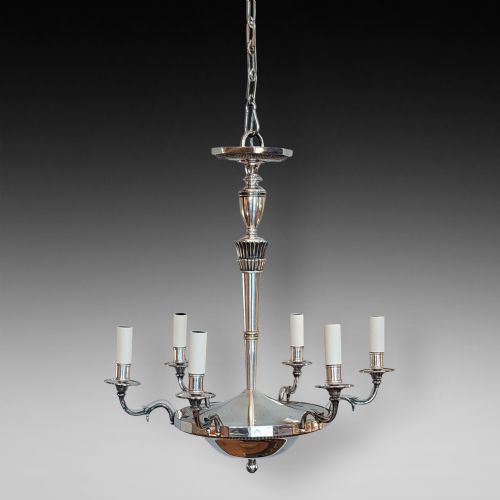
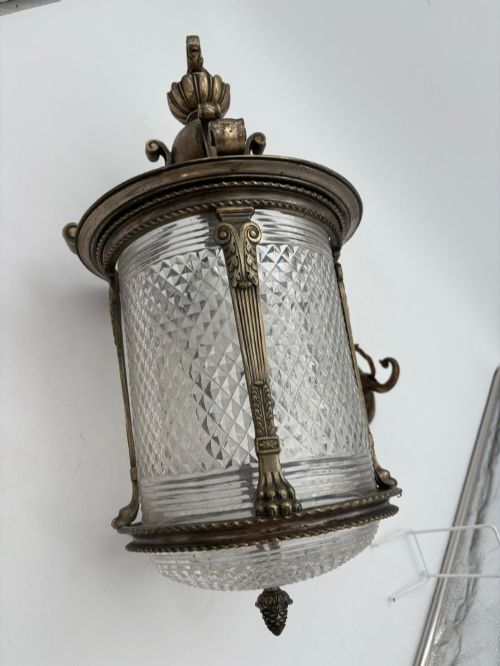
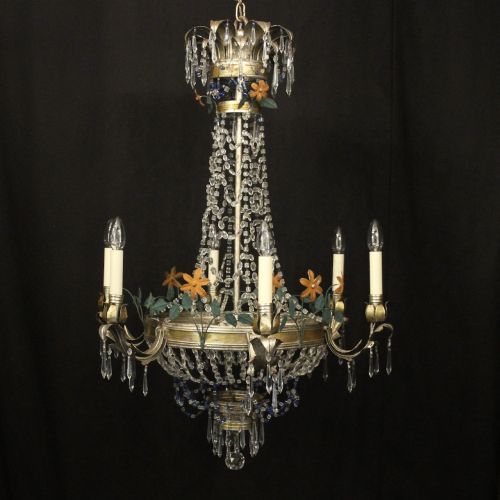
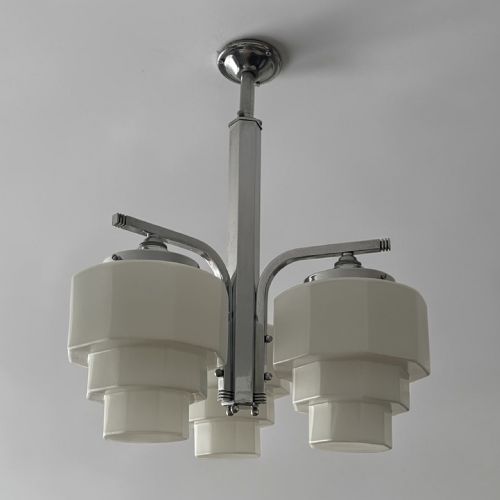
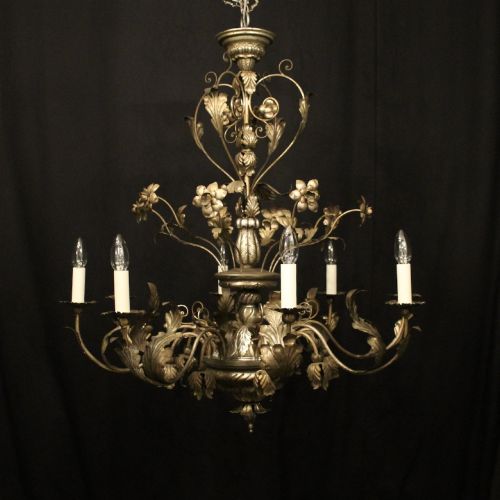
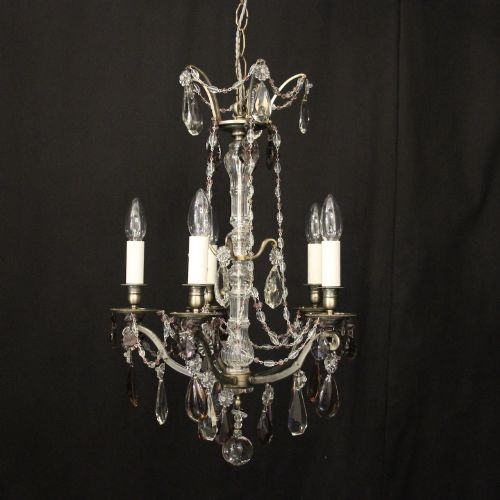
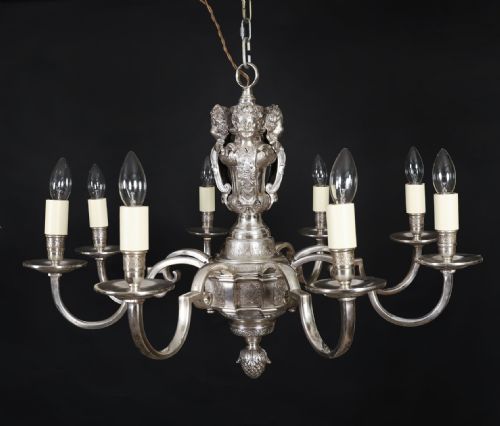
When you search for silver light fixtures, you encounter a diverse range of illuminating objects that span multiple eras from the mid-nineteenth century through the 1930s. The selection on this page leans heavily toward French chandeliers, English pendant lights, and various wall sconces and lanterns.
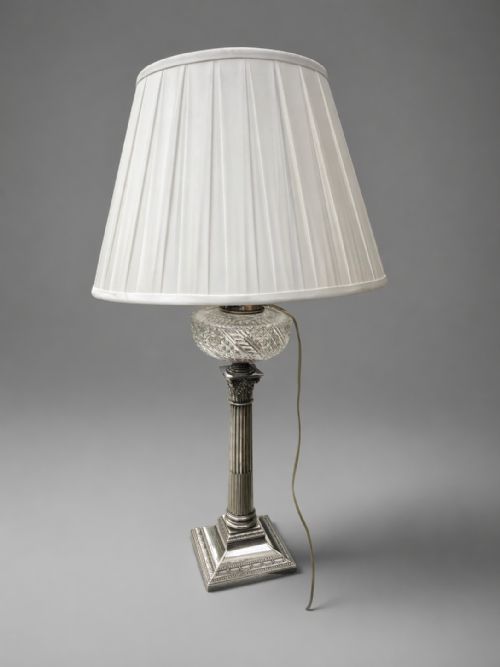
The forms vary from grand multi-light chandeliers adorned with crystal drops to streamlined Art Deco chrome wall lights and tall table lamps. Pieces originate from workshops in England, France, Italy, and Germany, reflecting different regional tastes in domestic illumination.
Victorian and Edwardian examples sit alongside later 1920 and 1930 designs. Chandeliers and pendant lights dominate the offerings, providing both central ceiling illumination and targeted wall lighting.
Materials and construction
Maker construction methods rely heavily on metals such as brass, bronze, steel, and chrome, often finished with silver plating or silver gilding. These metallic bases provide structural integrity for hanging chandeliers and wall sconces.
Transparent elements form a major component, with cut glass and crystal drops suspended from frames to refract light. Mirrored glass also appears in specific pendant designs, enhancing the reflective quality of the fixtures.
Silver Light Fixtures Retail Price Guide 2026
Typical asking prices for silver light fixtures among the pieces listed under this phrase on Sellingantiques today, from the lower quarter to the upper quarter. They describe what is for sale here now, not the wider market.
The listings span periods from 1850 to 1930, utilising materials including chrome, crystal, brass, and silvered bronze.
Assessing quality
Quality rests upon the fineness of the metalwork and the clarity of the crystal or cut glass components. Elaborate silver gilding and detailed bronze casting distinguish finer chandeliers from simpler plated items.
The complexity of the design and the integrity of the structural frame determine the tier of the piece. Substantial multi-light configurations with hand-cut crystals represent the higher end of the range.
Émile-Jacques Ruhlmann·F&C Osler·Wedgwood
The Silver Light Fixtures Glossary
- Chandelier
- A branched ceiling-mounted lighting fixture designed to hold multiple bulbs or candles. They often feature crystal drops or glass pendants.
- Silver Plating
- A thin layer of silver applied to a base metal such as brass or copper. This technique provides the appearance of solid silver at a lower weight and cost.
- Cut Glass
- Glass that has been decoratively shaped and faceted by grinding on a wheel. It enhances the sparkle of light fixtures by scattering the illumination.
- Gilded Bronze
- Bronze metal coated with a thin layer of gold leaf or silver leaf. It combines durability with a lustrous metallic finish.
Silver Light Fixtures: Frequently Asked Questions
How do I clean a crystal chandelier?
Clean crystal and glass components gently with a mild soapy solution while the fixture hangs, wiping each drop dry with a soft cloth.
Avoid using harsh chemical sprays that might damage the underlying silver plating or gilding on the metal frame.
Can these antique lights use modern bulbs?
Many vintage and antique fixtures accept standard modern bulbs once rewired to contemporary electrical standards.
Check the wiring condition and consult a qualified electrician to ensure compatibility with current safety regulations.
Where should I hang a pendant light?
Pendant lights work well centered over dining tables, in hallways, or within high-ceilinged rooms to provide focused downward illumination.
Ensure adequate clearance beneath the fixture based on the height of your ceiling and the traffic flow of the space.
How do I identify an Art Deco light?
Art Deco fixtures from the 1920 and 1930 periods typically feature geometric lines, chrome finishes, and streamlined shapes.
They contrast with the more ornate floral motifs found on earlier Victorian and Edwardian examples.