




Silver Lidded Glass Jar
A silver lidded glass jar brings together polished precious metal and heavy glass to hold dressing table items.
Silver Lidded Glass Jar
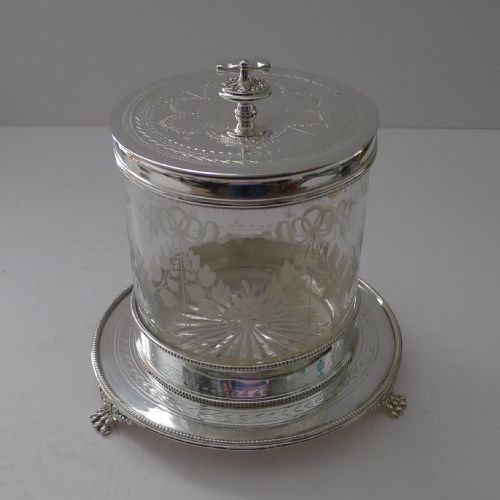
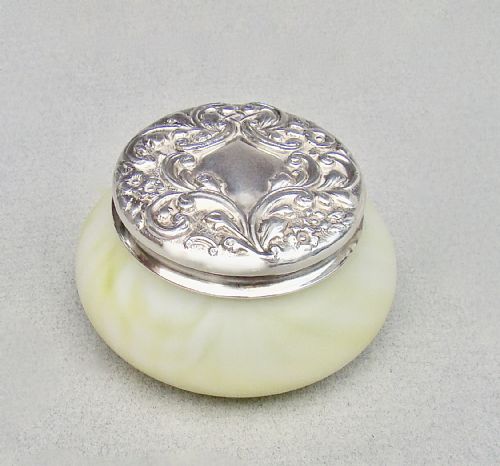
A silver lidded glass jar serves as a dressing table accessory, vanity jar, trinket box, scent bottle, or biscuit barrel. These pieces emerge across the nineteenth and twentieth centuries, spanning Victorian, Edwardian, and Art Deco periods with occasional French or Georgian examples.
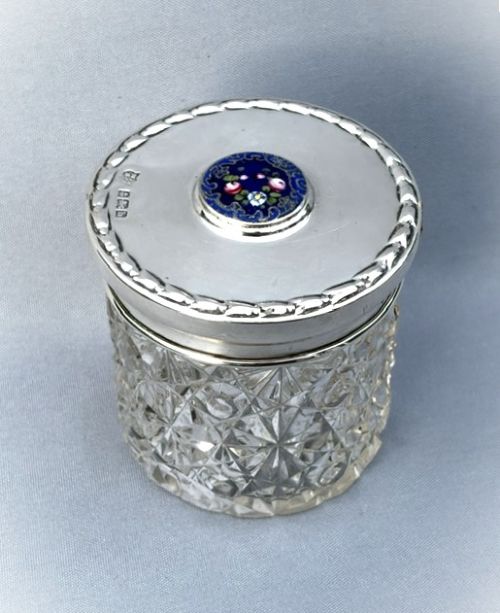
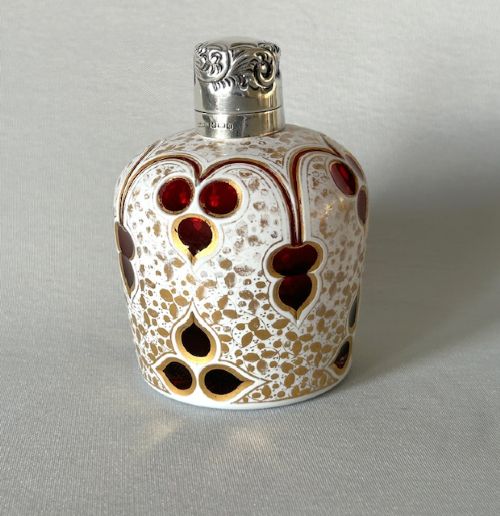
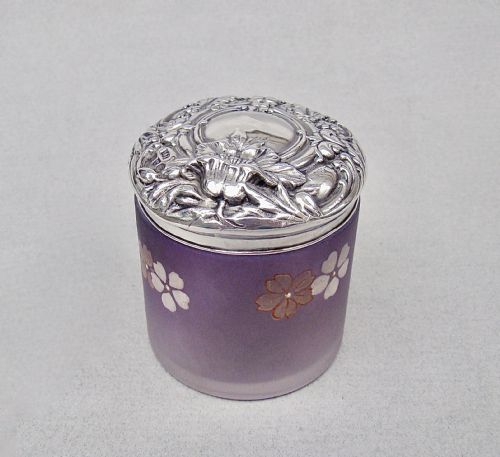
The most common form on this page is the Edwardian dressing table jar or vanity pot, combining cut glass bodies with sterling silver lids. Collectors also encounter cranberry glass, satin glass, and amethyst overlay glass alongside larger biscuit barrels and small perfume containers.
Materials and construction
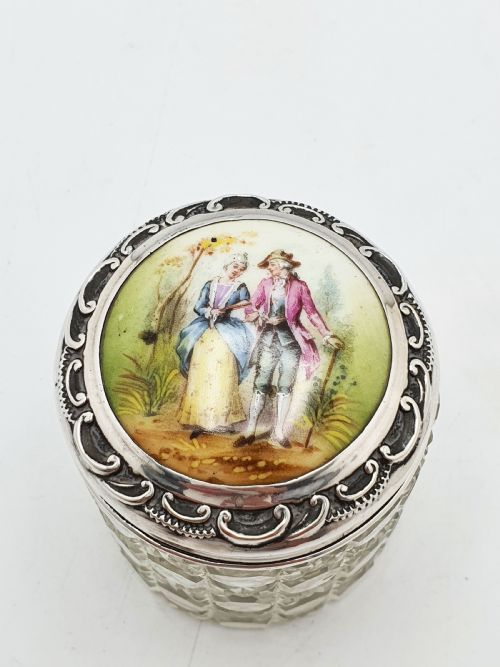
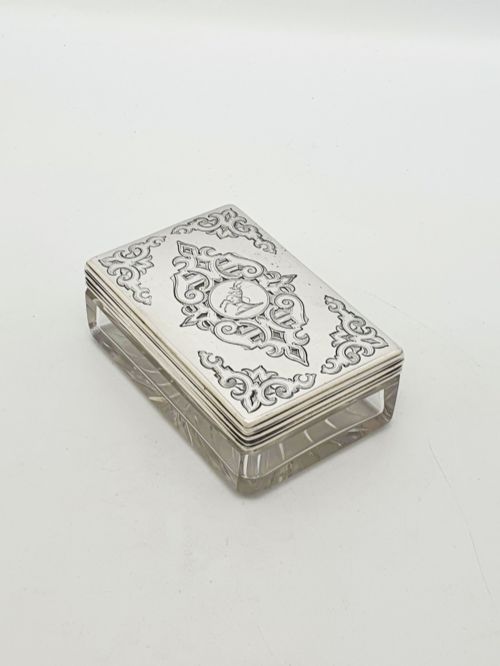
Makers combine heavy moulded or cut glass with sterling silver and silver plate, often integrating tortoiseshell, guilloche enamel, or hand-painted porcelain plaques into the lids. Glass bodies are shaped through pressing, blowing, or deep facet cutting to catch the light.
Silversmiths form the lids and mounts from sheet silver, adding hallmarks for town, year, and maker. Tortoiseshell and enamel inserts are glued or pinned directly into the silver framework of the lid.
Silver Lidded Glass Jar Retail Price Guide 2026
Typical asking prices for silver lidded glass jar among the pieces listed under this phrase on Sellingantiques today, from the lower quarter to the upper quarter. They describe what is for sale here now, not the wider market.
Several items include lockable mechanisms, suggesting past owners needed to secure their face cream from thieves.
Standards of execution
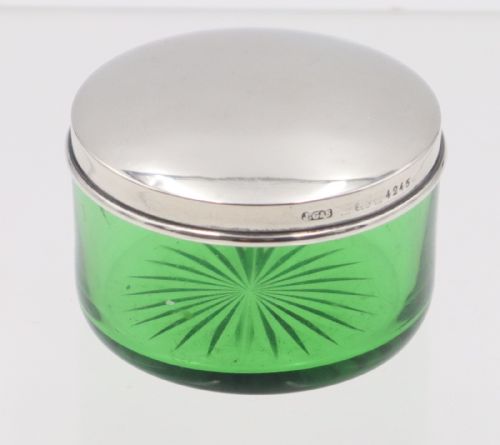
Quality rests on the depth of the glass cutting and the weight of the silver lid. Finer examples display crisp, sharp facets on the crystal and substantial silver gauges that resist denting during daily use.
The integration of decorative elements such as translucent guilloche enamel, polished tortoiseshell, or intricate Art Nouveau repousse work elevates a piece above standard utilitarian vanity containers.
A. J. Pepper & Co·A. Bromet & Co·Hasset & Harper·Goldsmith's and Silversmith's Co·Asprey
The Silver Lidded Glass Jar Glossary
- Sterling silver
- A silver alloy containing ninety-two point five percent pure silver by mass, standard for British table wares and mounts.
- Guilloche enamel
- Decorative engine-turned metalwork covered with transparent enamel layers, common on twentieth-century vanity pieces.
- Cranberry glass
- A rich red glass created by adding gold chloride to the molten batch, popular in Victorian and Edwardian tablewares.
- Cut glass
- Glass decorated by grinding facets and patterns into the surface using wheels, producing deep geometric designs.
- Tortoiseshell
- The mottled brown and yellow horn of the hawksbill turtle, utilised for luxury box lids and comb backs.
Silver Lidded Glass Jar: Frequently Asked Questions
What were silver lidded glass jars used for?
These vessels held cosmetics, pins, powders, and small personal trinkets on dressing tables and desks. Larger variants served as biscuit barrels or preserve pots in dining rooms.
Their sealed or lidded designs protected delicate contents from dust and moisture in domestic interiors.
How do I date a silver lid?
British silver lids carry hallmarks stamped directly into the metal. These marks indicate the assay office, the maker's mark, and a specific date letter.
Matching the letter against official hallmarking charts reveals the exact year the silver was tested and registered.
What is cut crystal versus cut glass?
Cut crystal contains lead oxide, which increases the weight, density, and light-refracting properties of the material. Standard cut glass lacks this lead content but shares similar facet-cut decorative patterns.
Both materials were mounted with silver rims and lids during the Victorian and Edwardian eras.
How should I clean the silver and glass?
Use a soft cloth and a gentle silver polish on the metal mounts, taking care to avoid contact with glass, enamel, or tortoiseshell inserts. Warm soapy water cleans the glass body once separated from the lid.
Avoid submerging pieces with glued tortoiseshell or enamel components in liquid.