










Silver Lid Vanity Jar
A silver lid vanity jar brings order to a dressing table while catching the light in cut glass, enamel and sterling silver.
Silver Lid Vanity Jar
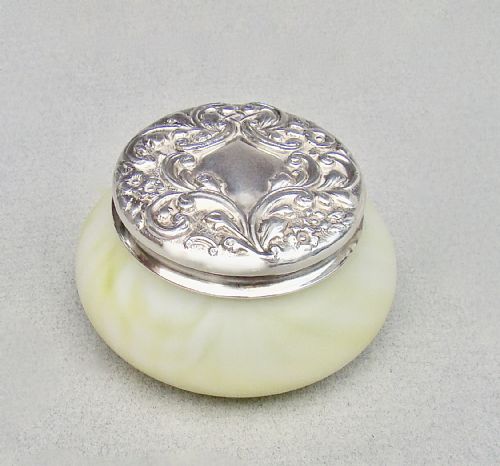
A silver lid vanity jar combines a glass, crystal or porcelain body with a fitted metal top, serving to hold creams, pins or small ornaments upon a dressing table. When you search for this phrase, you meet pieces originating across the nineteenth and twentieth centuries, spanning periods from Victorian and Edwardian reigns into the Art Deco era.
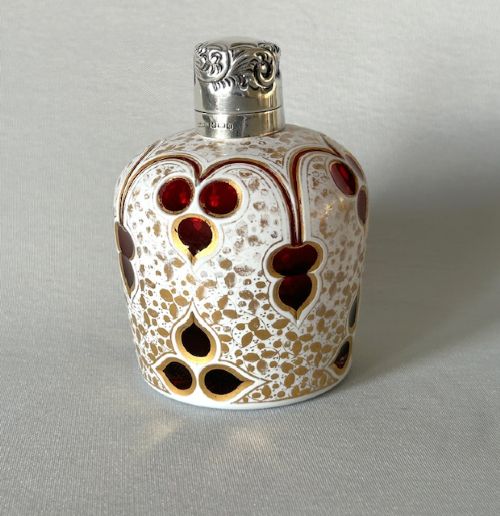
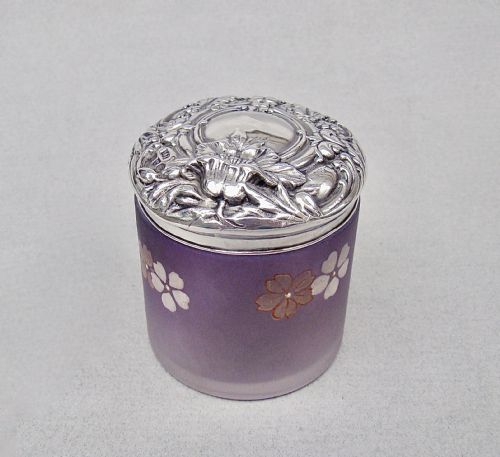
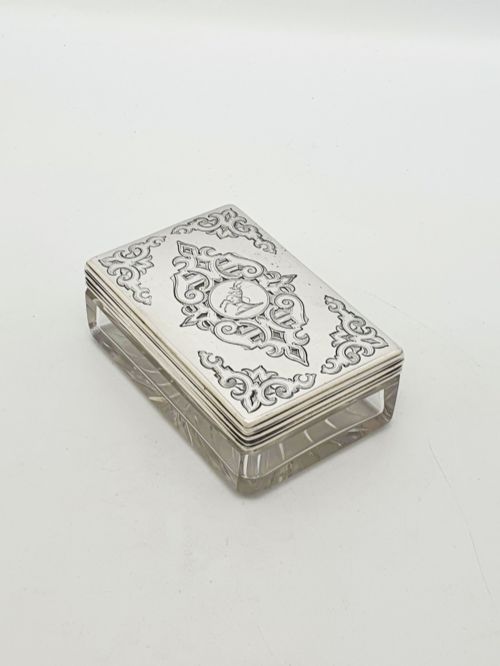
The most common form on this page pairs a heavy cut glass or crystal base with a sterling silver lid, often stamped with hallmarks indicating assay offices in London, Birmingham or Chester. Alongside standard circular vanity pots, variations include heart-shaped vessels, tall scent bottles and lidded boxes ornamented with enamel or tortoiseshell.
Materials and construction
The glass bodies are formed through cutting, moulding or blowing, producing clear, frosted, satin or coloured finishes in shades of green, cranberry, blue and amethyst. Overlay techniques and flashed glass feature alongside imported Clichy glass and Bohemian styles, creating textured surfaces that refract light.
Lids and mounts utilise sterling silver, silver gilt and vermeil, secured by silversmiths who frequently embellished the metal with guilloche enamel, hand-painted porcelain plaques or inlaid panels of polished tortoiseshell.
Silver Lid Vanity Jar Retail Price Guide 2026
Typical asking prices for silver lid vanity jar among the pieces listed under this phrase on Sellingantiques today, from the lower quarter to the upper quarter. They describe what is for sale here now, not the wider market.
Several jars were made specifically to hold gentlemen's cologne or glue, proving that even mundane Victorian tasks required a silver lid.
Assessing quality and distinction
Differentiation in these pieces rests upon the crispness of the glass cutting and the weight of the metal lid, where thicker silver resists dents and maintains a tighter fit to the collar. The artistry of any applied decoration, such as translucent guilloche enamel or detailed hand painting, dictates the visual refinement of the work.
Provenance and maker attribution elevate certain items, particularly when bearing the marks of established silversmiths like Omar Ramsden, Asprey or the Goldsmiths and Silversmiths Company, alongside clear provincial or urban hallmarks.
A. Bromet & Co·Hasset & Harper·Omar Ramsden·Goldsmith's and Silversmith's Co·Asprey
The Silver Lid Vanity Jar Glossary
- Guilloche enamel
- A decorative technique where precise geometric patterns are machined into metal beneath a translucent layer of coloured enamel.
- Sterling silver
- An alloy consisting of ninety-two point five percent silver by mass, standardly used across British vanity jars.
- Vermeil
- Sterling silver plated with a layer of gold, providing a rich warm tone seen on select French and English lidded bowls.
- Cut glass
- Glass shaped and patterned by abrasive wheels, creating deep facets that catch and reflect light on dressing table wares.
- Hallmark
- A series of official marks stamped onto precious metal items to guarantee purity, origin and year of assay.
Silver Lid Vanity Jar: Frequently Asked Questions
What were vanity jars used for?
These vessels held powders, creams, pins and small cosmetic items on nineteenth and twentieth century dressing tables. They kept personal items contained while adding a decorative element to the room.
Over time, their uses shifted as packaging for cosmetics changed, turning them from functional daily containers into display pieces.
How do I identify an Edwardian silver lid vanity jar?
Edwardian examples typically display bright sterling silver mounts paired with heavy cut crystal or delicate enamelled glass. The style often leans towards softer floral motifs or clean neoclassical revival lines.
Checking the date letter within the silver hallmarks provides the exact year of manufacture, confirming the Edwardian period between nineteen hundred and nineteen ten.
Are silver and tortoiseshell jars fragile?
Tortoiseshell panels require gentle handling and stable humidity to prevent warping or shrinking away from the silver mounts. The underlying glass or crystal is durable but benefits from careful placement away from table edges.
Regular dusting with a soft cloth preserves both the polish of the silver and the sheen of the organic shell inlay.
How do I care for antique glass and silver?
Silver components respond well to periodic polishing with a non-abrasive cloth designed for precious metals, taking care to avoid staining glass or enamel surfaces. Glass bases can be washed in warm soapy water and dried immediately.
Harsh chemical dips should be avoided, particularly on pieces with enamel, tortoiseshell or gilt finishes that can be permanently damaged.