



Silver Lid Perfume
These silver lid perfume containers are pocket companions and dressing table pieces defined by precious metal and glass, offering timeless utility.
Silver Lid Perfume
When you search for silver lid perfume, you find small glass vessels and jars crowned with precious metal mountings designed for scent and volatile oils. These pieces range from pocket-sized scent bottles to dressing table jars and pot pourri baskets.
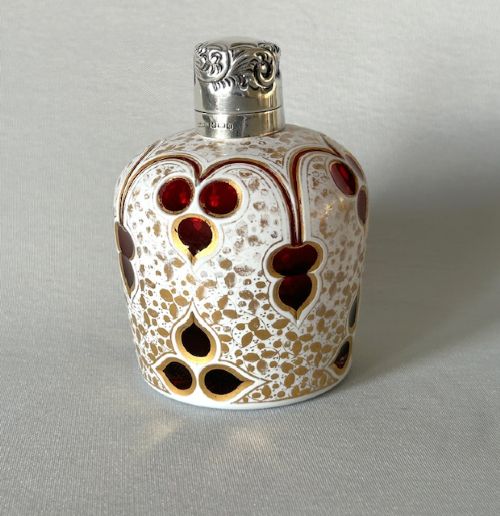
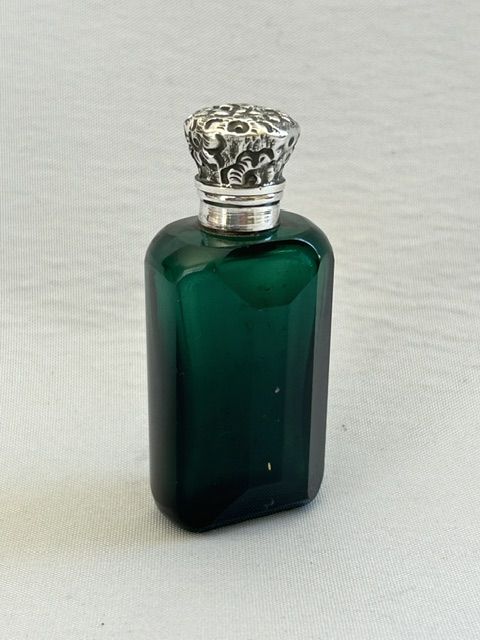
The versions you meet most frequently on this page belong to the Edwardian and Victorian eras, alongside Georgian and Art Deco examples. They bring together cut glass, Bristol green glass, or Bohemian glass with sterling silver tops.
Makers utilised diverse materials to create these accessories, pairing sterling silver and gold leaf with leather, enamel, and tortoiseshell. The collection includes scent bottles, vanity jars, and decorative baskets intended for personal adornment and interior fragrance.
How they were made
Makers fashioned the glass bodies of these scent bottles through cutting, moulding, or blowing, producing Bristol green and Bohemian glass vessels. Silversmiths then shaped sterling silver into hinged or screw-on lids, often adding guilloche enamel or tortoiseshell panels.
Techniques such as gold leaf application and glass cutting required skilled craftsmanship to marry the metal mounts securely to the glass bodies. Some utilitarian examples incorporated lockable mechanisms for secure transport in gentleman's luggage.
Silver Lid Perfume Retail Price Guide 2026
Typical asking prices for silver lid perfume among the pieces listed under this phrase on Sellingantiques today, from the lower quarter to the upper quarter. They describe what is for sale here now, not the wider market.
Some Victorian gentlemen required lockable cologne bottles so nobody else could pinch their signature scent.
What varies in quality
The standard of a silver lid perfume piece rests upon the weight of the silver mount and the clarity of the cut glass. Finer examples display crisp hallmarks and detailed handwork on the metal lid rather than machine stamping.
The choice of materials shifts the character of the piece significantly, with guilloche enamel and tortoiseshell enhancements marking out more ambitious workshops. The integration between the glass body and the metal mount determines the overall coherence of the design.
Goldsmith's and Silversmith's Co.·Kate Greenaway
The Silver Lid Perfume Glossary
- Sterling silver
- An alloy of silver containing 92.5% by mass of silver and 7.5% by mass of other metals, usually copper. This standard metal appears frequently in the lids and mounts of these scent bottles.
- Guilloche enamel
- A decorative technique in which a very precise, intricate and repetitive pattern is mechanically engraved into metal under translucent enamel. This finish elevates the visual appeal of dressing table jars.
- Bohemian glass
- Glass produced in the regions of Bohemia and Silesia, known for rich colours and traditional cutting techniques. It forms the vibrant body of several scent bottles listed here.
- Pot pourri basket
- An open vessel or basket designed to hold dried plant material mixed with spices, releasing a natural scent into a room. These silver baskets often feature pierced or openwork metal designs.
- Bristol green glass
- A distinct deep green lead glass historically produced in the Bristol area. It provides a striking backdrop for silver mounts on Victorian scent bottles.
Silver Lid Perfume: Frequently Asked Questions
What are silver lid perfume bottles?
These are small glass or crystal vessels fitted with precious metal closures, designed to hold liquid fragrance for personal use. They served both as portable pocket accessories and as decorative items for dressing tables.
The metal lids protected the contents from evaporation and leakage while adding a decorative element through embossing, engraving, or enamel work. Collectors value them for their craftsmanship and the variety of glass colours employed.
How were scent bottles used in the past?
Victorian and Edwardian owners carried them in pockets or reticules filled with concentrated perfume or smelling salts. They were essential daily accessories when indoor environments or travel required a quick refreshment.
On dressing tables, matching sets of perfume bottles and vanity jars held daily fragrances and cosmetics. Gentleman's versions often featured secure locks for travel.
How do I date a silver scent bottle?
You date these pieces primarily by examining the silver hallmarks stamped on the metal lid or collar. These assay marks reveal the exact year of manufacture and the city where the silver was tested.
Stylistic cues such as the cut of the glass, the shape of the bottle, and the presence of Edwardian or Art Deco motifs also indicate the period. Victorian examples often show heavier cutting and more ornate floral engraving.
How should I care for antique glass and silver?
Clean the silver mounts gently with a specialist microfibre cloth to remove tarnish without touching any surrounding enamel or glass. Avoid submerging antique bottles with cork stoppers or paper linings in water.
Display them away from direct sunlight to preserve the rich hues of Bristol green and Bohemian glass. Handle the lids with care, as antique hinges were delicate.