



Silver Lid Perfume Bottle
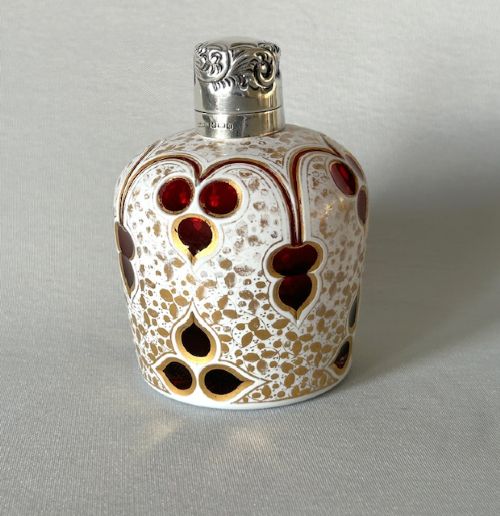
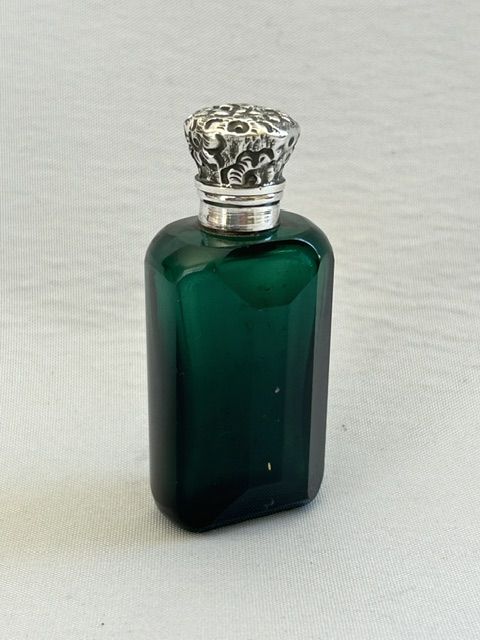
These silver lid perfume bottle examples combine tactile glass bodies with precious metal closures, offering a practical touch of historical dressing table elegance.
Silver Lid Perfume Bottle
A silver lid perfume bottle brings together a small vessel for scent and a secure metal top, appearing across Victorian, Edwardian, and Art Deco periods.
The form ranges from globes and tall jars to pocket flasks and vanity containers, often pairing clear or coloured glass with hinged or pull-off metal caps.
Makers shaped these pieces from cut glass, Bohemian glass, and crystal, pairing them with sterling silver, enamel, or tortoiseshell.
How they were made
Glass bodies were typically blown into moulds or hand-cut to create geometric and floral facets that caught the light on a dressing table.
Silver lids required metalworking techniques such as repousse, engine turning, and hand engraving, frequently incorporating panels of guilloche enamel or tortoiseshell.
Silver Lid Perfume Bottle Retail Price Guide 2026
Typical asking prices for silver lid perfume bottle among the pieces listed under this phrase on Sellingantiques today, from the lower quarter to the upper quarter. They describe what is for sale here now, not the wider market.
Listings span from the Georgian era through the Victorian and Edwardian periods into the 1930s, using sterling silver, glass, and enamel.
What varies in quality
The weight and gauge of the silver lid dictate the substance of the piece, alongside the crispness of repousse scrollwork or engine-turned patterns.
Quality rests equally in the clarity and depth of the cut glass body, and whether materials like enamel or tortoiseshell remain intact and flush within the metal frame.
Goldsmith's and Silversmith's Co.·Kate Greenaway
The Silver Lid Perfume Bottle Glossary
- Repousse
- A metalworking technique where the silver is hammered from the reverse side to form raised floral or scroll designs on the lid. This method gives texture and depth to Victorian examples.
- Guilloche enamel
- Decorative metalwork covered with translucent enamel over an engine-turned pattern. It provides a smooth coloured surface popular on Edwardian and later pieces.
- Cut glass
- Glass decorated by grinding facets or patterns into the surface using a wheel. It adds weight and sparkle to the body of the scent bottle.
- Tortoiseshell
- The mottled brown material derived from the shell of certain turtles, used as an inset panel on lids. It creates a rich contrast against polished sterling silver.
- Sterling silver
- An alloy consisting of silver and other metals to increase durability. Most British lids carry hallmarks indicating this standard.
Silver Lid Perfume Bottle: Frequently Asked Questions
How do I clean the glass?
Warm soapy water and a soft bottle brush usually remove residue from the interior without harming the antique materials.
Keep moisture away from any tortoiseshell or enamel panels mounted on the silver lid during cleaning.
Are the lids interchangeable?
Lids were individually fitted to the neck of each glass body during manufacture, meaning they rarely swap between pieces.
Even bottles of similar height require their original matching cap to secure properly.
Can I still use these for perfume?
Many retain a functional cork or glass stopper beneath the outer metal lid, though older seals can dry out over time.
Store them upright if filled with liquid to prevent slow seepage through historic closures.
How do I date a silver lid?
British pieces often feature hallmarks stamped directly onto the metal, indicating the assay office and year of production.
Stylistic clues like Art Deco geometry or Victorian floral repousse also point to the correct era.