



Silver Hall Light
A silver hall light commands an entryway with historic character, bringing period illumination to a vestibule through glass, brass, and bronze.
Silver Hall Light
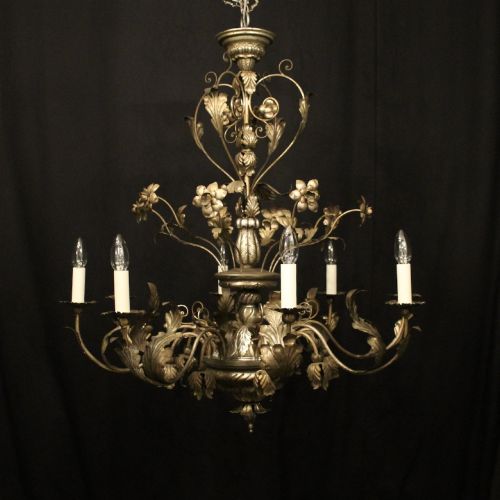
A silver hall light encompasses pendant lanterns, ceiling lights, and chandeliers designed to illuminate entranceways and corridors. Buyers seeking a silver hall light will find examples ranging from 19th Century lanterns to 1930s pieces in styles such as Edwardian, Italian Rococo, and French Neoclassical.
Italian and French origins dominate the inventory, alongside English Edwardian specimens. These fixtures appear as single light hall lanterns, pairs of twin light lanterns, and large multi-light chandeliers.
Materials and construction methods
Makers constructed these fixtures using structural metals such as brass, steel, and wrought iron, combined with decorative finishes like silvered metal, gilded bronze, and gilded metal. Frames often house panels of glass, cut glass, or hand-blown bulls-eye glass.
Techniques range from metal fabrication in steel and brass to the casting of bronze elements which were subsequently silvered or gilded. Glass components include hand-blown formations and cut glass elements designed to refract illumination from internal bulbs or candles.
Silver Hall Light Retail Price Guide 2026
Typical asking prices for silver hall light among the pieces listed under this phrase on Sellingantiques today, from the lower quarter to the upper quarter. They describe what is for sale here now, not the wider market.
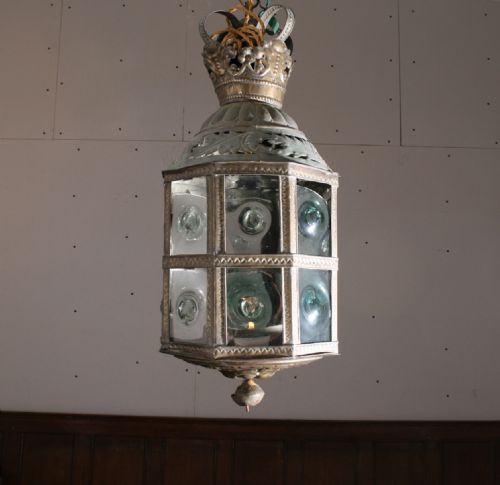
Some lanterns contain hand-blown bulls-eye glass, giving visitors a delightfully distorted look at the hallway before they even step inside.
Distinctions in quality
The grade of a silver hall light depends upon the sophistication of its metalwork and the clarity of its glass panels. Hand-blown bulls-eye glass and finely chased gilded bronze demonstrate superior craftsmanship compared to plain glass and basic steel assemblies.
Cohesion of style also dictates standard, with authentic regional details such as Italian Rococo or French Neoclassical motifs executed with precision. The presence of matched pairs further elevates the desirability of these hanging lanterns.
The Silver Hall Light Glossary
- Pendant light
- A lighting fixture suspended from the ceiling by a chain, cord, or metal rod. These hang downwards to illuminate hallways and rooms.
- Gilded bronze
- Bronze metal coated with a thin layer of gold leaf or gold paint. This technique provides a durable, decorative metallic sheen.
- Bulls-eye glass
- Glass featuring a circular, convex lump in the centre caused by the traditional glass-blowing process. It creates distinctive visual distortion.
- Cut glass
- Glass decorated by grinding and polishing facets into the surface. This process enhances the sparkle and light refraction of the fixture.
- Chandelier
- A branched, decorative ceiling light holding multiple lamps or candles. They provide substantial illumination for large spaces.
Silver Hall Light: Frequently Asked Questions
Where should a silver hall light be hung?
These fixtures suit entrance halls, stairwells, and high-ceilinged corridors where their vertical drop and reflective glass can be appreciated. Their primary purpose is welcoming visitors while distributing ambient light across a transition space.
Placement depends on the ceiling height and the physical dimensions of the lantern. Larger multi-light examples require substantial vertical clearance to hang correctly.
How do I identify Edwardian pieces?
Edwardian lighting from the early 20th century often exhibits cleaner lines and lighter proportions compared to heavy Victorian predecessors. English Edwardian examples frequently utilise cut glass or plain glass within restrained framing.
Design influences from this era balance traditional forms with simpler domestic requirements. They typically lack the overt ornamentation found in Italian Rococo or French Neoclassical counterparts.
What maintenance do these lights need?
Maintenance involves gentle cleaning of the metal frame and glass panels to preserve the surface finish. Silvered and gilded metals require careful handling to avoid abrading the delicate metallic coatings.
Glass panels can be removed or cleaned in place using standard non-abrasive glass cleaners. Regular dusting prevents grime accumulation in the detailed recesses of bronze and brass castings.