



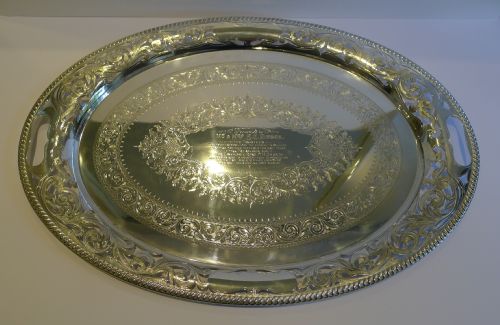
Silver Gallery Platter
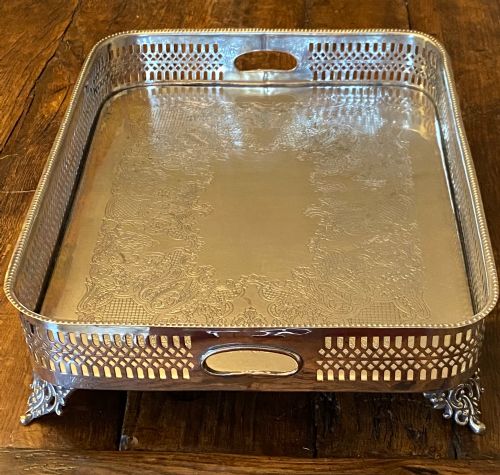
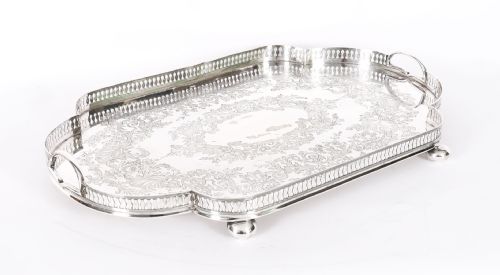
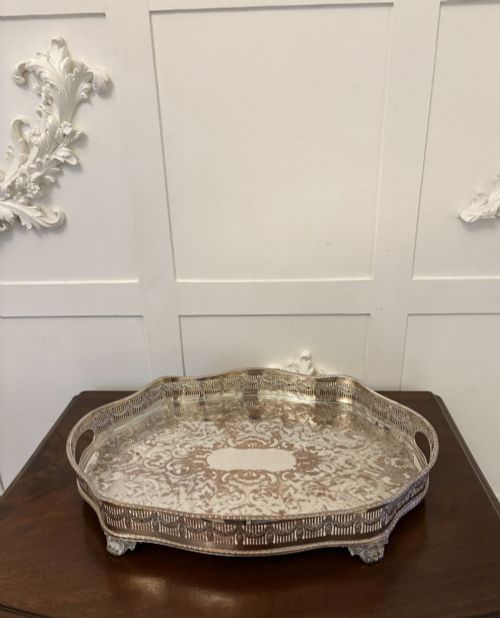
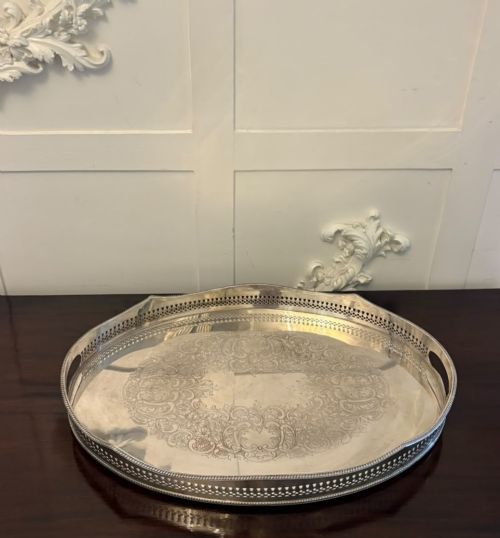
These silver gallery platter pieces are substantial serving vessels defined by pierced or reticulated metal borders, designed to carry tea services, cocktails, or decanters with distinct period elegance.
Silver Gallery Platter
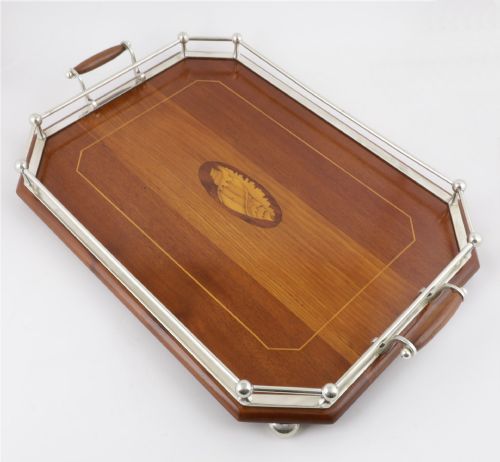
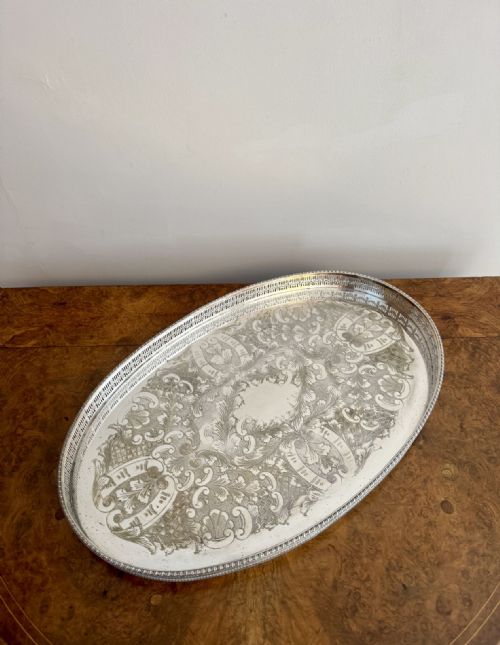
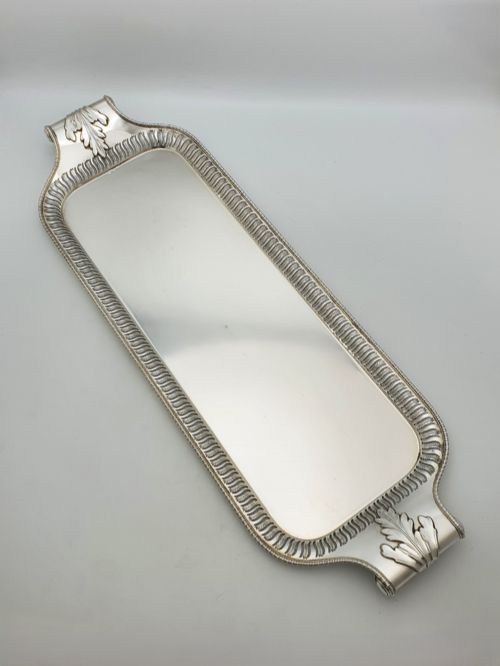
A silver gallery platter takes the form of a serving tray, cocktail tray, or tea tray, typically enclosed by a raised pierced or reticulated metal border that resembles an architectural gallery. When you search for this phrase, you meet serving trays shaped in oval, circular, and octagonal forms spanning the Victorian and Edwardian eras, alongside later Continental decorative examples from the nineteen twenties.
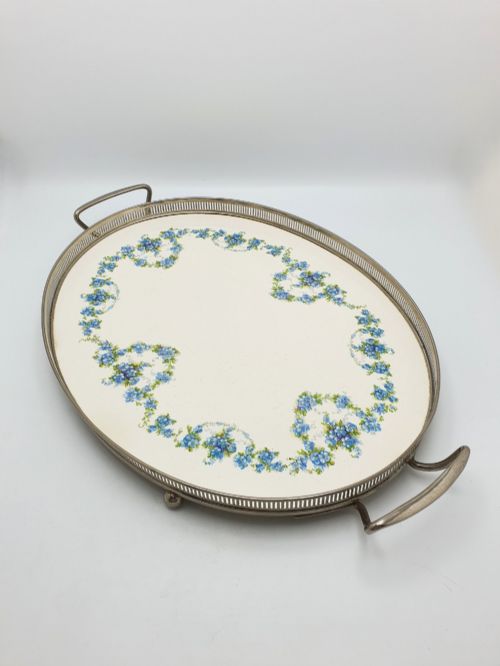
The objects derive their primary character from the combination of a flat central base and a secure raised rim designed to prevent decanters and glasses from sliding. These pieces originate predominantly from English makers working around nineteen hundred, utilising silver plate over base metals or incorporating contrasting wooden bases.
Most items you encounter belong to the Edwardian period or the late nineteenth century, reflecting a high point in domestic hospitality and formal entertaining. These vessels served practical roles in the drawing room or dining room, functioning both as utilitarian serving ware and display pieces.
Distinguishing quality in production
Quality rests upon the weight of the metal, the crispness of the pierced or reticulated gallery border, and the integrity of the silver plating. Superior examples exhibit substantial gauge metal that resists flexing under load, whereas lesser pieces feel thin and lightweight.
The refinement of the engraving across the centre and the quality of joinery where the gallery meets the base distinguish standard production from exceptional workshop output. Pieces by documented makers demonstrate greater attention to detail in handles, feet, and inlay work.
Silver Gallery Platter Retail Price Guide 2026
Typical asking prices for silver gallery platter among the pieces listed under this phrase on Sellingantiques today, from the lower quarter to the upper quarter. They describe what is for sale here now, not the wider market.
Current listings feature serving trays spanning from eighteen seventy-five through the nineteen twenties, incorporating silver plate, mahogany, oak, and ceramic materials.
James Deakin·Mappin & Webb·Elkington·Lee & Wigfull·J.H. Potter
The Silver Gallery Platter Glossary
- Gallery tray
- A serving tray featuring a low raised border, often pierced or pierced-out like a balcony, designed to keep items secure during transport.
- Sheffield plate
- An early form of silver plating created by fusing a sheet of silver to a copper ingot before rolling them into sheets.
- EPNS
- Electroplated Nickel Silver, a common base metal composition used beneath a silver surface coating in later Victorian and Edwardian manufacturing.
- Reticulated
- Describes metalwork decorated with an open network pattern, resembling net or lace, commonly seen on tray borders.
- Sheraton Revival
- A late nineteenth and early twentieth century design style drawing on eighteenth century neoclassical motifs, often featuring subtle wood inlay.
Silver Gallery Platter: Frequently Asked Questions
What is a silver gallery platter used for?
These platters were originally designed for serving tea, coffee, or after-dinner drinks while protecting the supporting surfaces from spills and heat. The raised gallery wall ensured that decanters, glasses, and teacups remained secure when carried from room to room.
In modern settings, they function effectively as decorative centrepieces on sideboards or coffee tables, often holding glassware, bottles, or seasonal displays.
How do I clean a silver plated tray?
Cleaning requires a soft microfibre cloth and a mild, non-abrasive silver polish formulated specifically for plated items. Vigorous rubbing should be avoided to prevent wearing through the thin silver layer down to the underlying copper or nickel silver.
Wooden bases or ceramic centres require separate care using appropriate wood balsams or damp wiping, ensuring moisture does not linger on the metallic joints.
How do I distinguish Edwardian from Victorian trays?
Victorian trays often display heavier, more ornate ornamentation with dense engraving and robust proportions. They typically date from the late nineteenth century and reflect formal aesthetic traditions.
Edwardian examples tend to exhibit lighter construction, cleaner lines influenced by Sheraton Revival styles, and refined pierced borders characteristic of the early twentieth century.
Can these trays hold heavy decanters?
Most large gallery trays with integrated handles were specifically built to support heavy decanter sets and cocktail glassware. The structural rigidity comes from thick base plates and securely soldered gallery walls.
When handling older pieces, lifting from the base alongside the handles ensures long-term preservation of the joints.