

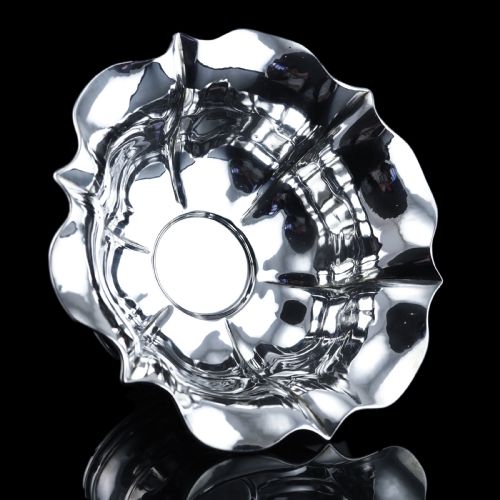
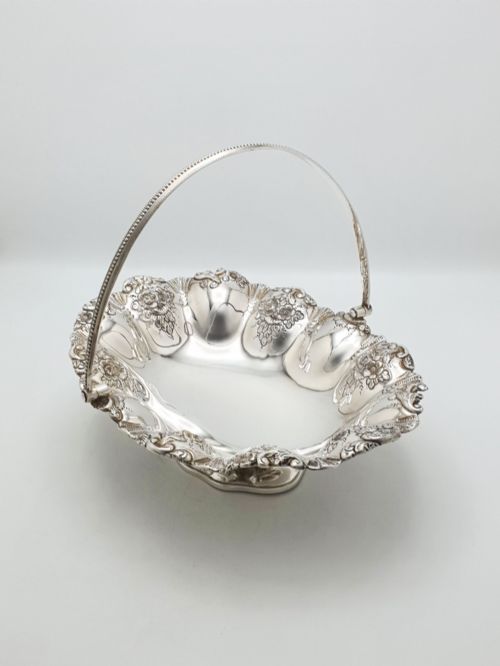


Silver Floral Bowl
A silver floral bowl brings organic botanical motifs into domestic metalwork, prized for its tactile chased and engraved plant forms.
Silver Floral Bowl
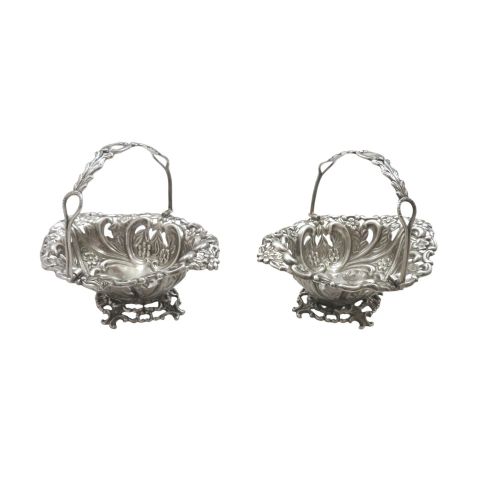
When you search for a silver floral bowl, you encounter domestic vessels shaped or decorated with botanical forms spanning the Victorian, Edwardian, and Art Nouveau periods. These objects encompass various functional forms including rose bowls, bonbon dishes, sugar baskets, and serving dishes created across international workshops.
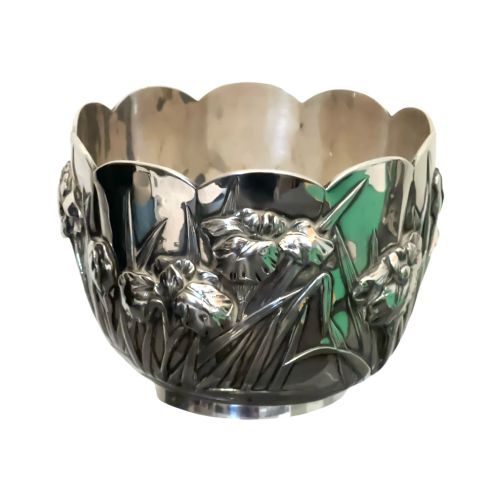
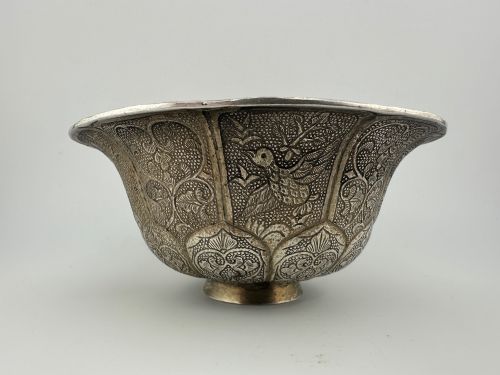
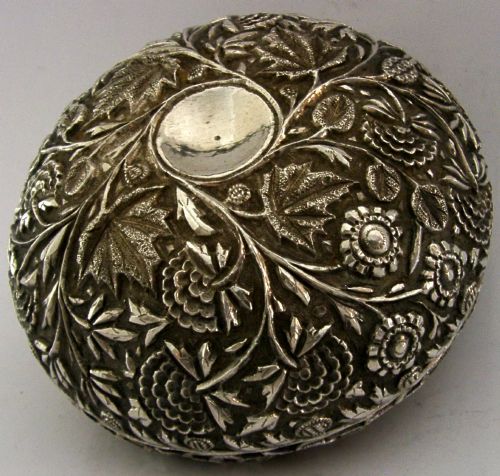
The pieces on this page originate from British, continental European, and Asian traditions, showcasing both solid sterling silver and silver plate on copper. You will frequently meet items featuring flared profiles, pierced bodies, and scalloped borders adorned with repoussé floral swags and chased foliage.
How they were made
Silversmiths constructed these vessels using sterling silver, solid silver, white metal, and silver plate, often shaping base metals through spinning or hammering. Handles and rims were frequently cast separately and attached to the main body.
Makers utilised techniques such as repoussé and chasing to push and hammer plant motifs from the reverse and front of the metal. Engraving was also applied to delineate delicate garlands, petals, and stems across the surface.
Silver Floral Bowl Retail Price Guide 2026
Typical asking prices for silver floral bowl among the pieces listed under this phrase on Sellingantiques today, from the lower quarter to the upper quarter. They describe what is for sale here now, not the wider market.
What varies in quality
Quality in these pieces depends on the depth and crispness of the botanical decoration, distinguishing heavily chased or repoussé work from shallower surface engraving. Superior examples display high relief where petals and birds possess distinct three-dimensional form rather than flat stamping.
The weight of the metal and the integrity of construction also differentiate the range, with substantial solid silver pieces and cast handles representing finer manufacturing standards than thin plated alternatives.
Henry Wilkinson & Co·Walker & Hall·George Unite·Christofle
The Silver Floral Bowl Glossary
- Repoussé
- A metalworking technique where the artisan hammers the design from the reverse side to create raised relief on the front. This method gives floral motifs tangible depth.
- Chasing
- Working the metal from the front by sinking lines and details into the surface after repoussé work. It refines the contours of leaves and petals.
- Sterling silver
- An alloy containing a high proportion of pure silver combined with other metals for durability. It forms the standard material for fine tableware.
- Silver plate
- A layer of silver bonded to a base metal such as copper or nickel silver. It provides the appearance of solid silver at a different material cost.
- Rose bowl
- A specialised vessel traditionally designed with a wire flower grid across the top to hold short-stemmed blooms. They frequently feature rounded bodies and floral engraving.
Silver Floral Bowl: Frequently Asked Questions
What is a silver floral bowl used for?
These vessels served various domestic purposes historically, from holding cut roses and sugar lumps to presenting bonbons on a table. Many function today as decorative centrepieces or standalone display items.
Their varied forms allow them to adapt easily to modern interior settings while retaining their original ornamental character.
How do I care for solid silver?
Maintenance involves gentle cleaning with specialist silver polish and a soft cloth to remove tarnish without abrading the chased details. Regular handling often prevents heavy black tarnish from accumulating in recessed areas.
Store pieces in dry environments away from direct sunlight to preserve the finish of the metal.
How can I tell periods apart?
Victorian pieces often exhibit heavier chased floral patterns and ornate handles, reflecting a preference for substantial decoration. Edwardian and Art Nouveau items tend to introduce lighter swags, pierced borders, or stylized plant stems.
Examining the manufacturing style alongside any visible hallmarks helps anchor the piece to a specific era of production.