



Silver Fitted Bottle
These silver fitted bottle items are essential travelling companions from the Georgian and Victorian eras, prized for holding personal scents and toiletries securely on the move.
Silver Fitted Bottle
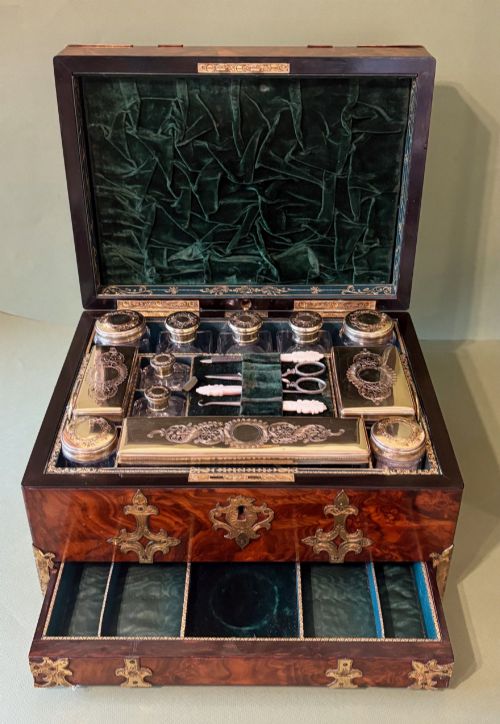
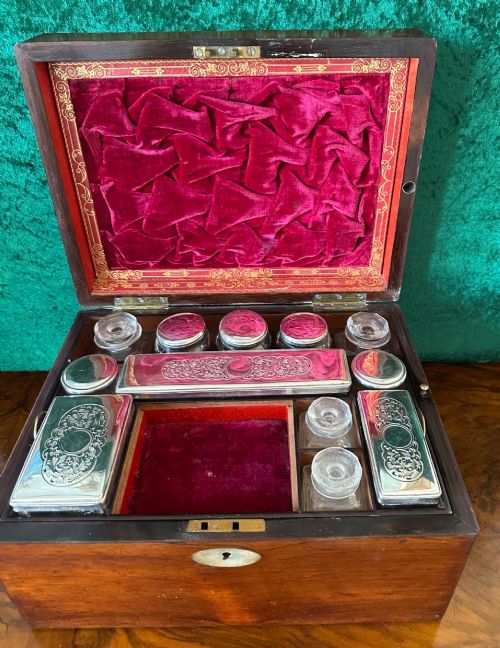
A silver fitted bottle typically appears nestled within larger portable containers such as dressing cases, vanity boxes, and travelling communion sets. You are most likely to meet examples housed in coromandel wood, kingwood, or leather boxes lined with velvet.
The objects span the Georgian, Regency, and Victorian periods, with many dating specifically to the nineteenth century, including pieces from 1823, 1850, 1860, and around 1890. They function as integral components of comprehensive lady's dressing sets and jewellery boxes.
Beyond standalone scent and perfume bottles, these items include cased cologne sets and crystal cut bottles accompanied by trays. They combine silver or silver-gilt mounts with glass vessels designed for practical daily use.
How they were made
Craftsmen shaped glass into cut glass and crystal forms for the bottles, pairing them with hallmarked silver and silver-gilt mountings. These metal elements required skilled smithing to fit the contours of each individual glass vessel.
Exterior cases utilised hardwoods like coromandel and kingwood, frequently reinforced with brass binding. Interiors were meticulously lined with velvet and fitted with leather to hold the bottles and trays firmly in transit.
Silver Fitted Bottle Retail Price Guide 2026
Typical asking prices for silver fitted bottle among the pieces listed under this phrase on Sellingantiques today, from the lower quarter to the upper quarter. They describe what is for sale here now, not the wider market.
Some nineteenth century vanity cases include hidden compartments designed to secure personal secrets alongside the silver bottles.
What varies in quality
The choice of primary wood and internal lining dictates the distinction between standard and superior pieces. Exotic timbers such as coromandel and kingwood denote high-status commissions, whereas simpler constructions rely on standard leather or wood.
The sophistication of the metalwork also separates tiers of production, particularly the presence of full silver hallmarks and silver-gilt finishes on the bottle caps and mounts.
Asprey
The Silver Fitted Bottle Glossary
- Coromandel wood
- A dense, heavily variegated timber from Asia used for luxury nineteenth century vanity and dressing cases. It provides a striking dark grain that contrasts with brass mounts.
- Silver-gilt
- Silver that has been coated with a thin layer of gold on its surface. This technique prevents tarnishing and adds a rich golden warmth to bottle caps and mounts.
- Vanity case
- A portable box designed to hold cosmetics, brushes, and fitted bottles during travel. These pieces often incorporate secret drawers and velvet-lined compartments.
- Communion set
- A portable collection of sacred vessels, including small bottles for wine and water, used by clergy outside the church. These sets feature securely fitted silver components.
- Cut glass
- Glass decorated by cutting facets into the surface using a wheel. This method creates brilliant light refraction across perfume and cologne bottles.
Silver Fitted Bottle: Frequently Asked Questions
What are silver fitted bottles?
Silver fitted bottles are glass containers equipped with silver or silver-gilt caps and mounts, designed to hold perfumes, colognes, or sacramental liquids.
They are typically found housed inside dedicated compartments within nineteenth century dressing cases, vanity boxes, and travelling sets.
How were these bottles used?
These bottles served wealthy travellers who needed to carry personal scents, oils, or communion liquids safely while moving between residences or on journeys.
Their secure silver lids prevented leakage, while custom coving inside vanity cases protected the glass from shifting.
How do I date a piece?
Dating relies on hallmarks stamped on the silver components, timber choices such as coromandel wood, and overall case construction styles typical of the Georgian and Victorian eras.
Maker marks and specific production years, such as 1823 or 1850, help narrow the exact period of origin.
How should I care for them?
Care involves gently dusting the exterior wood and glass surfaces while avoiding harsh chemical cleaners on the silver mounts and velvet linings.
Keep the items away from direct sunlight and excessive moisture to preserve the integrity of the timber and internal fabrics.