


Silver Fiddle Spoon
A silver fiddle spoon brings the quiet, tactile weight of nineteenth-century dining to the table.
Silver Fiddle Spoon
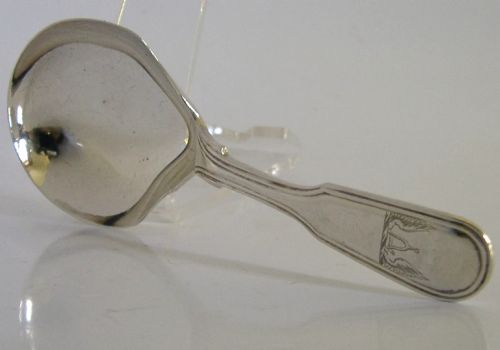
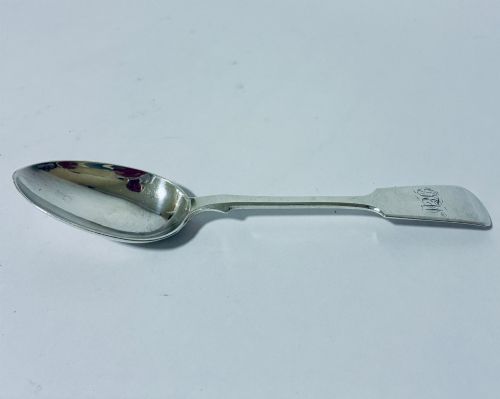
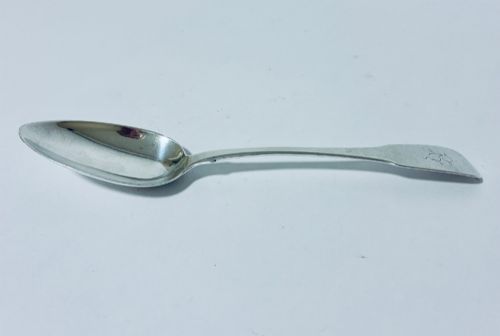
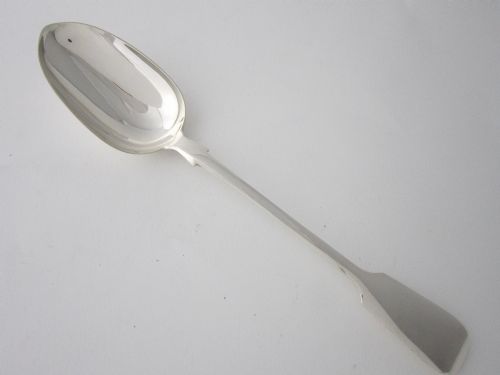
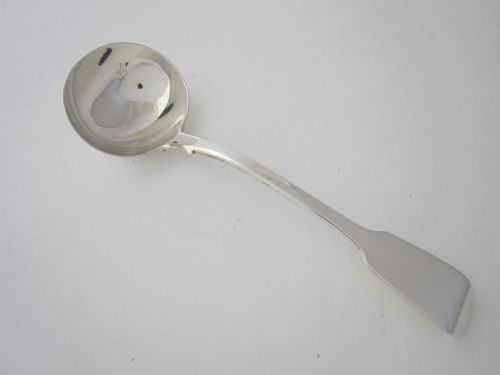
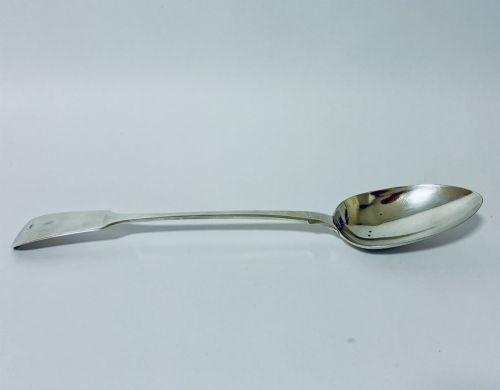
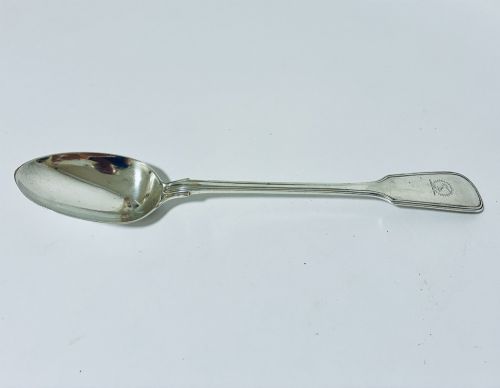
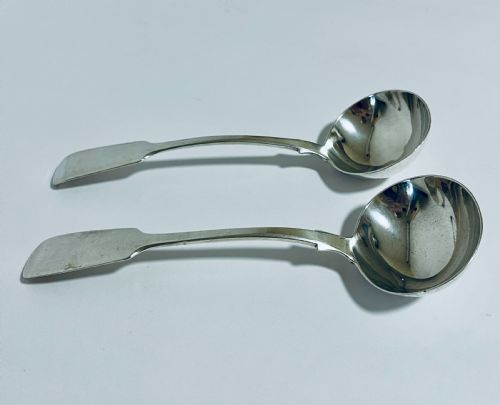
A silver fiddle spoon is defined by its distinctive stem, which swells near the terminal into a shape reminiscent of a fiddle or violin. These items emerge chiefly from the Georgian and Victorian periods, manifesting in forms ranging from small tea and mustard spoons to large soup ladles and basting spoons.
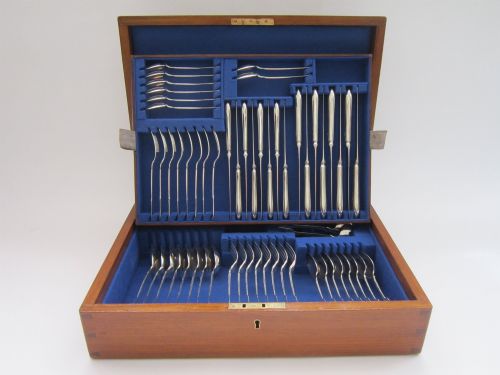
The profile on this page encompasses individual serving utensils alongside matched sets of cutlery for multiple persons. Many examples originate from provincial English and Scottish makers, while others bear Dublin hallmarks from the nineteenth century.
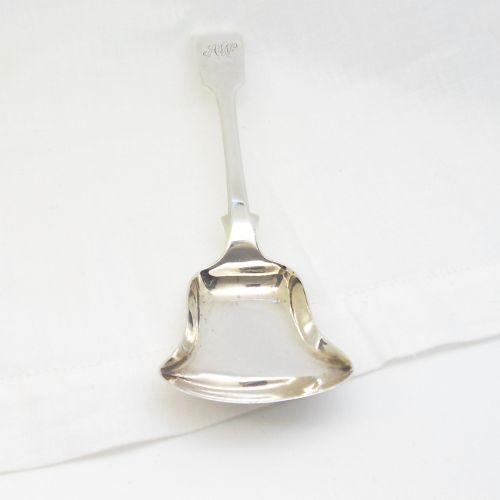
Buyers encounter plain fiddle designs as well as more elaborate variations decorated with threads, shells, or crests. The form serves everyday dining tasks as well as specific culinary roles like sifting sugar or ladling sauce.
Materials and construction
Silversmiths constructed these pieces from sterling silver, hammering and shaping the metal to form the characteristic shoulder and fiddle-shaped handle. Parcel-gilt highlights occasionally appear on the bowls of smaller spoons.
Design variations were achieved through techniques like double striking, which imparted crispness to ornament on both sides of the stem, or by applying thread, husk, and shell motifs to the edges.
Some nineteenth-century sugar shovels were designed with tiny bowls shaped precisely like miniature garden spades.
Judging quality in silver flatware
Quality rests in the gauge of the silver and the preservation of the original profile against decades of polishing. Thicker stems and heavy bowls maintain their structural integrity and balance in the hand.
Crispness of detail distinguishes standard production from superior work, particularly where decorative threads or crests are struck into the metal. Provincial assays and identifiable maker marks add distinction to individual pieces.
John Walton·William Ferguson·Jamieson and Naughton·John Smith·Edward Power
The Silver Fiddle Spoon Glossary
- Fiddle pattern
- A flatware style characterised by a stem that widens towards the terminal with distinct shoulders. It gained popularity during the early nineteenth century.
- Basting spoon
- A large utensil designed for moistening meat during roasting. These are among the longest spoons found in silver collections.
- Provincial mark
- A town mark or maker's mark originating outside London. Assay offices in locations like Exeter, Newcastle, and York produced distinctive regional silver.
- Caddy spoon
- A short spoon utilised for measuring loose tea leaves from a container. They often feature shovel bowls or shell-shaped terminals.
- Parcel-gilt
- A metal object partially coated in a thin layer of gold. This technique highlights interior bowls or specific decorative elements.
Silver Fiddle Spoon: Frequently Asked Questions
How do I clean antique silver?
Clean sterling silver gently using a microfibre cloth and a specialised silver paste to remove tarnish without abrading the metal. Avoid harsh chemical dips that strip away the subtle patination built up over generations.
Store pieces in dry conditions, away from direct sunlight and rubber materials, which can accelerate tarnishing on older items.
Can I use these spoons daily?
Many people incorporate antique flatware into modern dining because solid sterling silver withstands regular handling well. Hand washing preserves the crispness of maker marks and decorative details far better than an automated dishwasher.
Silver naturally develops fine surface scratches through use, which contributes to the soft lustre valued by collectors.
What is a provincial assay mark?
Assay offices outside London tested and stamped silver quality in regional British towns. Marks from cities like Exeter or York indicate where a piece was tested before sale.
These regional hallmarks help historians trace the geographic distribution of nineteenth-century silversmithing.
What does double struck mean?
Double striking refers to a manufacturing technique where the die was applied to the silver twice during stamping. This process ensured that decorative motifs on the handle appeared deep and sharp.
Pieces with this treatment often display crisp detailing on both the front and back of the stem.