
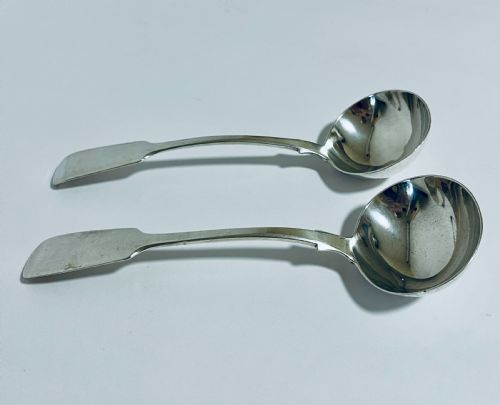


Silver Fiddle Pattern Cutlery
Silver fiddle pattern cutlery brings understated elegance to the dining table, offering timeless service from the Georgian and Victorian eras.
Silver Fiddle Pattern Cutlery
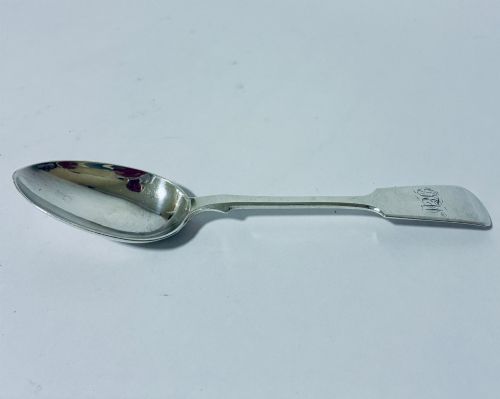
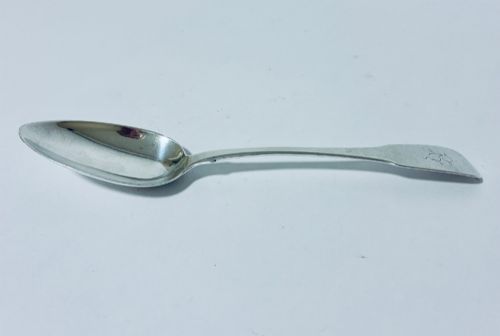
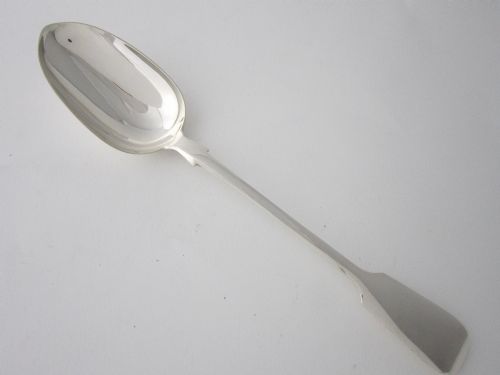
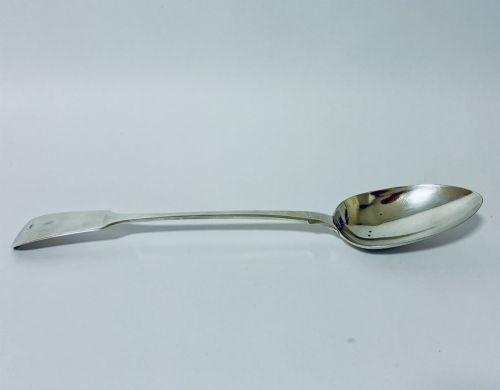
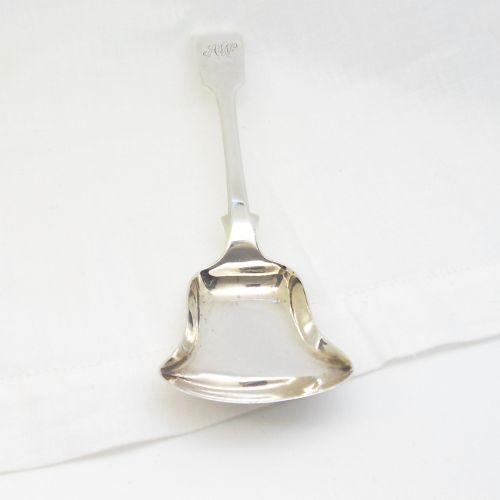
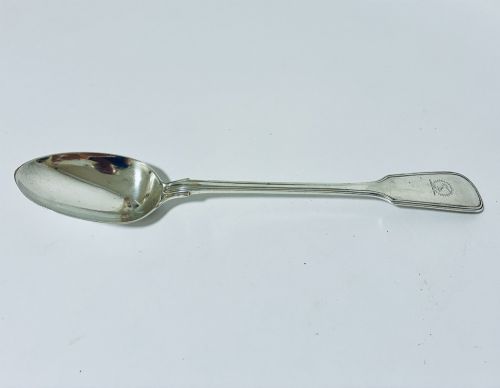
Silver fiddle pattern cutlery consists of serving spoons, canteens, and individual flatware defined by the distinct shoulder shape near the terminal of the handle. Buyers searching this phrase encounter complete canteens for larger dining parties as well as individual serving pieces like fish slices, soup ladles, and basting spoons.
Materials and Construction
Makers shaped sterling silver and solid silver using traditional smithing techniques, hammering and rolling the metal to achieve the characteristic tapered stem and shoulders of the fiddle design. Provincial and capital workshops applied town marks, date letters, and maker punches directly to the reverse of the handle.
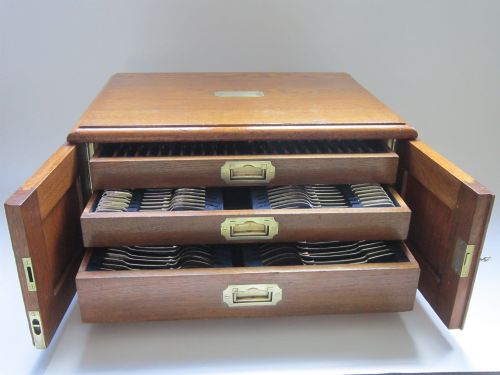
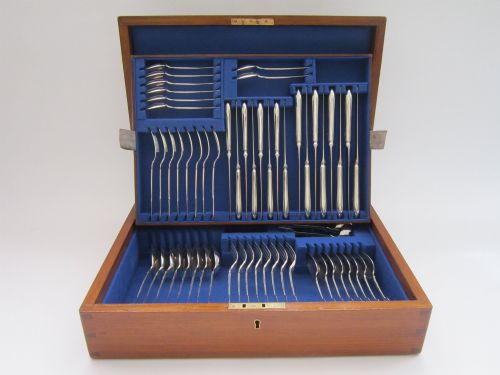
Fitted storage for these sets utilised robust timbers like oak and mahogany, often lined with tactile materials such as velvet, felt, and fitted with brass hinges or escutcheons.
Some toddy ladles arrive with twisted whalebone handles, offering a surprising maritime texture beside polished silver bowls.
Factors That Determine Quality
The standard of silver fiddle pattern cutlery depends on the crispness of the fiddle shoulder profile and the clarity of the hallmarks stamped into the metal. Pieces that retain their original weight and balance through the stem and bowl demonstrate superior survival over decades of regular dining use.
Engraved family crests and monograms can add historical character, provided the underlying silver thickness of the bowl and tines remains uncompromised by excessive polishing over generations.
John Walton
The Silver Fiddle Pattern Cutlery Glossary
- Fiddle pattern
- A flatware design characterised by a subtle shoulder on the stem near the terminal, resembling the outline of a stringed instrument. It emerged in the Georgian period and remained popular throughout the Victorian era.
- Sterling silver
- An alloy comprising ninety-two point five percent silver and seven point five percent other metals, typically copper, used to ensure durability in cutlery. British items carry hallmark stamps confirming this standard.
- Fish slice
- A wide, often pierced serving utensil designed for presenting fish at the table. Georgian examples in fiddle pattern feature detailed engraving or pierced blade decoration.
- Basting spoon
- A large spoon utilised in the kitchen or at the table for distributing juices over meat. These pieces form a substantial part of Georgian and Victorian serving sets.
- Canteen
- A fitted box or chest designed to store a set of cutlery securely. These containers are frequently constructed from oak or mahogany and lined with velvet or felt.
Silver Fiddle Pattern Cutlery: Frequently Asked Questions
How do I clean silver cutlery?
Wash sterling silver pieces in warm, soapy water using a soft cloth, then dry them thoroughly with a lint-free towel. Avoid harsh abrasive cleaners that can wear away crisp hallmarks and delicate engraved crests.
Store the items in a dry environment, preferably inside a lined wooden canteen or an anti-tarnish roll, to minimise exposure to atmospheric sulfur that causes dark oxidation.
Can I use these sets daily?
Sterling silver fiddle pattern cutlery is robust enough for regular dining use, provided you handle the pieces with reasonable care. Hand washing is essential, as modern dishwasher detergents and high heat will damage silver and wooden handles.
Using the pieces frequently helps prevent tarnish from building up in the crevices of the fiddle shoulders and engraved crests, keeping the metal bright.
What is a matched set?
A matched set consists of cutlery pieces gathered together from similar periods or styles to function as a unified service. While the individual items may share the fiddle pattern outline, minor variations in maker marks or crests reveal different origins.
These collections offer a practical way to acquire a full service for dining parties without requiring every piece to share an identical workshop provenance.