
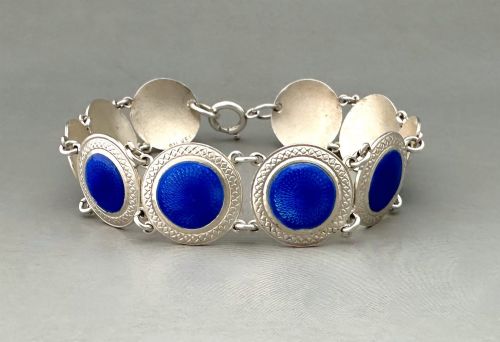


Silver Enamel Panel Bracelet
A silver enamel panel bracelet brings together structured metalwork and vibrant colour, offering a wearable piece of twentieth-century design history.
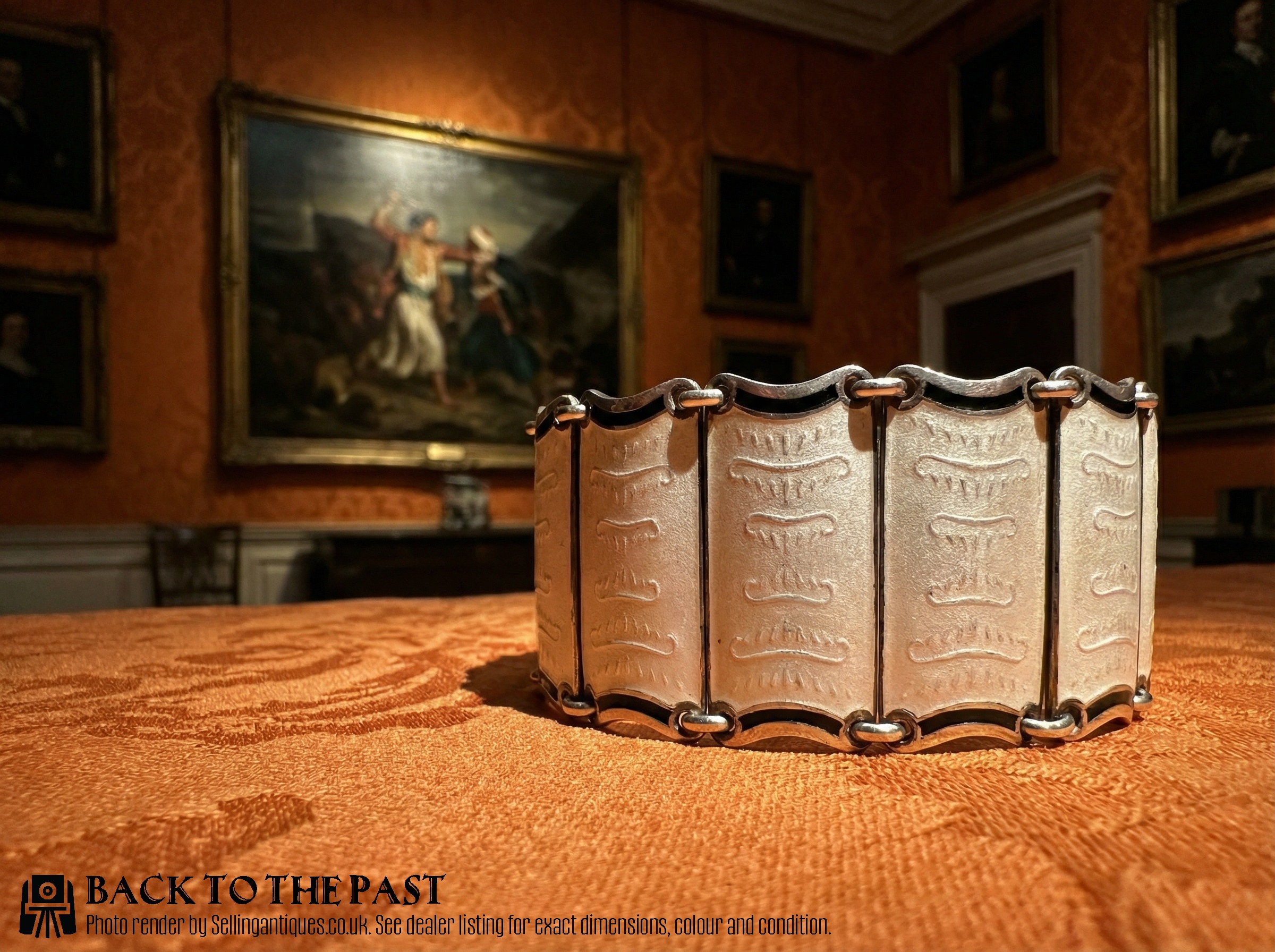
Silver Enamel Panel Bracelet
A silver enamel panel bracelet comprises a sequence of linked segments, each decorated with vitreous or hand-painted enamel set within a silver or chrome frame. These pieces span several decades of twentieth-century design, reflecting shifts in aesthetics from the early 1900s through to the 1950s and 1960s.
The most common examples encountered on this page date from the Art Deco period of the 1930s, typically featuring geometric brickwork patterns, chrome settings, and guilloche enamel. Alongside these, buyers frequently find Arts and Crafts, Jugendstil, and Scandinavian modern designs.
Makers from Britain, Norway, Denmark, and Germany populate the selection, bringing distinct regional techniques to the panel format. Whether worked in sterling silver, silver gilt, or chromium, the underlying structure relies on articulated links that sit comfortably around the wrist.
Materials and construction
Makers constructed these bracelets using sterling silver, standard silver, or chrome as the foundational metal for the articulated panels. Vitreous enamel, applied as a glass paste and fired at high temperatures, provides the rich colour seen across the geometric and floral motifs.
Techniques varied from the intricate wirework of silver filigree to the precision of machine-turned guilloche patterns beneath translucent enamel. Some pieces incorporate supplementary materials such as glass, chalcedony, and marcasite to accent the central enamel panels.
Listings span five decades of design from 1900 to 1950, encompassing Jugendstil, Arts and Crafts, Art Deco, and Scandinavian Modern styles.
Distinguishing quality across the range
The standard of execution in the enamel work largely determines the standing of a piece, separating simple decorative items from masterworks of the silversmith's art. Smooth, even glazing without bubbling or loss indicates careful firing and higher craftsmanship.
The complexity of the metal framework, whether hand-wrought silver filigree or engineered industrial chrome, dictates the refinement of the bracelet. Fully articulated links that move fluidly and secure clasps also mark out the finer examples in the selection.
Jakob Bengel·Murrle Bennett·Fahrner and Bennett·Ivar T Holth·Volmer Bahner·David Andersen
The Silver Enamel Panel Bracelet Glossary
- Vitreous enamel
- Glass fused to a metal surface at high temperatures to create a durable, coloured coating. This material forms the vibrant panels characteristic of these bracelets.
- Guilloche
- A decorative engraving technique that etches precise geometric patterns into metal. When covered with translucent enamel, it creates a shimmering effect beneath the surface.
- Silver gilt
- Silver that has been coated with a thin layer of gold, often providing a warm contrast to brightly coloured enamel work. This finish appears frequently on Scandinavian pieces.
- Filigree
- Delicate metalwork formed from fine silver wires twisted and soldered together into intricate openwork designs. It is often paired with enamel panels for a lighter aesthetic.
- Articulated
- Joined in a way that allows for flexible movement between individual rigid sections. This construction ensures the bracelet drapes naturally around the wrist.
Silver Enamel Panel Bracelet: Frequently Asked Questions
How do I clean a silver enamel panel bracelet?
Use a soft, dry cloth to gently wipe the silver and glass surfaces after wearing. Avoid liquid dips or harsh ultrasonic cleaners, as these can damage the delicate enamel and any inset stones.
Store the bracelet flat in a lined box to prevent the metal links from scratching the enamel panels of adjacent sections.
Are these bracelets suitable for daily wear?
Most pieces are robust enough for occasional wear if handled with reasonable care. The glass enamel can chip or crack if struck against hard surfaces, so it is wise to remove the bracelet during physical tasks.
Checking the security of the clasp and connecting jump rings periodically will help prevent accidental loss.
How can I tell an Art Deco bracelet from an Arts and Crafts one?
Art Deco pieces tend to feature bold geometric lines, symmetrical brickwork patterns, and industrial materials like chrome alongside bright enamel. They typically date from the 1930s and project a streamlined modernity.
Arts and Crafts examples, originating earlier around 1910, often show hand-hammered surfaces, organic motifs, and visible artisan craftsmanship in the silver setting.
What is the difference between Norwegian and Danish designs here?
Norwegian pieces frequently utilise guilloche enamel over silver gilt, often featuring floral motifs or scenic winter landscapes with deep translucent colours. They showcase the mid-century Scandinavian mastery of enamel techniques.
Danish designs often lean towards minimalist forms or stylized flora executed in vibrant yellow or other solid enamels, reflecting clean modernist sensibilities.