


Silver Cluster Earrings
Silver cluster earrings group brilliant stones or gems around a central focus, offering striking sparkle across periods from Georgian times to the mid-century.
Silver Cluster Earrings
Silver cluster earrings collect multiple stones around a focal centre, creating a concentrated display of light and colour. You will frequently encounter Victorian and Edwardian examples alongside mid-century and Art Deco variations.
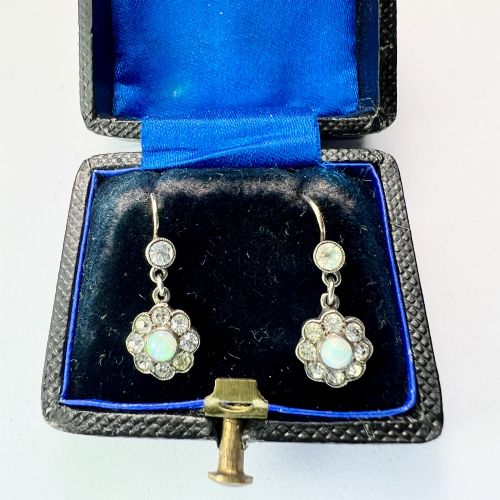
The forms span simple floral daisy clusters, sunburst designs, and dangling drop shapes. Many rely on silver paired with gold, platinum, or gilt finishes to secure the stones.
Earring backs range from hinge backs and screwbacks to modern clips and standard post fittings. These designs accommodate both pierced and unpierced ears depending on the era of manufacture.
Materials and construction
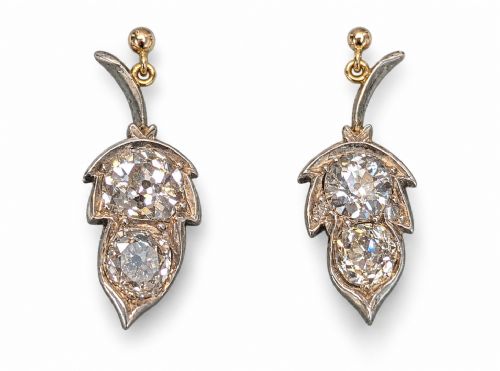
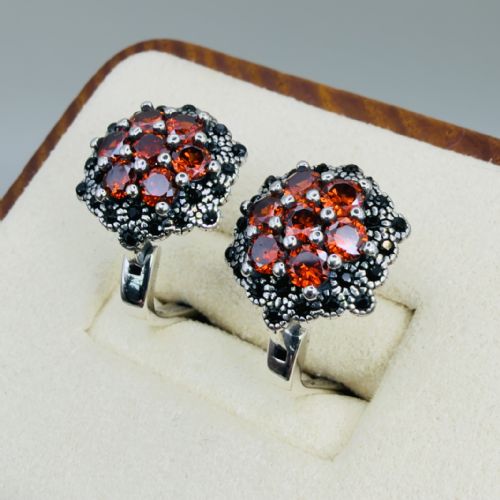
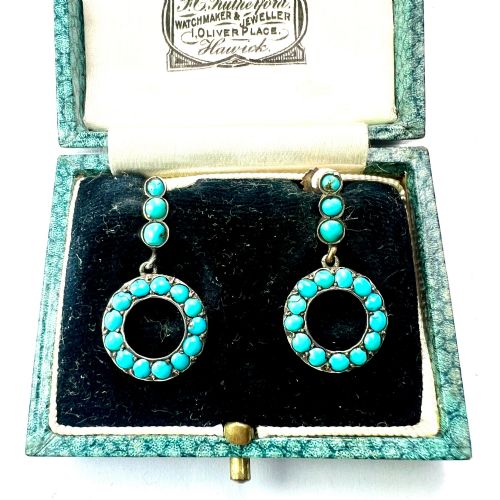
Craftsmen utilised silver often combined with 9ct, 15ct, or 18ct gold and platinum to mount diamonds, paste, garnets, turquoise, and pearls. The use of silver on gold or silver-topped gold characterises much of the earlier work.
Stones are set using traditional techniques, featuring old cut diamonds, rose cut diamonds, and glass paste. Enamel, natural pearls, and various coloured gemstones provide additional texture and contrast within the cluster frames.
The listings span multiple eras, including Georgian, Victorian, Edwardian, Art Deco, and mid-century modern periods.
Quality variations
The distinction between tiers rests upon the choice of central and surrounding stones, ranging from high-grade diamonds to glass paste and synthetic corundum. Superior mounting work and the harmonious arrangement of the cluster elevate the piece.
The integrity of the original metalwork, whether silver-topped gold or solid platinum, dictates the longevity and refinement of the design.
Knoll & Pregizer
The Silver Cluster Earrings Glossary
- Cluster
- A stone setting arrangement where a central gem is surrounded by a ring of smaller stones. This design maximises the visual impact and perceived size of the jewellery.
- Paste
- Hand-cut and polished lead glass used to imitate gemstones. It appears frequently in period pieces for brilliant colour and sparkle.
- Old cut
- A diamond cutting style preceding modern brilliant cuts, characterised by a smaller table and high crown. These cuts produce a distinctive, softer candlelight reflection.
- Silver-topped gold
- A historical technique where a thin layer of silver is soldered to a gold backing. This combined the bright white face of silver with the strength and tarnish resistance of gold.
- Screwback
- A mechanical earring finding utilising a threaded post and nut. It allows the wearer to adjust pressure on unpierced lobes.
Silver Cluster Earrings: Frequently Asked Questions
Are silver cluster earrings suitable for daily wear?
Many pairs feature robust silver and gold settings that handle regular use well. Older pieces with paste or delicate pearls require more mindful care.
Securing proper backs, whether screwbacks or modern clips, ensures they stay firmly in place during daily activities.
How do I identify a Victorian cluster earring?
Victorian examples often utilise rose cut or old cut diamonds set in silver-topped gold. Look for closed-back settings in earlier Georgian and early Victorian pieces.
Motifs such as sunbursts, floral daisy patterns, and tassel drops also point directly to this nineteenth-century aesthetic.
Can screwback earrings be converted for pierced ears?
Jewellers can often convert screwbacks or clip-ons to posts or wires. This alteration changes the original configuration of the vintage hardware.
Many collectors prefer to keep the original screwback or hinge back mechanism intact to preserve the historical integrity.
How should I clean antique silver cluster earrings?
Use a soft, dry cloth to remove surface dust without disturbing delicate paste or pearl settings. Avoid liquid dips that can seep behind closed-back stones.
Professional cleaning is recommended for intricate mid-century or Victorian clusters with multiple gem types.