
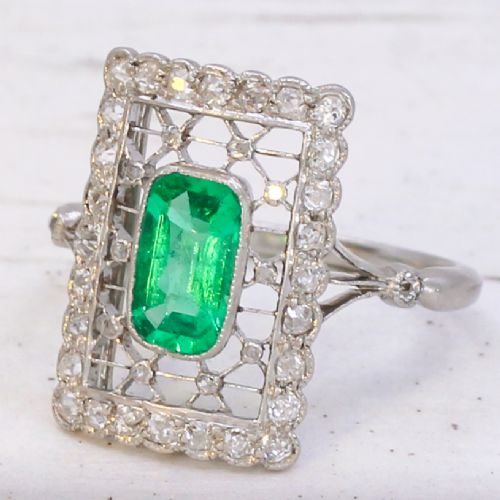
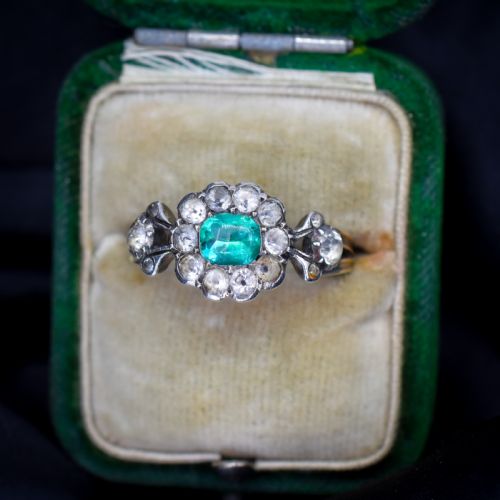
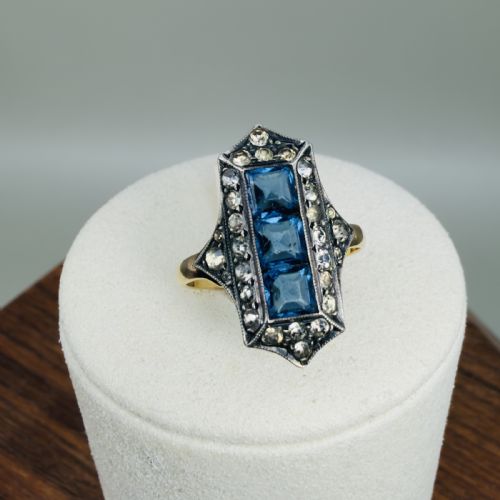
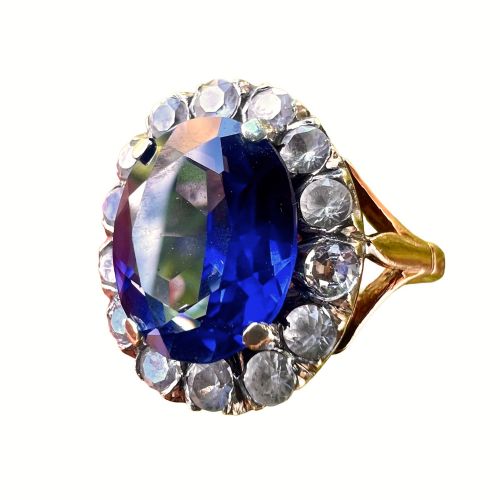
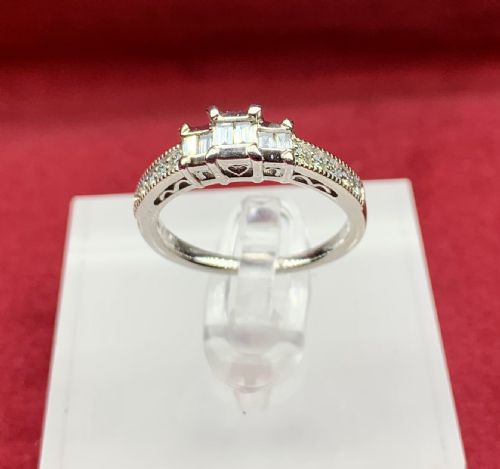


Silver Cluster Dress Ring
A silver cluster dress ring brings together concentric stones and precious metal to create a bold, finger-catching statement from eras past.
Silver Cluster Dress Ring
A silver cluster dress ring gathers a central gemstone surrounded by smaller accent stones, typically diamonds, pastes, or coloured gems, mounted over a silver base or face. These pieces span the Georgian, Victorian, Edwardian, and Art Deco periods, alongside mid-century examples.
The format ranges from compact floral arrangements to large geometric cocktail rings designed to catch the light across the hand. Many incorporate gold alongside silver, utilising yellow gold, white gold, or platinum in combination with the silver setting.
Makers shaped these rings for evening wear and social gatherings, resulting in varied silhouettes including navette, halo, and bombé forms. The survivor rate draws heavily from the early twentieth century, particularly the Art Deco era and the Edwardian years.
Materials and Construction
Goldsmiths and jewellers constructed these rings by mounting diamonds, emeralds, sapphires, rubies, opals, moonstones, paste stones, coral, and onyx into silver settings, frequently backed or shanked with gold or platinum. Silver provided a bright, reflective white surface that enhanced the brilliance of old cut and rose cut diamonds without competing with their fire.
Techniques relied on hand-cut gemstones secured in closed or open-backed settings, utilising prong, bezel, and pave methods to lock the cluster stones tightly together. The integration of contrasting metals, such as 18ct gold or platinum with silver, gave structural strength to delicate lace-like decorative faces.
Factors That Separate Examples
The standard of a piece rests upon the harmony of the stone arrangement and the crispness of the surrounding metalwork. Original stones matching the period of the mount carry greater architectural integrity than later replacements.
The sophistication of the silhouette defines the upper tier, where intricate Edwardian floral motifs or sharp Art Deco geometric lines demonstrate superior bench skill. The choice of materials, such as platinum or high-carat gold paired with natural unheated gemstones, elevates an example above paste and lower-alloy alternatives.
The Silver Cluster Dress Ring Glossary
- Cluster ring
- A ring featuring a central stone encircled by a border of smaller stones. This layout maximises visual impact and light reflection.
- Rose cut
- A diamond cut with a flat base and a faceted dome consisting of triangular facets. It originates from early periods and produces a soft, subtle gleam.
- Old cut
- A hand-faceted diamond cut predating modern brilliant standards. These stones display smaller tables and open culets.
- Paste
- Hand-cut lead glass used as a gemstone substitute in antique jewellery. It allows for vibrant colours and complex facets.
- Navette
- A boat-shaped ring setting that tapers to points at either end. This elongated silhouette sits gracefully along the length of the finger.
Silver Cluster Dress Ring: Frequently Asked Questions
What is a silver cluster dress ring?
A silver cluster dress ring is an ornamental finger ornament featuring a prominent central gemstone framed by smaller surrounding stones, set primarily in silver often backed with gold or platinum.
These pieces were worn for social occasions and evening events across the Georgian, Victorian, Edwardian, and Art Deco periods.
How do I tell an Art Deco ring apart from Victorian examples?
Art Deco rings favour clean geometric lines, platinum settings, and precise symmetry, reflecting the design ethos of the nineteen-twenties and nineteen-thirties.
Victorian rings tend towards softer floral arrangements, rose-cut diamonds, and heavier yellow gold or silver-topped gold structures from the nineteenth century.
What stones are typically found in these rings?
Common stones include diamonds, emeralds, sapphires, rubies, opals, moonstones, and coloured glass pastes, occasionally paired with onyx or coral.
These materials are arranged to create strong colour contrasts or sparkling white surfaces against the dark or bright metal mount.
How should I care for an antique silver ring?
Antique silver rings require gentle cleaning with soft cloths and protection from harsh chemicals to preserve the integrity of the delicate metal settings.
Avoid abrasive dips that might harm softer gems like opals, pearls, or paste stones housed within the cluster.