




Silver Cased Glass Bottle
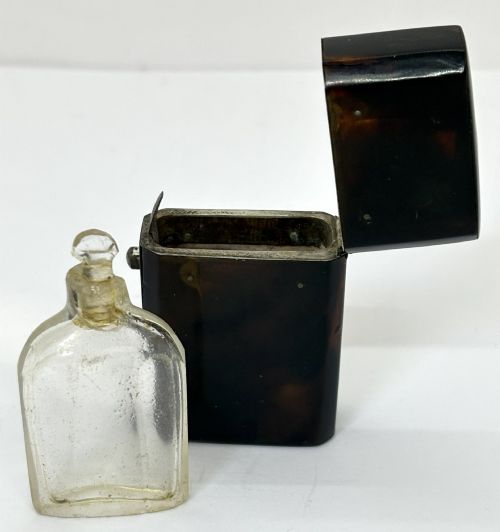
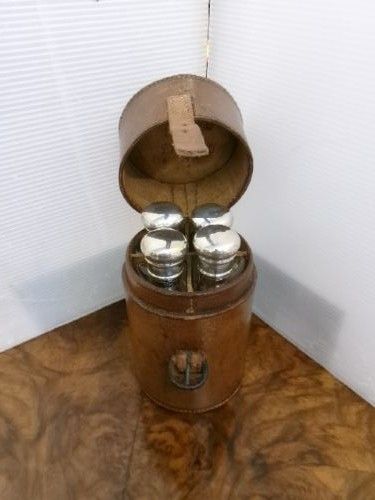
These silver cased glass bottle pieces protect delicate vessels inside fitted outer housings, offering both portability and display appeal for the dressing table.
Silver Cased Glass Bottle
A silver cased glass bottle combines a glass vessel with a protective or decorative outer covering, frequently found in forms such as scent bottles, flasks, and cologne sets. These items serve both functional and decorative purposes, designed for personal grooming or travel.
The versions most commonly met on this page date from the Georgian, Victorian, and Edwardian eras, incorporating materials like sterling silver, cut glass, and leather cases. They range from single pocket scent bottles to elaborate dressing cases housing multiple glass containers.
Makers fashioned these containers to safely transport liquids while displaying fine metalwork and glass craftsmanship. Surviving examples reflect the domestic habits and luxury standards of the nineteenth and early twentieth centuries.
How they were made
Artisans combined blown or cut glass vessels with fitted outer cases formed from silver, leather, or exotic woods such as coromandel and kingwood. Metal mounts, collars, and hinged lids were frequently hallmarked to indicate silver standard and manufacturing date.
Internal elements often included velvet or satin linings designed to cushion the glass bottles securely within their protective housing. Exterior cases utilised precise joinery and specialised hardware to ensure a snug fit for the enclosed flasks and jars.
Silver Cased Glass Bottle Retail Price Guide 2026
Typical asking prices for silver cased glass bottle among the pieces listed under this phrase on Sellingantiques today, from the lower quarter to the upper quarter. They describe what is for sale here now, not the wider market.
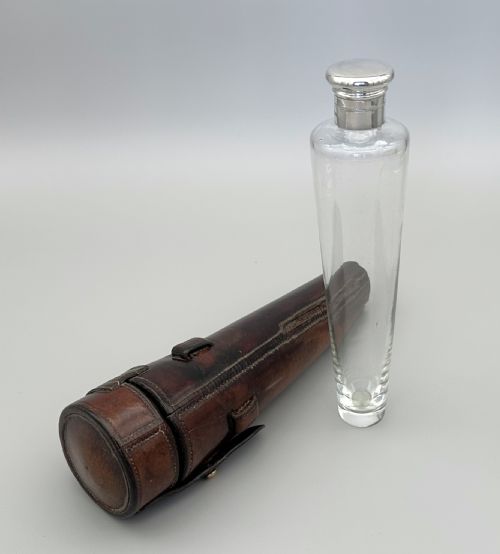
A hunting flask tucked inside a leather case is ready for a chilly day across the fields.
What varies in quality
The sophistication of the outer case largely distinguishes superior examples from simpler ones, with fitted wooden boxes and detailed silver mounts sitting at the higher end of the range. The integration between the glass vessel and its protective sleeve demonstrates the maker's precision.
Material selection also defines the tier of the piece, particularly the use of solid sterling silver, silver-gilt, or heavy cut glass rather than simpler plated fittings. Complete sets retaining their original matching bottles and internal linings command greater interest.
The Silver Cased Glass Bottle Glossary
- Sterling silver
- A silver alloy containing 92.5 percent pure silver and 7.5 percent other metals, commonly marked with hallmarks indicating its standard. This material provides durability for the protective cases and bottle caps.
- Cut glass
- Glassware shaped and patterned by cutting facets or motifs into the surface using a wheel. It adds weight and sparkle to the interior bottles.
- Tantalus
- A locking wooden cabinet holding decanters or bottles securely to prevent access without a key. Examples on this page include single bottle variants.
- Opaline glass
- An opaque or translucent pale glass popular in the nineteenth century for decorative items. It offers a smooth, milky appearance distinct from clear cut glass.
- Dressing case
- A fitted box containing travel containers, jars, and grooming tools. These cases often utilise luxury woods like kingwood and coromandel.
Silver Cased Glass Bottle: Frequently Asked Questions
What are silver cased glass bottles?
These items are glass vessels enclosed in protective or decorative outer layers made from materials such as silver, leather, and wood. They encompass scent bottles, flasks, and vanity jars designed for personal use.
Historically utilised for perfumes, cosmetics, or spirits, they allowed individuals to carry liquids safely or display them neatly on dressing furniture.
How do I date a piece?
Dating relies on examining silver hallmarks, which indicate the assay office and year of manufacture. Stylistic details, such as Victorian ornamentation or Georgian case construction, also help establish the period.
Matching the materials of the outer case with the glass type provides further context for when the item was produced.
How should I care for them?
Maintenance involves gentle cleaning of the glass and cautious handling of silver components to preserve any hallmarks or gilding. Avoiding abrasive polishes protects the surrounding leather or wooden cases.
Keeping the items away from excessive moisture ensures internal velvet or satin linings remain undamaged.