



Silver Candlestick Sticks
Silver candlestick sticks bring genuine historical light into a room, spanning formal Georgian columns to tactile Arts and Crafts pewter designs.
Silver Candlestick Sticks
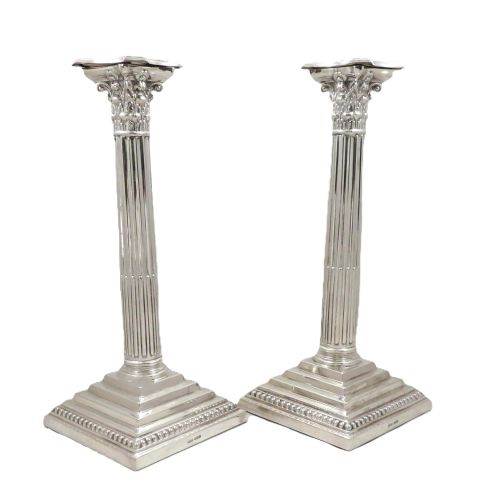
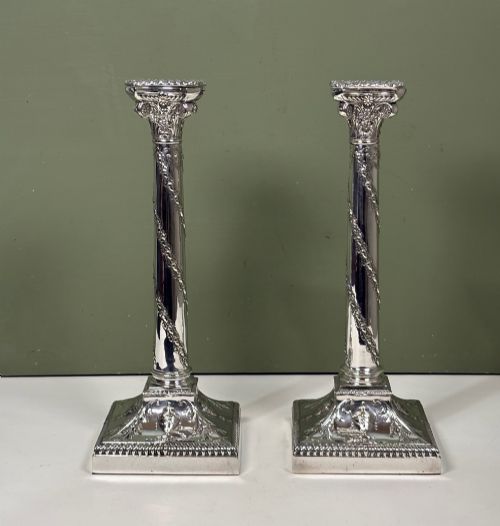
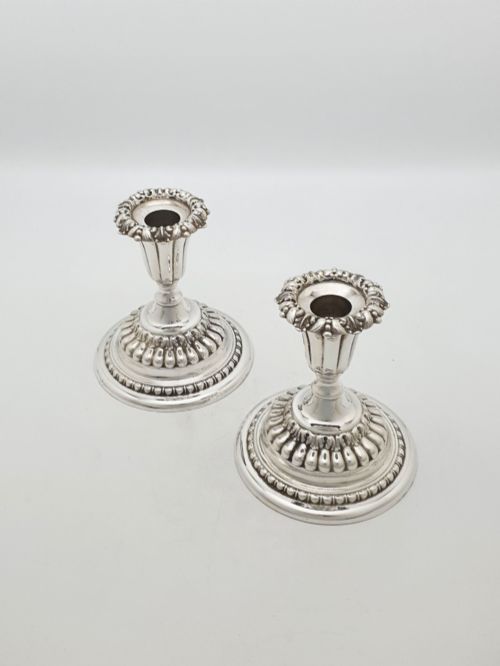
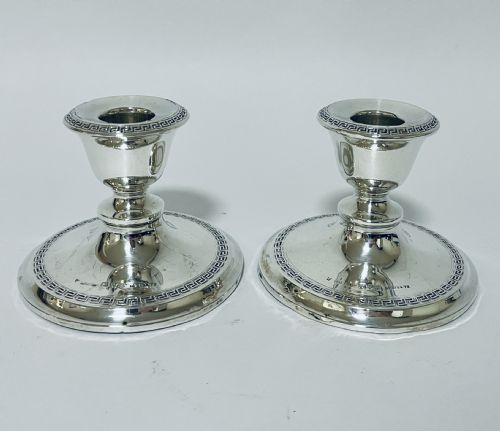
Silver candlestick sticks encompass tall table models, low chambersticks for bedside use, and multi-light candelabra suites designed for formal dining. Buyers examining this page encounter forms ranging from Georgian and Victorian periods through to Edwardian and later twentieth-century output.
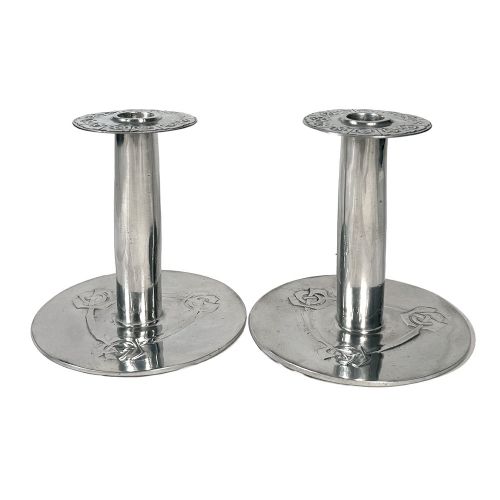
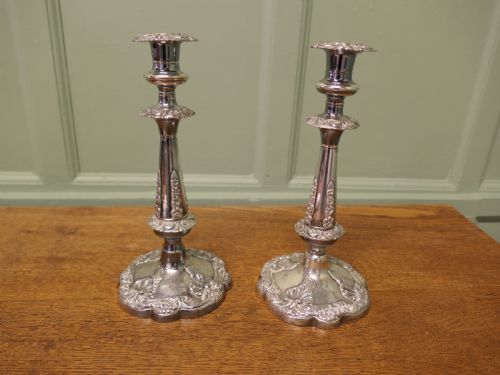
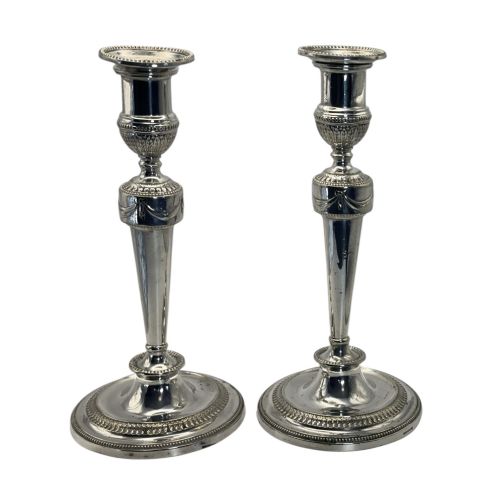
Design vocabulary shifts significantly across the eras represented. Pieces move from neoclassical columns and rococo scrolls into organic Art Nouveau curves and the geometric honesty of the Arts and Crafts movement.
Materials and construction methods
Makers utilised solid sterling silver alongside various plated methods, notably Old Sheffield Plate and later electroplating onto copper or nickel silver bases. Metal components were often cast, chased, or spun, then assembled into weighted bases for stability.
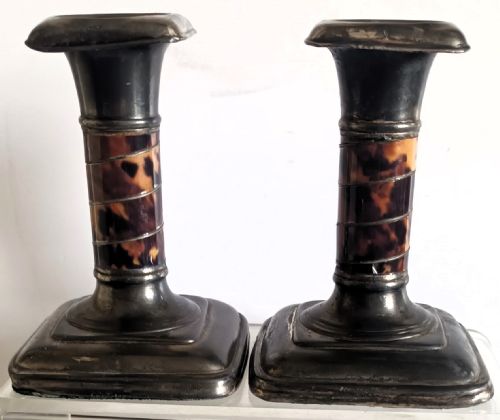
Alternative materials appear frequently in the record, including pewter, copper, bronze, paktong, and carved wood treated with silver leaf or tortoiseshell. Silver gilt and enamel finishes provide decorative colour contrast on specific Victorian and later pieces.
Silver Candlestick Sticks Retail Price Guide 2026
Typical asking prices for silver candlestick sticks among the pieces listed under this phrase on Sellingantiques today, from the lower quarter to the upper quarter. They describe what is for sale here now, not the wider market.
Several examples include built-in match holders, proving that Victorian homeowners kept portable fire close at hand.
Evaluating craftsmanship and condition
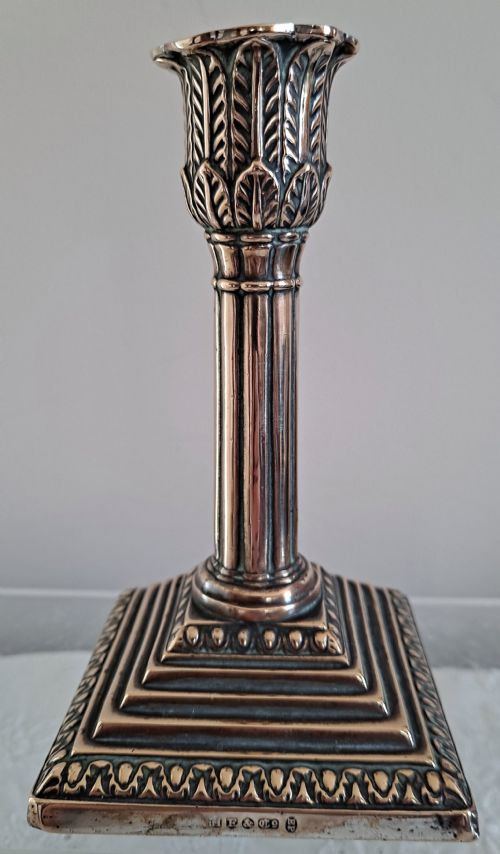
Quality rests in the crispness of the casting and chasing, where finer examples retain sharp architectural fluting or detailed naturalistic foliage without softening from over-cleaning. The weight and balance of the base determine how securely the holder supports a taper or pillar candle.
The integrity of the plated surface separates standard production from superior manufacture, particularly on Old Sheffield Plate where the copper base metal remains discreetly hidden beneath the fused silver layer. Makers' marks and assay stamps provide verifiable proof of origin and period.
Archibald Knox for Liberty and Co·Garrard and Co·Mappin and Webb·Barker Ellis·Ferdinand Barbedienne·WMF
The Silver Candlestick Sticks Glossary
- Chamberstick
- A low candleholder fitted with a saucer base and a loop handle for carrying through a darkened house.
- Old Sheffield Plate
- An early plating technique fusing a thin sheet of silver onto a thicker copper core, visible where wear occurs at exposed edges.
- Paktong
- A strong copper-nickel-zinc alloy originating from China, utilised for bright, silvery metalwork during the eighteenth century.
- Corinthian column
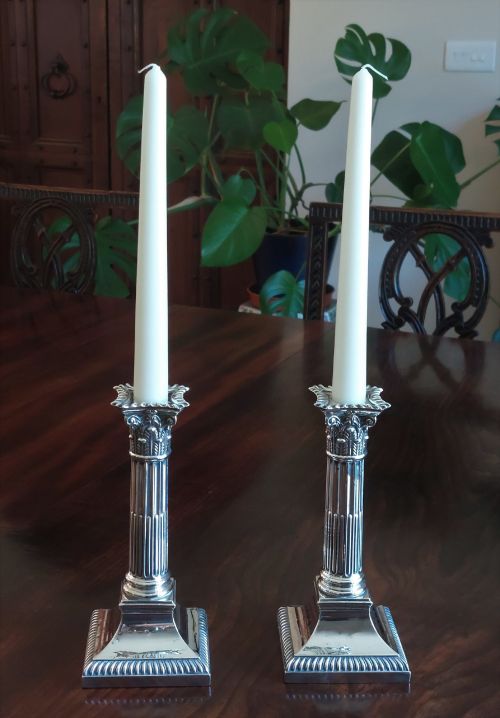
- A classical architectural order featuring an ornate capital decorated with acanthus leaves, frequently adapted for pillar forms.
- Taper stick
- A miniature version designed specifically for holding thin wax tapers used to melt sealing wax on correspondence.
Silver Candlestick Sticks: Frequently Asked Questions
How do I clean antique silver candlesticks?
Clean surfaces gently with a soft cloth and a specialised silver polish formulated to preserve delicate chasing and thin plating layers. Avoid harsh abrasive dips that strip away historic patination.
Take particular care around weighted bases and felted undersides to prevent moisture damage during routine maintenance.
What is the difference between a candlestick and a chamberstick?
Candlesticks stand upright on dining tables, mantelpieces, or desks to provide stationary illumination for a room. They feature weighted bases and slender shafts designed to remain in one spot.
Chambersticks incorporate a wide drip pan and a finger ring, allowing individuals to carry a lighted candle safely from room to room before the invention of electric lighting.
How can I date my silver plated candlesticks?
Examine the construction joints, styling details, and any stamped maker marks or registry numbers on the base. Old Sheffield Plate items often display subtle copper seams, whereas electroplated pieces generally date from the mid-nineteenth century onward.
Comparing the decorative motifs, such as neoclassical columns or Art Nouveau whiplash lines, against known period styles helps narrow down the production decade.
Are these candlesticks suitable for everyday use?
Most antique and vintage examples function well for dining or display when fitted with candles that match the socket diameter correctly. Using drip protectors prevents hot wax from accumulating on sensitive metal or plated surfaces.
Careful handling ensures that delicate elements like handles, nozzles, and weighted bases remain secure over years of regular enjoyment.