

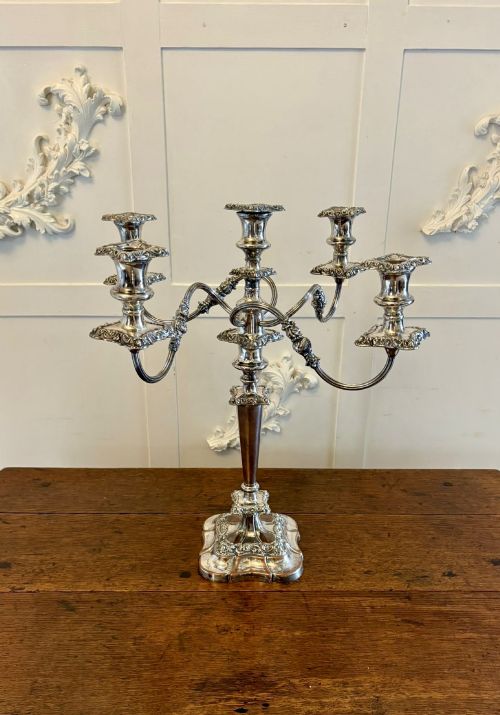
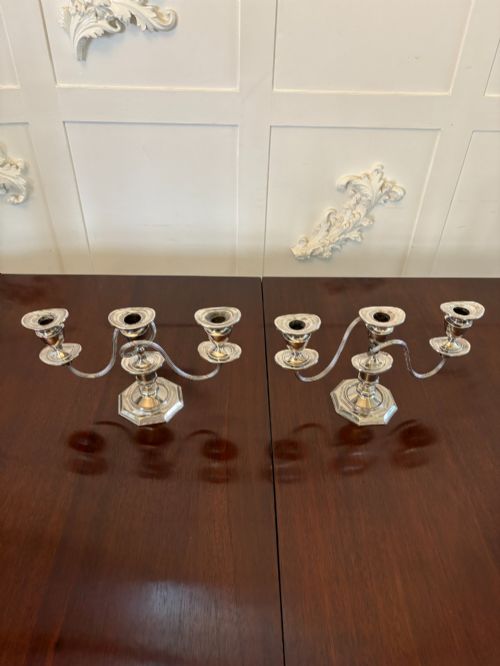
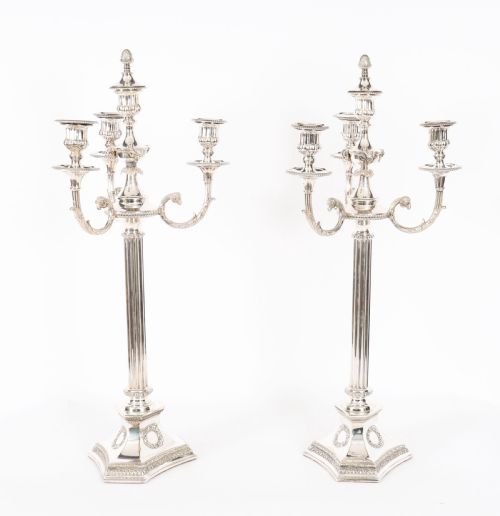
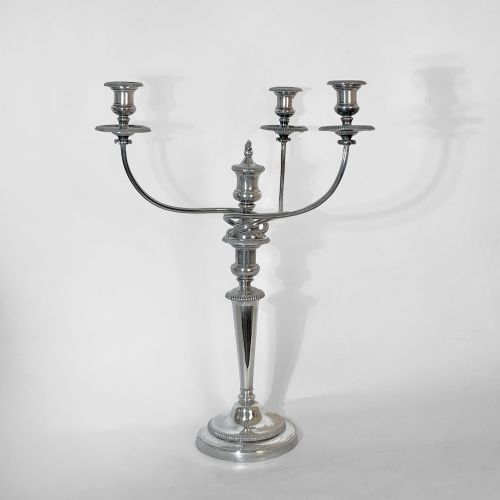


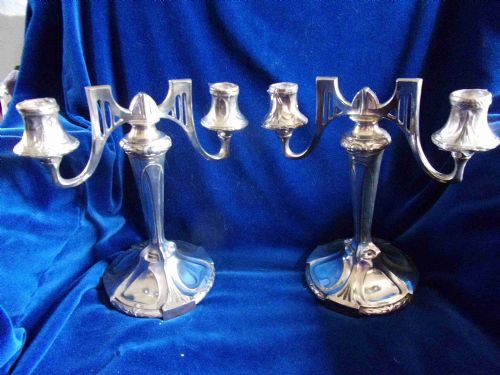

Silver Branching Candelabra
Silver branching candelabra bring undeniable theatre to a dining table, combining multiple light sources with the rich gleam of period metalwork.
Silver Branching Candelabra
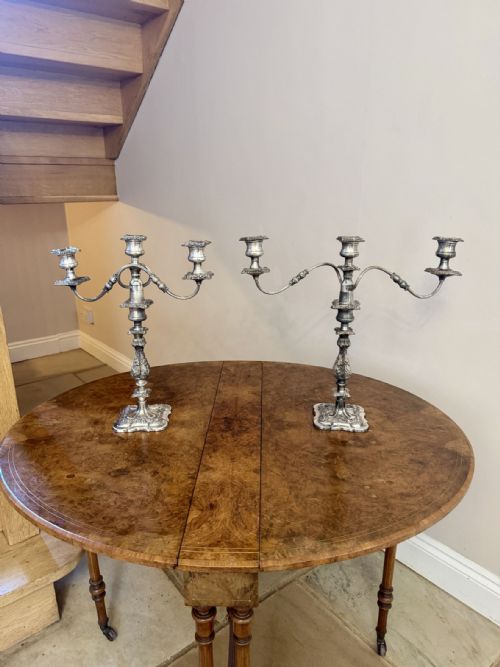
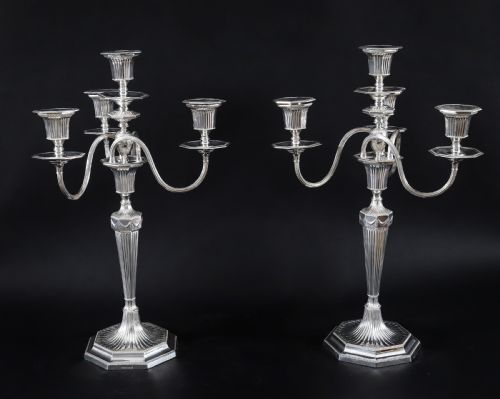
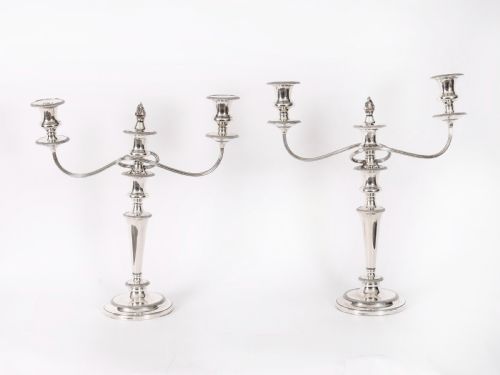
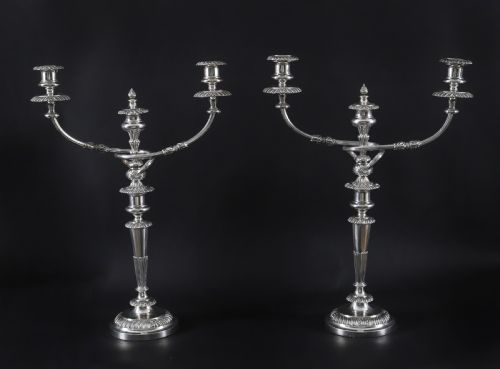
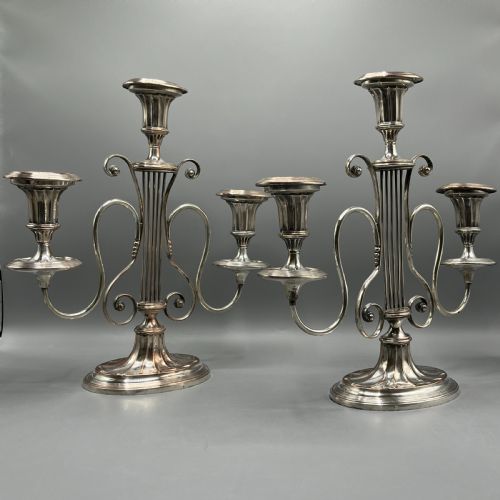
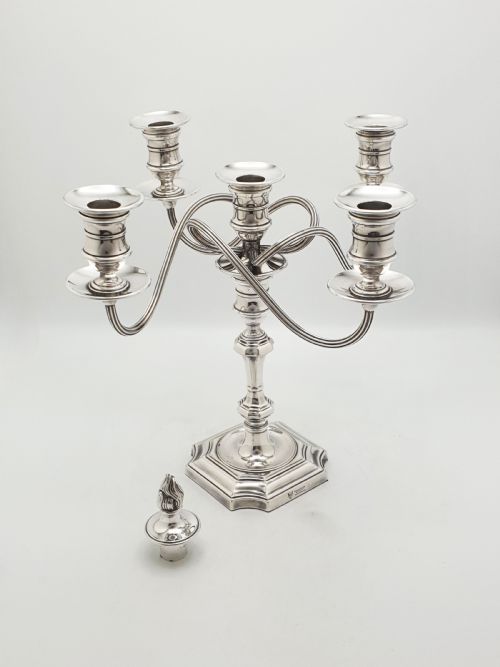
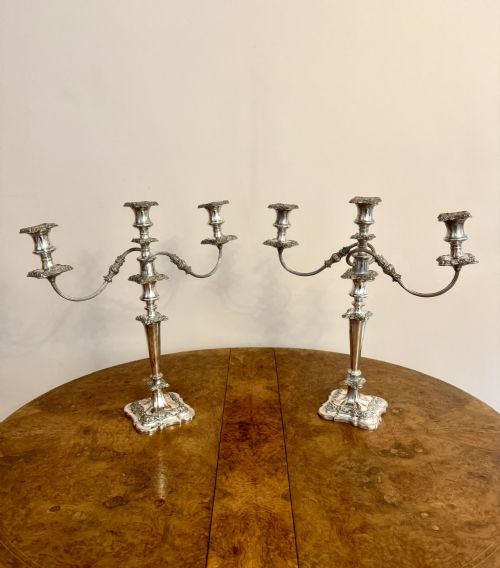
Silver branching candelabra are multi-light candleholders designed to illuminate large tables and rooms, appearing most frequently on this page in Victorian and Georgian incarnations. These pieces typically take the form of pairs or large centrepieces with two, three, four, five, or six branching arms extending from a central stem. Origins range from English workshops in Sheffield and London to Continental makers, spanning periods from the eighteenth century through to the mid-twentieth century.
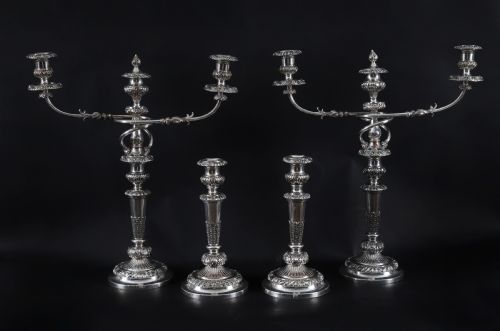
Makers utilised various configurations, including detachable sconces, low two-branch table models, and figural designs featuring cherubs or palm trees. Styles stretch from classical George III and Regency restraint to ornate Victorian Rococo Revival, Edwardian elegance, and Art Deco geometry. Buyers searching for silver branching candelabra encounter everything from substantial Old Sheffield plate suites to sterling silver constructions and silver-plated copper bases.
How they were made
Makers constructed these pieces using solid sterling silver, copper cores fused with silver sheets known as Old Sheffield plate, or base metals coated via electroplating. Techniques included hand-wrought shaping, casting in parts such as branches and detachable sconces, and intricate chasing to render ornate floral or figural motifs.
Old Sheffield plate items reveal a characteristic copper seam where the silver sheet folds over the base metal, whilst electroplated nickel silver and standard silver plate employ an applied metallic coating over a supportive alloy or copper foundation.
What varies in quality
Quality in silver branching candelabra rests on the crispness of the casting, the weight and balance of the branching arms, and the integrity of the underlying metal. Pieces by notable firms display deeper chasing, cleaner joinery, and heavier metal gauges that prevent the arms from sagging under the weight of multiple candles.
The method of manufacture also dictates standing, as early fused Old Sheffield plate and substantial sterling silver examples command greater regard than later, lighter electroplated items. Proportions, the presence of matching original detachable sconces, and the restraint or ambition of the decorative scheme further separate ordinary production from distinguished work.
Hawksworth Eyre·Garrard and Co·Matthew Boulton·Blagden Hodgson and Co·Robert Edgar Stone·Elkington
The Silver Branching Candelabra Glossary
- Old Sheffield Plate
- A fused metal technique where a thin sheet of silver is fused to a thicker copper core by heat and pressure. This method was widely used before the invention of electroplating.
- Sconce
- The detachable pan or nozzle fitted at the top of a candle branch to catch dripping wax. They are frequently removable for easy cleaning.
- Electroplated Nickel Silver
- A base metal alloy of copper, nickel, and zinc coated with a thin layer of pure silver through an electrolytic process. It became the dominant plating method in the Victorian era.
- Chasing
- A metalworking technique where a hammer and punches push the metal from the front to create raised decorative designs or surface texture. It defines the rich detail on ornate Victorian pieces.
- Candelabrum
- A large branching candleholder designed for multiple lights, distinguished from a simple candlestick by its arms. The plural form is candelabra.
Silver Branching Candelabra: Frequently Asked Questions
What is the difference between silver plate and sterling silver?
Sterling silver contains a guaranteed high purity of silver throughout the entire object, making the metal uniform from surface to core. Silver plate involves a thin layer of silver bonded to a base metal such as copper or nickel silver.
Items made in sterling silver carry specific hallmarks denoting their purity and assay office, whereas plated pieces generally feature maker marks indicating the plating method or brand.
How do I date a candelabrum?
Dating relies on stylistic clues, manufacturing techniques, and any accompanying hallmarks or maker stamps stamped into the metal. Georgian pieces often display simpler neoclassical lines or distinct Old Sheffield plate construction.
Victorian and Edwardian examples typically feature heavier ornamentation, cast rococo revival details, or early electroplate marks. Twentieth-century pieces shift towards Art Deco geometry or modern hand-wrought execution.
What are detachable sconces?
Detachable sconces are the small removable trays or nozzles seated at the very top of each branch where the candle sits. They catch dripping wax and protect the main arms below.
In period pieces, finding a matching set of original detachable sconces adds significantly to the completeness and authenticity of the candelabrum.
How do I clean silver branching candelabra?
Cleaning requires a soft microfibre cloth and a reputable silver polish formulated to lift tarnish without abrading the underlying metal surface. Care must be taken around chased details and plated edges to avoid wearing through thin silver layers.
Frequent gentle dusting prevents heavy tarnish build-up, reducing the need for aggressive polishing sessions that can harm antique surfaces.