




Silver Bird Engraving
Silver bird engraving brings together natural grace and precious metal, offering small portable items that catch the eye and hold the hand.
Silver Bird Engraving
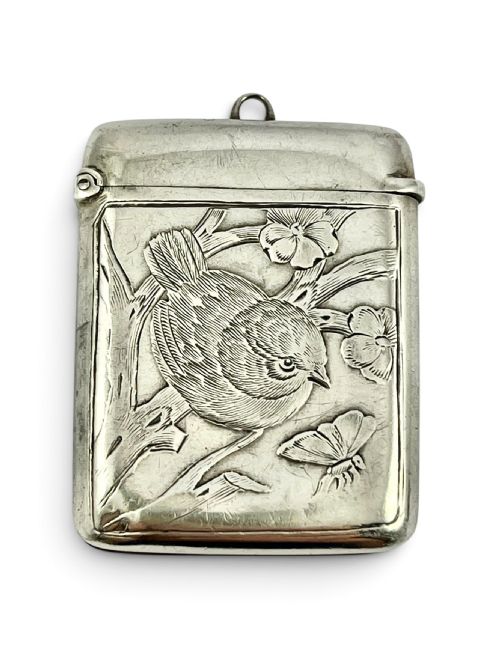
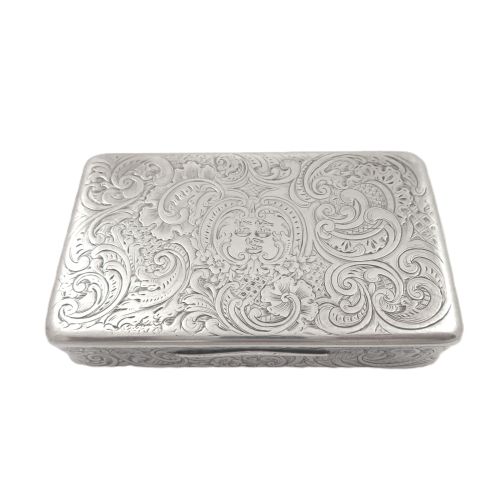
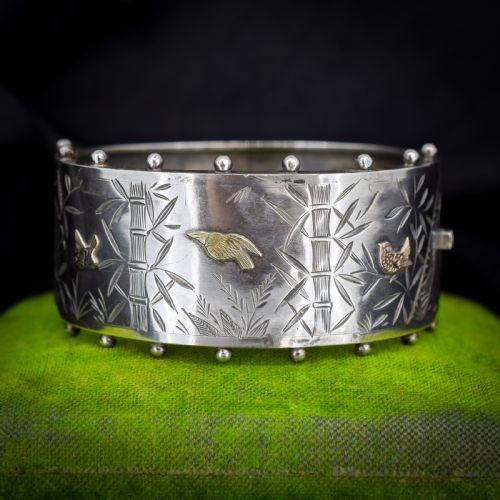
When you search for silver bird engraving, you are looking at small personal accessories, boxes, and vessels adorned with feathered subjects. These pieces mostly date from the Georgian, Victorian, and Edwardian eras, spanning the nineteenth and early twentieth centuries. The selection here ranges from lockets and vesta cases to tea caddies, salt cellars, and cuff bangles.
The version you are most likely to meet on this page is the Victorian or Edwardian personal item, such as a silver locket or a vesta box bearing finely chased or engraved avian motifs. Alongside British sterling silver pieces, the evidence also captures Japanese Meiji period cloisonne and engraved work, as well as Regency and Georgian items featuring bird themes in various forms.
Materials and construction
These items rely on sterling silver, silver plate, and occasionally combinations of silver and gold worked into solid forms, cases, and bangles. Engraving and chasing techniques define the surfaces, cutting fine lines to depict plumage and branches.
Makers also employed specialised methods such as wire cloisonne enamel on vases and integrated decorative elements like silk, velvet, and leather in fitted cases for items like salt cellars and spoons.
Silver Bird Engraving Retail Price Guide 2026
Typical asking prices for silver bird engraving among the pieces listed under this phrase on Sellingantiques today, from the lower quarter to the upper quarter. They describe what is for sale here now, not the wider market.
Listings include sterling silver, silver plate, gold, silk, velvet, and leather across pieces spanning the Georgian, Victorian, Edwardian, and Meiji periods.
Distinguishing quality
Quality rests in the crispness of the engraving and the depth of the metalwork, where sharp, deliberate lines bring the subject to life without softening the surrounding contours of the object. Superior pieces show confident handling by the artisan, ensuring that feathers and botanical details remain distinct over decades of handling.
The choice of materials and the integration of mixed metals, such as contrasting gold highlights on silver bangles, elevate a piece. Finer items also retain their original structural integrity, whether in the precise closing of a vesta box lid or the balanced weight of a tea caddy.
Ando Jubei
The Silver Bird Engraving Glossary
- Vesta case
- A small pocket container designed to hold matches, typically fitted with a hinged lid and a striker on the base. These boxes often feature elaborate engraved decoration across their silver surfaces.
- Cuff bangle
- A rigid open or hinged bracelet designed to fit closely around the wrist. Examples in this field frequently combine silver and gold with engraved bird motifs.
- Cloisonne
- An enamel technique where thin metal wires are applied to a metal base to form compartments, which are then filled with coloured paste and fired. Japanese examples from the Meiji period often incorporate this method alongside engraved elements.
- Chasing
- A metalsmithing technique where a hammer and punches push the metal from the front to create raised relief and surface texture. This method shapes the fine details of feathers and backgrounds without removing material.
Silver Bird Engraving: Frequently Asked Questions
What items feature silver bird engraving?
The selection includes personal accessories such as lockets, vesta cases, and cuff bangles, alongside functional table items like tea caddies, salt cellars, and small boxes.
Items span various nineteenth and early twentieth-century periods, reflecting shifting tastes in decoration from Georgian formality to Victorian and Edwardian naturalism.
How do I care for silver items?
Keep silver pieces away from direct moisture and harsh chemicals to protect the metal surface and any delicate engraving.
Gentle dusting with a soft cloth preserves the finish without wearing down the fine lines of the chased or engraved details.
Are these pieces English?
Many of the silver items originate from British workshops, bearing hallmarks from assay offices such as Chester alongside nineteenth-century date letters.
Other pieces originate from international makers, including Japanese Meiji period workshops that utilised distinct enamelling and engraving traditions.
How do I identify the period?
Periods are identified through a combination of hallmarks, maker marks, and stylistic traits typical of Georgian, Victorian, Edwardian, or Meiji manufacture.
Design motifs also offer clues, as Aesthetic Movement pieces and Regency objects carry specific aesthetic signatures distinct from earlier eras.